Opinion: Canal 2’Or 2026: Beyond recognizing talent, where is the industry?
By Ndambi Julliene
The latest edition of Cameroon’s biggest entertainment award, the Canal 2’Or 2026 celebrated musicians, comedians, actors and digital creators. But beyond the trophies and red-carpet moments lies a more difficult question: are the structures needed to turn creative talent into sustainable livelihoods keeping pace with the country’s cultural energy?
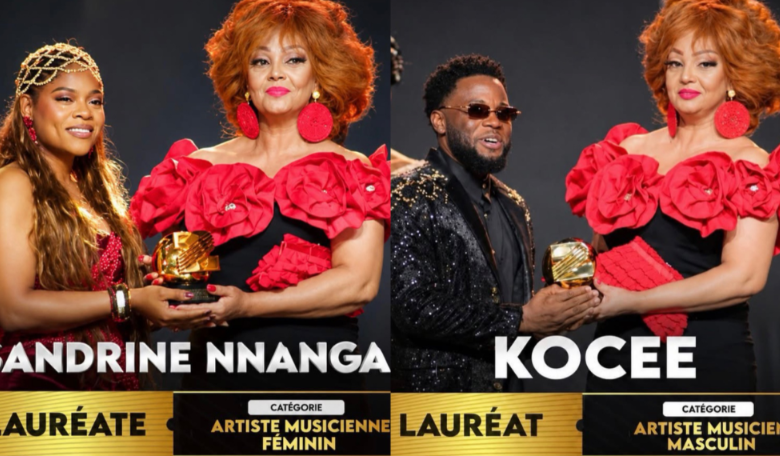
When artists, Kocee and Sandrine Nanga walked away with trophies for the top male and female artistes at the 2026 Canal 2’Or award, they took home more than trophies. Their victories were an endorsement of the work they have both put in over the past year, giving contemporary Cameroonian music a place on the national and international stage.
The ceremony, held on October 31 at the Palais des Congrès in Yaoundé, also recognized a broad range of creative expressions. King Luca was named musical revelation of the year; Armand Biyag won in the Afro-fusion category; La Chakala was recognized for Mbolé; Indira Baboké for gospel; and Fadil Le Sorcier for heritage-inspired music. In television and digital entertainment, 12 Cas, Les Années 80, Kaprice Akamba, Papy Le Jongleur and Moustik le Karismatik were among those recognized.
It was in many respects, a snapshot of a country whose entertainment culture is not standing still. Like with other recent editions of the prestigious award, ‘home’ sounds continued to share the same space with urban music, comedians and digital creators too made their mark and even web series and the huge audiences they now command, featured on the same recognition platform.
Yet, the energy and glamour on the awards stage should outlive the ceremony, necessitating the question of what happens to these creatives when the lights go out. Fondly referred to as Africa in miniature, Cameroon is not short of talent. The more difficult question is whether it is building an entertainment industry capable of sustaining that talent, one that can finance production, protect intellectual property, distribute creative work, generate revenue and provide decent livelihoods for the people behind it.
While the Canal 2’Or Award celebrates achievement, it is not only a pillar in the wider industry, but also a pathway for visibility and status upgrade of winners, and must contribute to making the achievement sustainable. A diverse awards list is not, by itself, proof of a strong creative economy. The recognition can establish visibility, but does not automatically establish the conditions in which artists and producers can keep working.
The difficult business behind the applause
For many creatives, the distance between being recognized and earning a sustainable living from their work remains considerable. An artiste can attract millions of views and still struggle to convert that attention into predictable income and for a country with a minimum wage as little as 35,000 FCFA, expecting the millions of Cameroonians living under the poverty line to finance the industry is as hard as going through the proverbial eye of the needle.
A comedian can build a substantial online following without having a reliable route to monetization, a television production can win an award and still face the challenge of securing finance for its next season and we have seen some of our great artistes pass onto glory in the most pitiful conditions after long careers marked by major awards and similar big stages. These are not problems that a trophy can solve. This is the same reason why artistes like Prince Aime, Mama Nguea of blessed memory and more, despite their greatness, remained beneficiaries of public generosity instead of feeding fat off the craft.
Beyond just performers, a functioning industry needs a whole ecosystem run and regulated. It needs producers able to raise capital, managers who can negotiate fair contracts, distributors who can take content to audiences, venues that can host performances, platforms that pay creators, and institutions capable of protecting the rights attached to creative work.
The bedrock of this ecosystem is reliable data. Despite having their songs played millions of times, many artistes continue to take home peanuts for royalties – in the rare cases where the royalties do come through, usually after protests or strike actions. In one such protest in 2024, artistes moved to the Prime Minister’s office demanding the payment of over 850 million FCFA which was due them over a year before that.
In many instances, other artistes have also called out the institutions in charge as well as the process for dishing out ‘peanuts’ in royalties. This begs the question of audience purchasing power, if we are to assume the reward machinery gets properly lubricated in the Cameroonian entertainment industry. How much revenue do Cameroonian musicians generate from streaming? What proportion reaches the performers, songwriters, producers and other rights holders? How many independent film and television productions are financed locally each year? How many people earn a regular income from the creative sector?
These are the kinds of questions that should inform a national conversation about entertainment. Without answers, it is difficult to distinguish a growing industry from a lively but precarious collection of individual careers.
The digital environment has made the distinction even more important. Social media can help a Cameroonian artiste build an audience without first securing a record deal or television appearance. It can also create the impression that visibility is the same as commercial success. Bad Nova’s recognition for digital popularity, alongside awards for web comedy and web series, for instance, reflects the growing importance of online audiences in the entertainment landscape. But follower counts and views are not the same as income, and online popularity does not automatically translate into ownership, fair compensation or long-term professional security. The question, therefore, is not whether Cameroonian creatives are finding audiences. Increasingly, they are. The challenge is now that the systems hardly allow them to benefit economically from the audiences they build.
The politics of patronage
The usual presence of the First Lady, Chantal Biya at first glance, hardly ever portrays a political dimension beyond its entertainment value and her role as a social icon. At the 2026 Canal 2’Or ceremony, she was recognized with a distinction for cultural patronage, while Kocee and Sandrine Nnanga received their awards from her.
But in a country where the relationship between the state, public institutions and cultural production deserves sustained scrutiny, such recognition invites a broader question about what support for culture looks like beyond ceremonial patronage.
This is not to disregard the role of patronage in the creative economy: private individuals, companies and public figures can help artists access resources, visibility and opportunities. Corporate sponsorship can also make large cultural events possible in an instant. But patronage shout not be a substitute for a functioning cultural policy.
The more consequential questions concern the responsibilities of public institutions. What is the state doing to strengthen copyright protection and ensure that creators receive the income due to them? What financing opportunities exist for independent musicians, filmmakers, producers and cultural entrepreneurs? Are there accessible production and performance facilities beyond the country’s main urban centers? What support is available to young creatives who have audiences but lack the capital to professionalize their work?
These questions lead directly to the Ministry of Arts and Culture, the institution responsible for copyright administration and the wider policy environment in which creative businesses operate. Also, it would be unfair to suggest that one awards ceremony should answer for all these shortcomings. Despite being the enfant cheri of awards in Cameroon, Canal 2’Or is organized by a private media institution, not a government department responsible for financing the entire cultural sector. Its contribution should be assessed within its actual role: providing a platform for recognition, visibility and public celebration.
But when public officials and influential figures participate in the celebration of culture, the occasion can also become an opportunity to discuss the conditions under which that culture is produced. The symbolism of support is welcome, but the public should also be able to assess its practical results.
From celebrating talent to building an industry
The 2026 Canal 2’Or offered a useful reminder of the breadth of Cameroon’s creative talent. From Kocee and Sandrine Nnanga to La Chakala, Indira Baboké, Kaprice Akamba and the many other winners, the ceremony recognized individuals and groups working across a changing entertainment landscape. All shakers and movers in their own rights, their achievements deserve to be celebrated. But the measure of a country’s creative progress cannot be the number of trophies awarded in a single night.
It must also be measured by the number of artists who can earn a living from their work, the number of productions that can secure financing, the extent to which creators retain control over their intellectual property, the audiences they can reach, and the opportunities available to the next generation.
Cameroon has the talent. It has stories, sounds, languages and audiences that give its entertainment sector a distinct identity. What remains is the difficult work of building the systems that can turn these assets into a sustainable economy. The Canal 2’Or, like other award platforms, can continue to provide a stage for that talent. But the bigger task belongs to the industry around it, from government and investors to broadcasters, producers, rights organizations and the creatives themselves. If history is anything to go by, this type of power, creative control and system ownership has never come without conscious efforts and sometimes, a well-coordinated fight.
Ndambi Julliene is a Cameroonian journalist and social critic who covers a broad range of subjects including society, politics, governance, culture and entertainment.