Grassroots Fishers Gain Ground, but Indigenous Voices Remain on the Margins at 11th OOC
Jabi Katy Chale
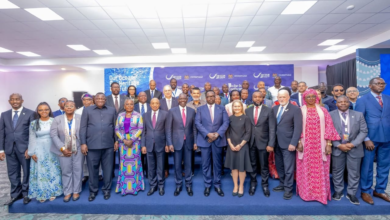
For decades, decisions about the world’s oceans have largely been made without the people who depend on them most. At the 11th Our Ocean Conference, that appeared to be changing, at least for artisanal fishers and grassroots conservation groups. But Indigenous advocates say there is still a gap in indigenous representation: while local communities are increasingly finding a place in global ocean discussions, Indigenous Peoples continue to be largely underrepresented in both participation and policy commitments.
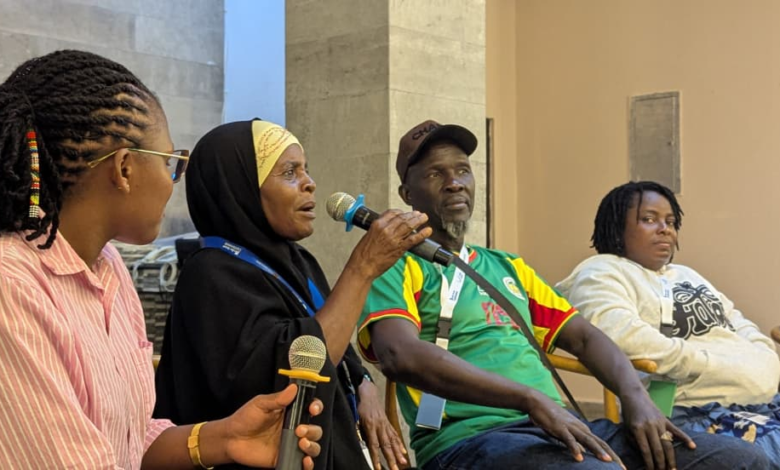
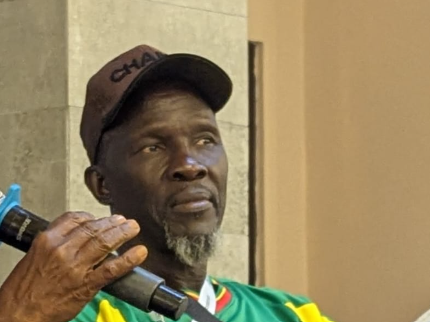
For 60-year-old Sarr Mamadou, a fisherman from Senegal, attending the conference was itself evidence of that gradual shift.
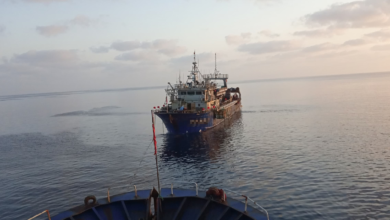
Mamadou has been a fisherman in Senegal since the 1970s. For more than four decades, the ocean has been both his home and his livelihood. But in recent years, that livelihood has come under increasing threat. He and members of his fishing community have experienced the impacts of industrial fishing vessels firsthand. Through community patrols, they have also played an active role in reporting illegal activities by industrial trawlers to the relevant authorities for sanctions.
As president of the artisanal fishing association PAPAS, Mamadou attended the conference to highlight the challenges facing small-scale fishing communities while sharing their efforts to protect marine resources. He says the gathering also gave him a rare opportunity to present their concerns directly to international institutions, including the World Bank.
“This means a lot for us, because it’s really like a bucket that you have that’s half-full. And then it gets very full when you go to places like that, where you meet people and you exchange and you learn. And you’re able to then take everything back to the community. And taking part in all of these important conversations means that you’re maybe going forward. And it also means making progress.”
Mamadou was among several fishers and grassroots conservation practitioners from countries including Kenya, Ghana, Nigeria and Brazil, amongst others, who participated in discussions throughout the conference, bringing firsthand experiences from communities directly dependent on marine ecosystems. For many participants, this growing representation was one of the conference’s most significant achievements, describing it as a long-overdue shift toward more inclusive ocean governance.
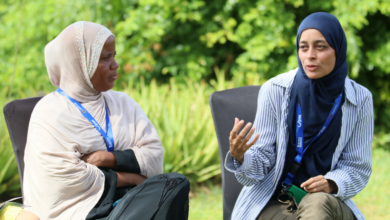
“The major gap that was really addressed this time is having small-scale fishers in the room. Before now, we never had the opportunity to be in those spaces where these conversations were happening and where decisions were being made. Having a seat in most of the discussions at this conference is a major gap that is beginning to close. We are able to speak our minds and talk about our livelihoods in these conversations.” remarked Shelika Oluwafunmitola, President of the African Women Fish Processors and Traders Network, Nigerian Chapter.
Beyond the conference, Mamadou says, their participation in day-to-day ocean governance has greatly empowered fishing communities to see themselves not merely as resource users, but to recognize that they have an important role to play in ocean protection. That growing sense of ownership recently led them to join civil society organisations in signing a national petition opposing a ministerial decision to issue new coastal demersal fishing licences in Senegal. The campaign ultimately prompted the government to suspend the decision.
“There’s something that’s starting to grow. Before, we were at a very low level. But now, communities are really beginning to feel involved in the management of the ocean.” Mamadou notes.
A different picture for Indigenous Peoples
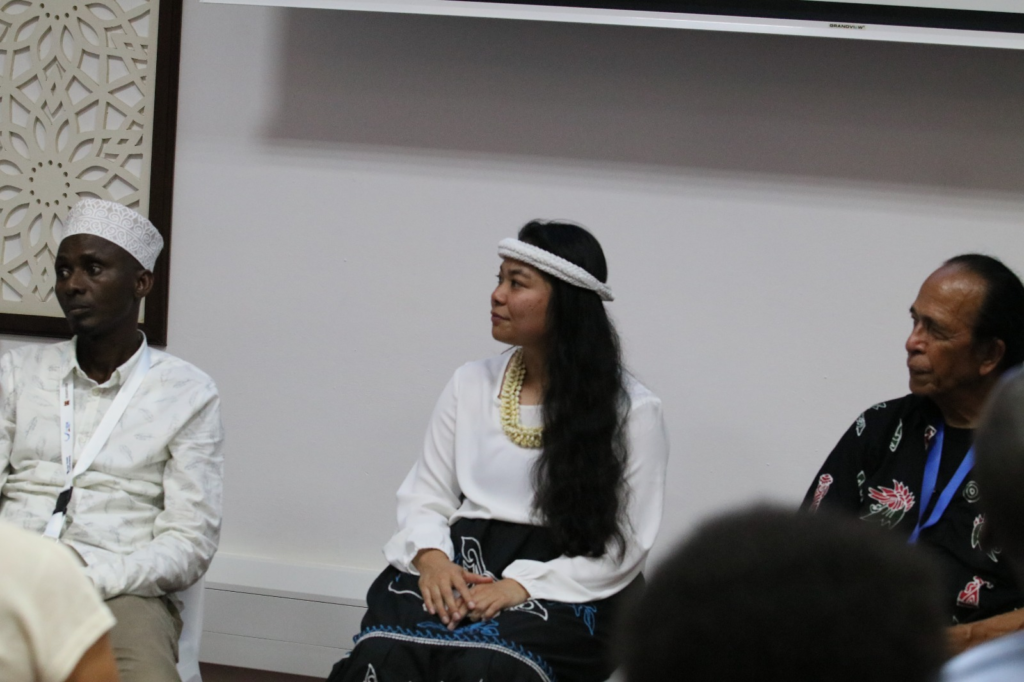
While grassroots participation seems to be expanding, Indigenous representatives say the 11th Our Ocean Conference reinforced the concern of the limited space their communities continue to occupy in global ocean governance.
Although the conference featured a side event on Indigenous leadership at the ocean–climate nexus, showcasing four successful and scalable Indigenous and community-led initiatives, indigenous representatives argued that such dedicated sessions remained the exception rather than evidence of meaningful inclusion in the conference’s broader decision-making processes. Adding that the event was not exclusively dedicated to Indigenous voices.
Dr. Johnson Jament, an ocean researcher from India representing the Asia Indigenous Peoples Network on Extractive Industries and Energy (AIPNEE), acknowledged the stronger presence of fishers and local communities during the conference, but expressed concern over what he described as the limited participation of Indigenous Peoples, and the implications this could have for future conservation efforts.
“Indigenous peoples’ presence is very, very limited. I would say maybe less than one percent. Local community fishers are there. I’ve met many of them. But most of the time, when people talk about locally led solutions, they’re not actually talking about Indigenous-led solutions. We have more local communities this year.” He emphasised
Jament insists that excluding Indigenous Peoples from decision-making risks overlooking generations of traditional ecological knowledge that have sustained marine ecosystems for centuries.
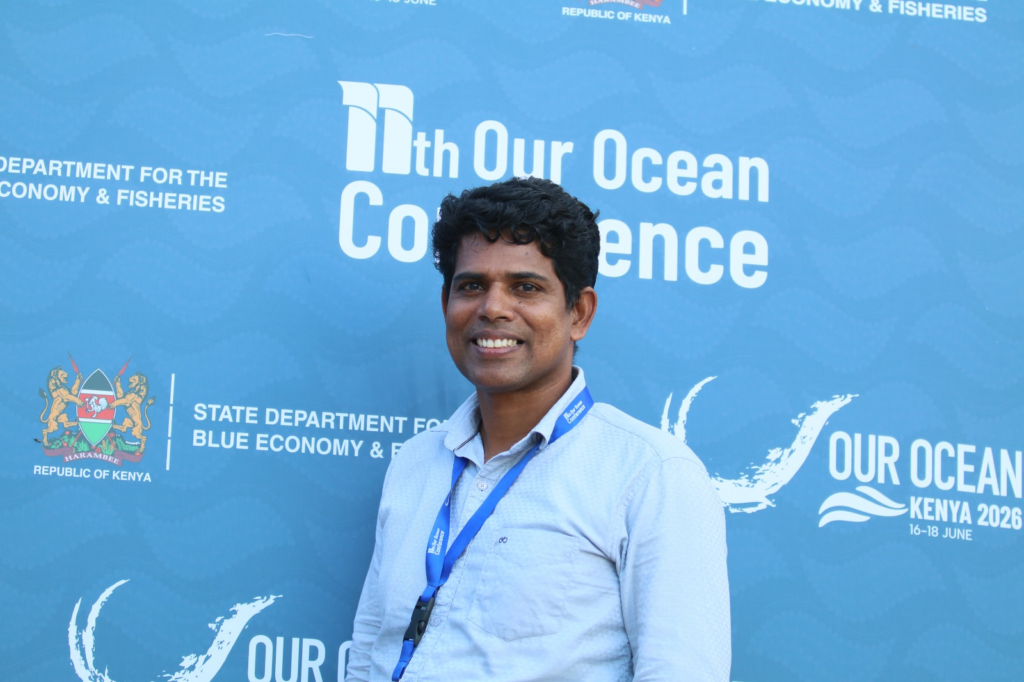
His concerns were echoed by Sarah Lee, a researcher from South Korea and fellow representative of AIPNEE. Lee noted that despite increasing references to Indigenous Peoples and Local Communities (IPLCs) in international conservation discourse, Indigenous-specific commitments remain almost absent from the Our Ocean Conference.
According to her analysis, across the first 11 editions of the Our Ocean Conference, IPLC related commitments make up 0.0% of the entire commitments, on an aggregate level. She further noted that, although OOC 2025 produced 135 commitments, only about 5% referenced “Indigenous Peoples (IPs) and local communities (LCs), traditional knowledge, or Tribal organizations”, but no commitment explicitly referenced Indigenous Peoples.
Giving that Indigenous Peoples globally steward 25% of the world’s land and ocean, which reportedly contain roughly 80% of the world’s remaining biodiversity, Lee considers this a severe underrepresentation.
“If you actually look at the commitments, no single commitment explicitly references Indigenous Peoples. They’re mostly based on local communities. We’re very concerned about merging Indigenous Peoples and local communities together because they’re not the same…..When we merge these terms under IPLCs rather than specifically focusing on Indigenous Peoples, we risk diluting their rights.” She asserted.
Environmental anthropologist Dr. Efuet Simon, an associate professor at the University of Buea in Cameroon, says the distinction between Indigenous Peoples and local communities and balanced representation is fundamental in conservation policy.
The International Labor Organization’s Indigenous and Tribal Peoples Convention (Convention 169), Article 1(b), describe Indigenous peoples to be “peoples in independent countries who are regarded as indigenous on account of their descent from the populations which inhabited the country, or a geographical region to which the country belongs, at the time of conquest or colonization or the establishment of present state boundaries and who, irrespective of their legal status, retain some or all of their own social, economic, cultural and political institutions.”
The ICCA Consortium broadly describes local communities as groups of people who share a common geographical area and interact through shared social, cultural and economic ties. They often rely on common resources, local institutions and mutual support systems. While some local communities may include people of Indigenous descent, they may also comprise of migrants who have settled in an area for economic or other reasons and may relocate over time.
While involving local communities in marine conservation is essential because they directly depend on marine resources, Efuet argues that, Indigenous Peoples bring an additional layer of generational ecological knowledge and customary governance systems that can strengthen conservation outcomes while safeguarding their internationally recognized rights.
“While we bring local communities on board, it is always good to bring Indigenous Peoples alongside them. Those who make community policies and regulate how the community functions are the Indigenous Peoples. Capacity building is important because many Indigenous communities do not yet have associations that can effectively influence policy among local populations.”
Looking ahead to Canada
With the 12th Our Ocean Conference scheduled to take place in Canada in 2027, the host country has pledged to strengthen the integration of Indigenous knowledge into the conference.
For Indigenous rights advocates such as Sarah Lee and Johnson Jament, this commitment offers hope. However, they insist it should not be at face value. Rather, indigenous representatives should be involved in shaping the agenda, designing discussions and influencing the commitments that emerge from the meeting.
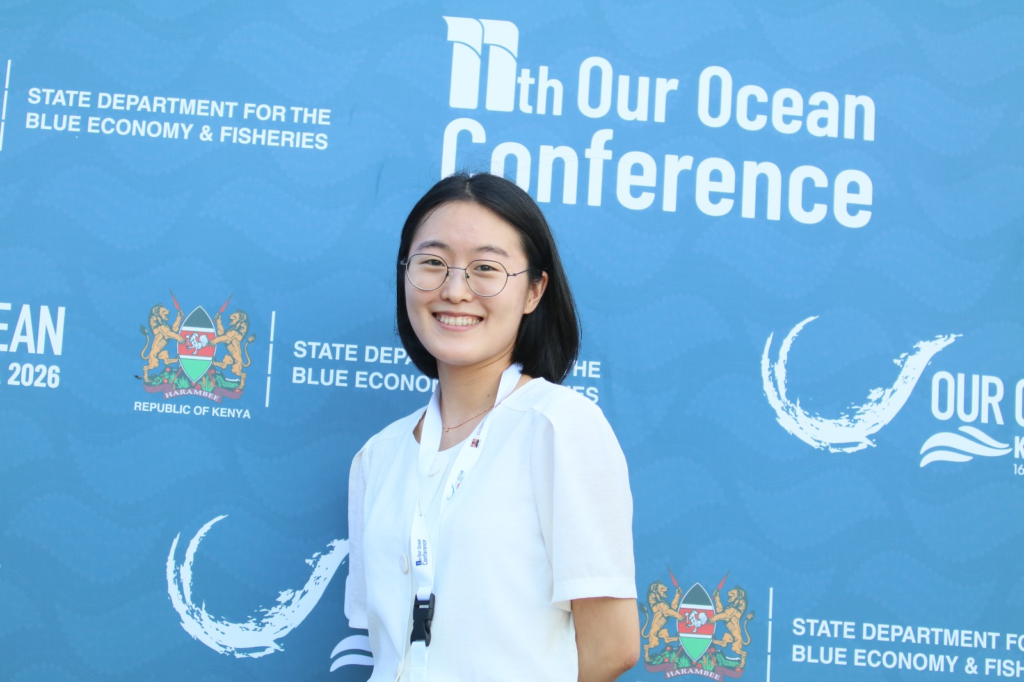
Dr Efuet believes achieving that level of participation will require sustained investment in Indigenous leadership, particularly among young people who can represent their communities in international policy spaces.
“Not everyone can attend these conferences. Representatives have to be selected. We should identify Indigenous youth who are educated and train them so they can represent their communities. They become the eyes, the legs and the voice of their parents. We should train the youth to advocate for their communities and work alongside local organisations so they can influence policies where they are made.”
This year’s conference proved that global ocean governance is becoming more open to grassroots voices. Canada’s commitment to strengthening Indigenous knowledge at the 2027 Our Ocean Conference adds a new chapter to that inclusion discussion.
This story was written thanks to the collaboration with www.communicationsinc.co.uk