Starting Over, Again: Floods Disrupt Lives Already Shaken by Arm Conflict in Bamenda
By Tohnain Laureen
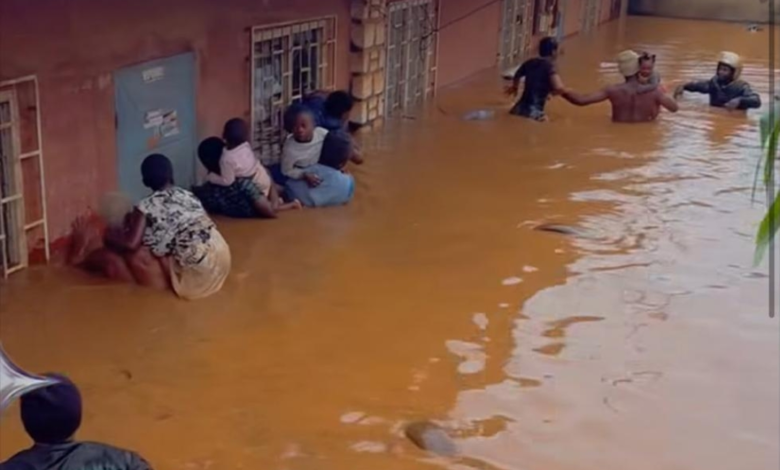
After fleeing the Anglophone crisis in search of safety, two families in Ndamukong have suffered fresh losses after floods damaged their homes and belongings, they had worked hard to re-acquire. For families already forced to rebuild their lives after fleeing the Anglophone crisis, the floods that hit parts of Bamenda in August 2026 brought another painful setback.
In Ndamukong, Bamenda III Subdivision, North West region, two households were left counting their losses after heavy rains caused damage to their homes on August 13 and 18. Household belongings were destroyed, important documents were lost, and familiar places they had struggled to make home became unsafe.The Anglophone crisis which began in late 2016, in the North West and South West regions in Cameroon has caused widespread deaths, displacement and damage to public infrastructures.
The partial list of reported deaths estimates the deaths at 10,000. However, only about 4000 deaths have been compiled, according to the Global Campaign for Peace and Justice in Cameroon and the Centre for Human Rights and Democracy in Africa. The United Nations estimated that 493,400 people were internally displaced in the North-West and South-West regions as of April 30, 2026, and nearly 500,000 people lacked adequate shelter.
Among those affected is 63-year-old Tammu Falicita, a widow who moved from Mankon to Ndamukong with her late husband in 2017, hoping to find safety as the crisis worsened. After her husband died, she was left to raise their seven children on her own. She now has five grandchildren, three of whom depend on her for their daily needs. The flood has placed this responsibility under even greater strain, leaving her without a stable home and disrupting her business and rental income she relied on to support the family.
For Kombe Donald and his family, who also relocated to Bamenda after fleeing insecurity in their home area, the disaster came after they had started rebuilding their lives. A home lost after years of rebuilding long before the Anglophone crisis, Falicita and her late husband had built a house in Ndamukong, which they kept for rental purposes. But as the security situation worsened in 2017, they left Mankon and moved into the property, hoping to find a safer place to live. After her husband’s death, Falicita continued raising their seven children on her own and later took on responsibilities for her grandchildren.On August 13, 2026, flooding caused part of the building to collapse, damaging her home and destroying belongings she depended on. Falicita lost household items, essential documents and her business materials.
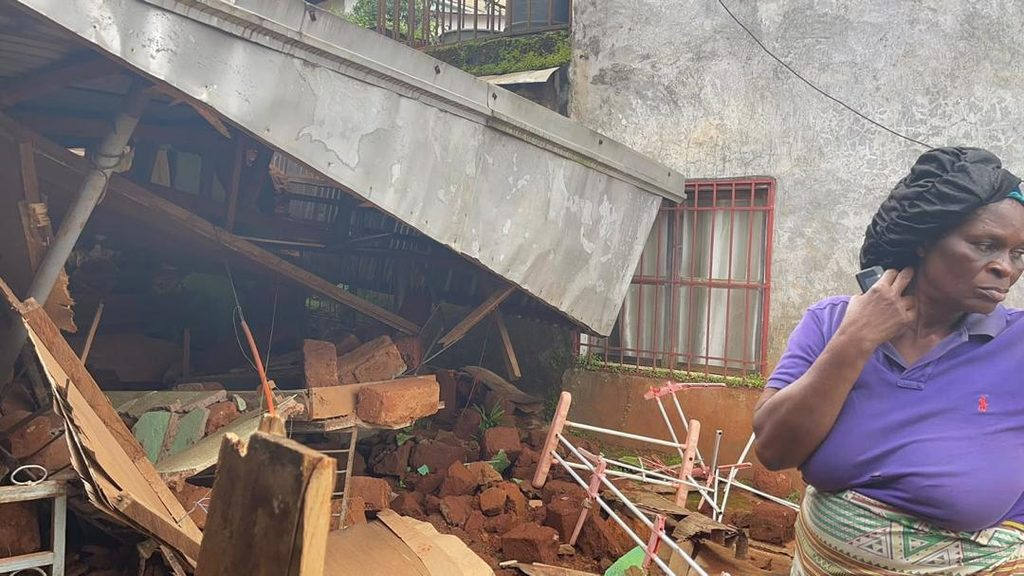
The damage also brought an end to the rental income she depended on. She said the loss has left her with little to rely on.
“I used to make and sell detergent, but now I have lost everything. When the house collapsed, the remaining things inside were stolen. I have lost my house, and I have nothing left to depend on,” she lamented. (Translated from Pidgin English.)After the incident, Falicita had to leave the house to find somewhere for her and the family to sleep. While she was away, some of the belongings left inside were stolen. She now stays with a friend and receives some support from members of her “Njangi” group, who help her with food and other basic needs. With her means of livelihood affected, rebuilding her life remains a major challenge.
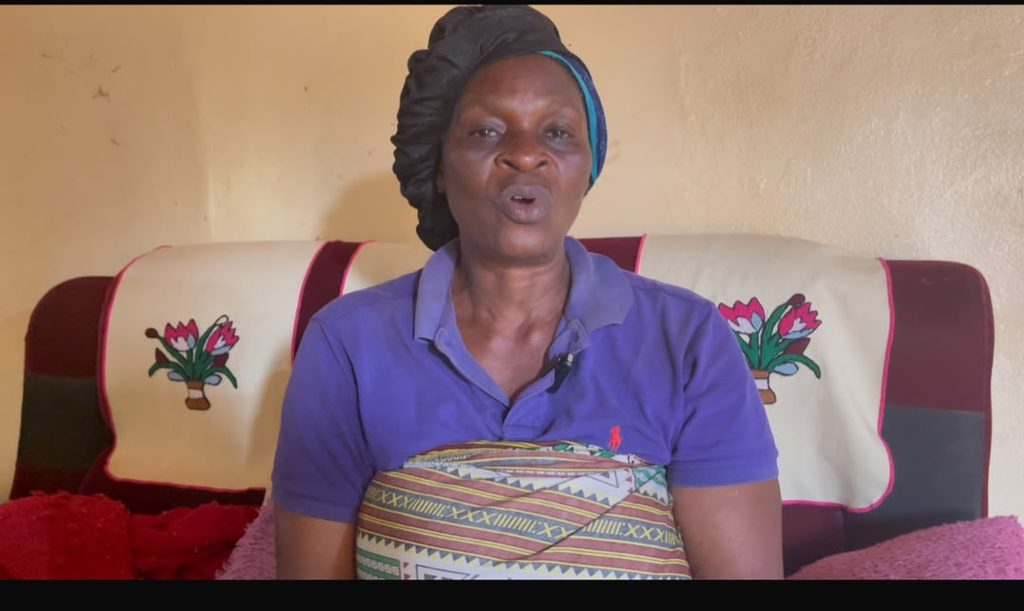
“The disaster has taken an emotional toll on me. I have been depressed since the flooding. I don’t know how I will continue caring for my children and grandchildren who depend on her me”
The disaster also affected Falicita’s tenants, whose studio apartments were buried under the collapsed structure. One tenant described what was lost:
“I lost everything in my house, from the smallest household items to all the certificates. My younger sister also lost all her GCE Ordinary Level and Advanced Level certificates. When I returned home after hearing what had happened, I left with nothing. The soil had buried everything in the house. I had nothing left to show for what I owned, but I thank God that no life was lost,” the tenant said.
Mr. Kombe Donald, his wife Janett and their three children, had lived in Kom all their lives before moving to Bamenda in 2020 to escape the insecurity from the armed conflict.Donald said the family had been doing well before the disaster struck. They left Kom after separatist fighters repeatedly came to demand ransom, making it difficult for them to remain in the place they had always called home. The move to Bamenda meant leaving behind familiar surroundings and beginning life again in a new town.
“I am an internally displaced person from Kom. We left our village when things were going well for us because separatist groups kept coming to demand ransom on several occasions. We got tired and decided to relocate to Bamenda town and start life again. Everything was going well until this calamity struck us,” Donald said.
The flood damaged several household belongings. Their couches were soaked, their television was broken, and their sleeping mattress was left unusable. Important documents and valuable kitchen equipment were also lost when part of the building collapsed over the kitchen section.
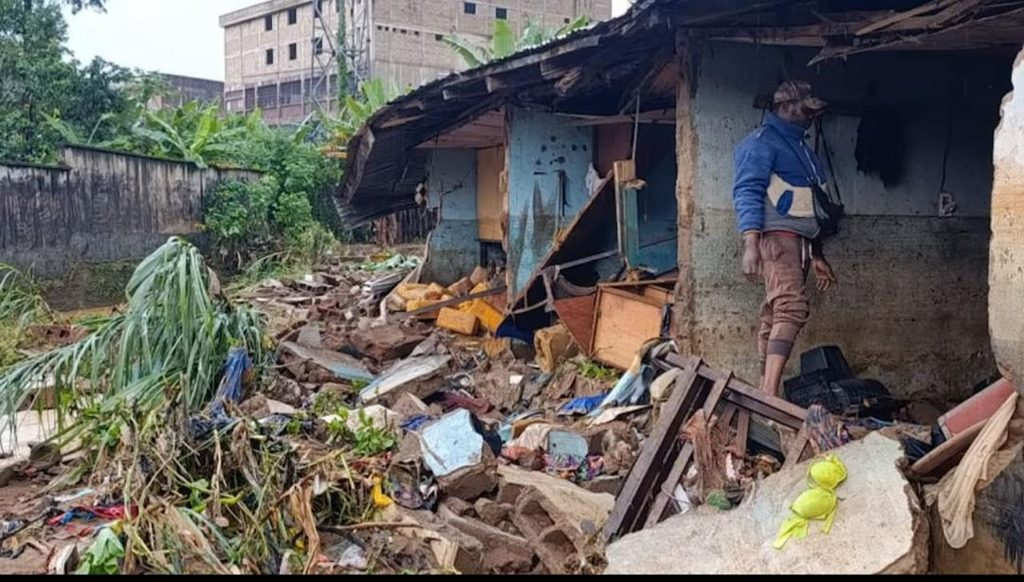
“We lost everything in the kitchen and some of our most valuable belongings in the parlour. But it is not the end of life. I am grateful that our business is still running and for the support I have received from people,” he said.The family has since relocated to Sisia, Nkwen. For Donald, his wife and their children, this is another move after the one that took them from Kom to Bamenda in 2020.
After spending their lives in Kom and then working to establish a home and business in Bamenda, they are now adjusting again to a new neighborhood and facing the cost of replacing belongings lost in the flood. Their business is still running, but the family must once again settle into unfamiliar surroundings and rebuild what the disaster has taken from them.Why Bamenda experiences repeated floodingFlooding is not new to Bamenda. The city experiences recurring floods during the rainy season, particularly between July and September.
Francis Mondembe Menyoli, a disaster risk reduction and climate change professional and Divisional Delegate of Environment and Nature Protection for Donga-Mantung, explained that Bamenda’s landscape makes several communities vulnerable.
“Bamenda’s location makes it vulnerable to flooding. When heavy rains fall, water flows from the surrounding hills into lower communities, while the River Mezam can overflow and affect areas close to its banks. This is why communities such as Mulang, Ntamulung, Ndamukong, Old Town, Sisia and Bayelle are at risk during the rainy season,” Menyoli explained.
However, he stressed that the problem is not caused by rainfall alone. Human activities, including construction on wetlands and riverbanks, poor drainage maintenance, improper waste disposal, and deforestation, have made flooding worse. He stressed the need for better water channeling, public awareness and compliance with building regulations to reduce the risks.
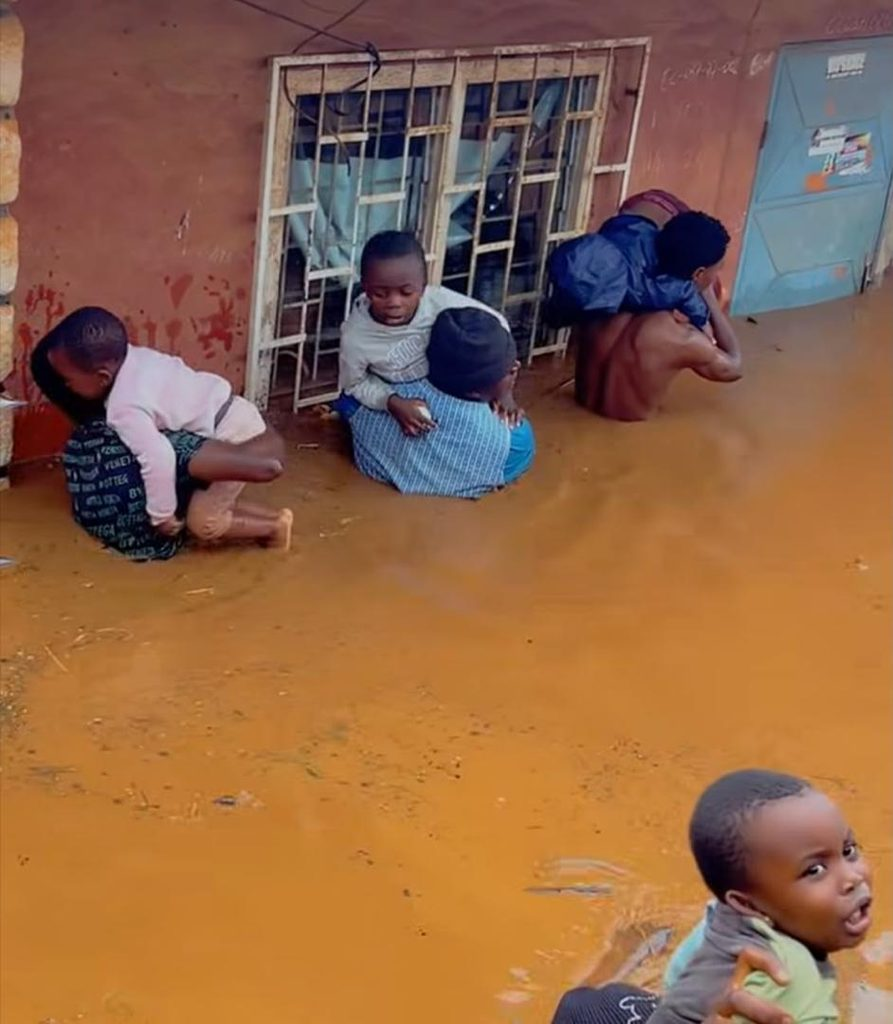
“When people build on wetlands and along waterways, they take away the natural spaces where water should flow. When drainage channels are blocked by waste or poorly maintained, water has nowhere to go. Heavy rainfall then becomes more dangerous for communities,” he added.Flooding is a national concernThe floods experienced in Bamenda is not an isolated problem, other parts of the country have also recorded deadly weather-related disasters.
Between July and September 2024, floods affected almost 460,000 people across Cameroon, caused 38 deaths and destroyed 56,084 houses, according to UNICEF. In November 2024, two landslides at the Dschang escarpment in the West Region killed 12 people.
In Limbe, South-West Region, three people died when a landslide triggered by heavy rainfall destroyed a house in the Mbende neighborhood on August 5, 2026.Scientists say Climate change exacerbates these disasters.
A 2024 International Monetary Fund report ranked Cameroon as the 16th most vulnerable country globally to climate impacts and noted that extreme weather events had doubled over the previous three decades.
UNICEF warns that climate change is expected to increase the frequency and intensity of disasters, including floods and droughts. This raises the concern that more families could face the kind of losses experienced by Falicita and Donald’s family, worsening humanitarian situations, especially in the conflict hit zones of Cameroon where affected persons are still trying to rebuild their lives.
This article was produced following training through the Journalism Students Nature Storytelling Lab