Russia’s Disinformation War in Africa and the Warning Signs for Cameroon
By Hans Ngala
In today’s Africa, power is no longer exercised only through guns or diplomacy, it is increasingly shaped by narratives. From viral social media posts to coordinated propaganda campaigns, information has become a weapon. A recent investigation into a covert Russian-linked network known as Africa Politology reveals just how far this invisible war has gone. While the operation has focused heavily on the Sahel and parts of East Africa, its methods and ambitions raise urgent questions for countries like Cameroon, where political tensions and information gaps create fertile ground for manipulation.
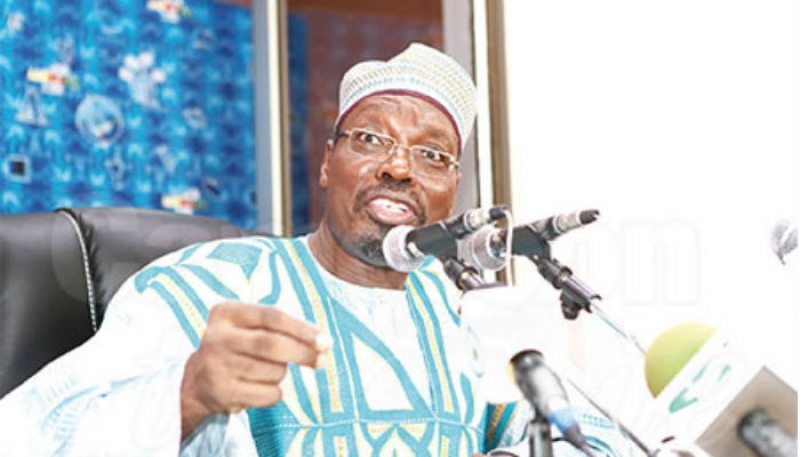
According to Olga Emma, a Cameroonian social media analyst “The fact that most Cameroonians have very little or no trust in institutions – especially given the context of the ongoing crisis (in the NW and SW regions) and the electoral process. Foreign actors play another part in this when there is an influx of diaspora narratives, either stemming from unverified sources or from “hear say” but the full blame would not only be on the diaspora, it also falls back to domestic messaging” she argues.
The investigation, conducted by a consortium of international media organizations, is based on 76 leaked internal documents totaling more than 1,400 pages. These documents expose Africa Politology as a sophisticated disinformation and political interference network now operating under Russia’s Foreign Intelligence Service (SVR). With at least $7.3 million spent in 2024 alone, the network has financed a wide range of activities—from influencing political elites to orchestrating online propaganda campaigns designed to shape public opinion.
At the heart of the operation is a clear geopolitical goal: to build a “belt of regimes friendly to the Russian Federation” across Africa. This vision, outlined in an internal strategy document titled Confederation of Independence, targets countries such as Mali, Burkina Faso, Niger, Chad, and Sudan. However, the broader objective extends beyond these nations. It seeks to redefine Africa’s political landscape by weakening Western influence and embedding pro-Russian narratives within local political and media ecosystems.
One of the most striking aspects of Africa Politology’s strategy is its reliance on disinformation as a primary tool. Through fake social media accounts, paid influencers, and coordinated messaging, the network amplifies false or misleading narratives to influence elections and public discourse. In Namibia, for example, operatives reportedly fabricated a letter accusing the United Kingdom of secretly funding the opposition. The false claim spread to over 1.7 million people, demonstrating how quickly disinformation can shape political perceptions.
But the operation does not stop at online influence. The leaked documents also reveal efforts to infiltrate political systems directly. Africa Politology employs nearly 100 “counteragents”—individuals embedded within political parties, military structures, and civil society organizations. These actors gather intelligence, influence decision-making, and, in some cases, help orchestrate political outcomes favorable to Russian interests.
Even more concerning is the network’s openness to military interference. Internal plans suggest that Russian operatives have explored supporting coups, including in Senegal, where they considered collaborating with the military to seize power. These strategies blur the line between information warfare and direct political intervention, signaling a more aggressive phase of foreign influence in Africa.
For Cameroon, these revelations should not be viewed as distant developments. Although the country is not explicitly named among the primary targets, its internal dynamics make it particularly susceptible to disinformation campaigns. As already pointed out by Olga Emma, the ongoing Anglophone crisis has already created a fragmented information environment, where competing narratives circulate widely on social media, often without verification. In such a context, external actors like the Russians, could easily exploit existing tensions by amplifying divisive content or spreading false information to undermine trust in institutions.
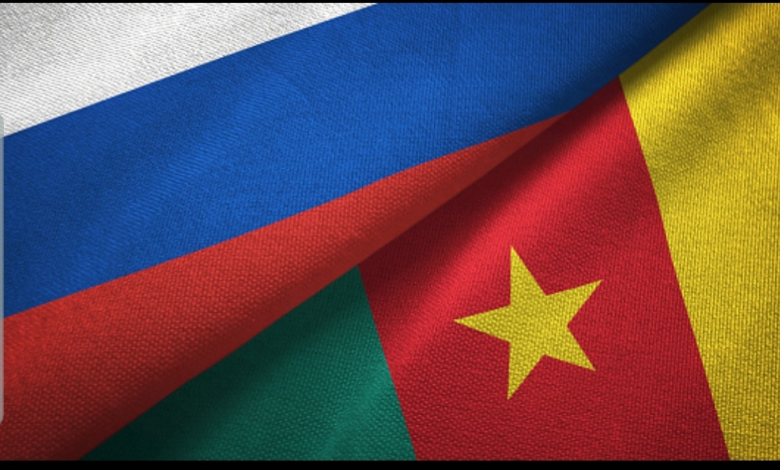
Cameroon’s geographic position also adds to its vulnerability. Bordering Chad and the Central African Republic—both countries with documented Russian engagement—the risk of cross-border influence is real. Disinformation networks do not respect national boundaries; they operate through digital platforms that can reach millions instantly. A coordinated Russian campaign targeting Cameroon could therefore emerge quickly, especially during sensitive periods such as during Cameroon’s just-ended elections in October or other major political events.
Another key concern is the country’s digital literacy gap. While internet access is expanding, many users lack the tools to critically evaluate online information. This makes it easier for false narratives to gain traction, particularly when they are framed in ways that resonate with local grievances or cultural contexts. Africa Politology’s use of local “counteragents” highlights how disinformation campaigns often rely on trusted voices to spread their messages, making them harder to detect and counter.
The response from African governments to these revelations has so far been limited. In South Africa, officials dismissed the reports as exaggerated, even as opposition parties called for investigations. Elsewhere, silence has prevailed. This lack of coordinated action underscores a broader challenge: many African states are not yet fully equipped to להתמודד the scale and sophistication of modern disinformation campaigns.
For Cameroon, the stakes are high. Disinformation is not just a media issue—it is a threat to national stability and democratic integrity. Addressing it requires a multi-layered approach. Strengthening independent journalism is essential, as credible media outlets play a crucial role in countering false narratives. At the same time, investing in digital literacy can empower citizens to critically assess the information they encounter online.
Government institutions also have a role to play by increasing transparency and building public trust. When citizens trust official sources, they are less likely to be swayed by external propaganda. Civil society organizations, too, must be involved in monitoring and exposing disinformation networks, while advocating for policies that protect the integrity of the information space.
Ultimately, the revelations about Africa Politology highlight a new reality: Africa is a key battleground in a global contest for influence. Cameroon may not yet be at the center of this struggle, but the warning signs are clear. In an era where narratives shape power, safeguarding the truth is no longer optional—it is essential.