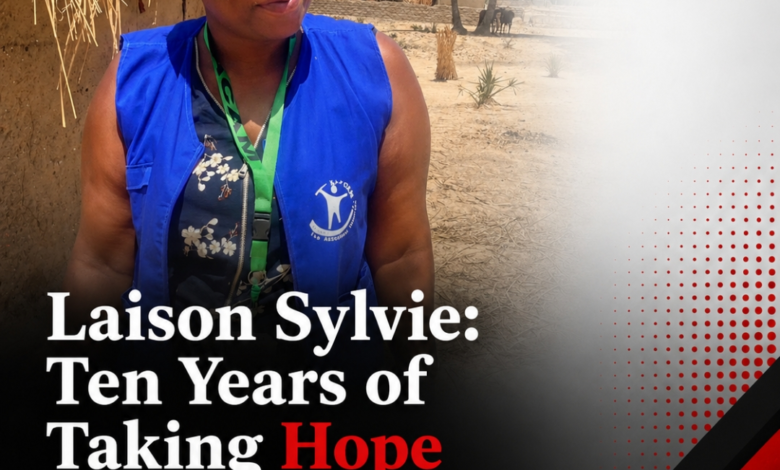
For Laison Sylvie, humanitarian work was not the destination she originally planned.
Armed with an MBA, she could have pursued a conventional career in business and management. Instead, Sylvie found herself drawn toward a different kind of work : one that would take her into vulnerable communities, conflict-affected areas and places where access to basic social services remains limited.
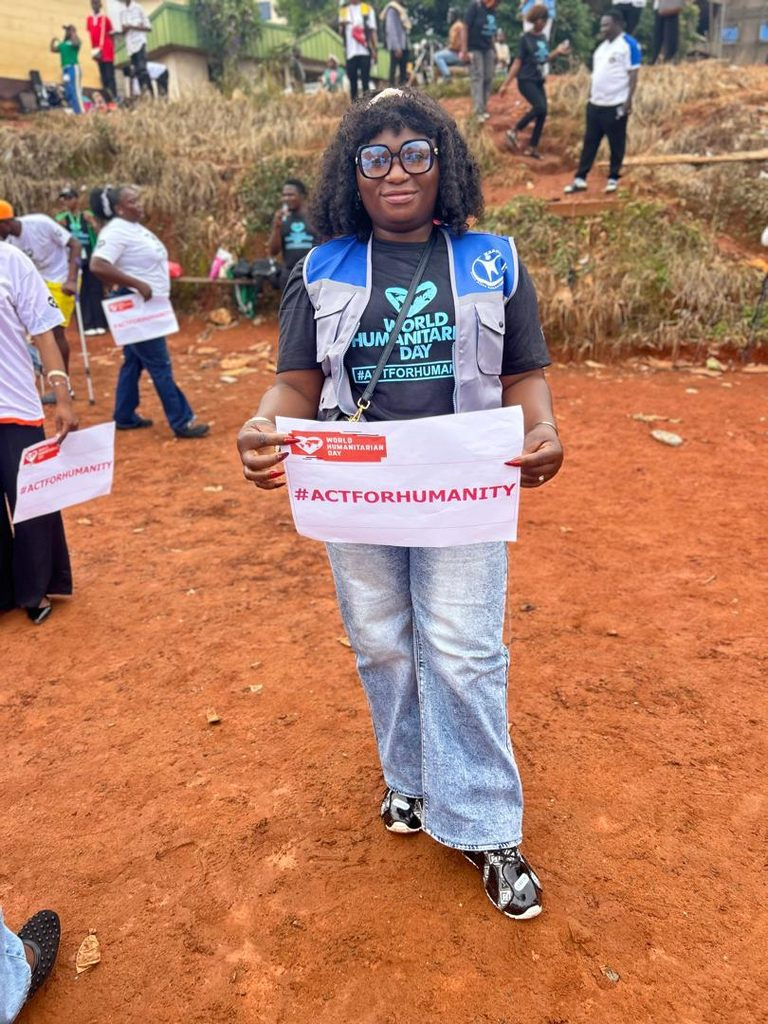
A decade after she formally began her humanitarian journey, the founder of Hope Alive Association Cameroon (HAACAM) is still going where help is often hardest to reach.
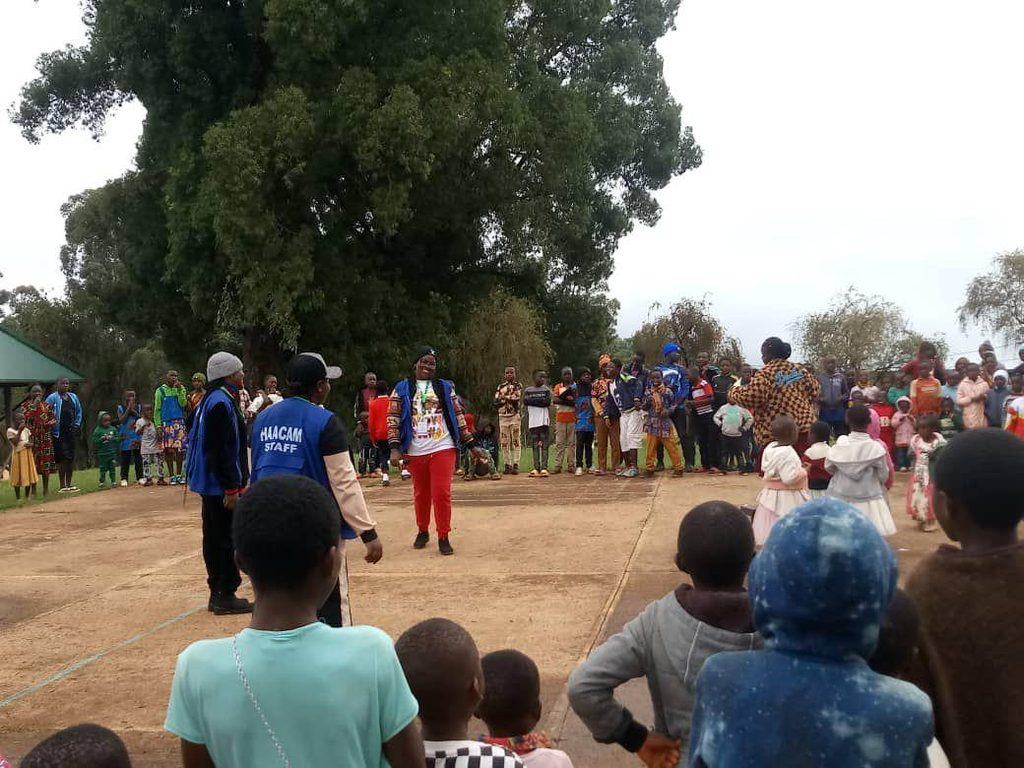
Her journey has taken her across some of Cameroon’s most challenging humanitarian environments, including the Northwest, Southwest, North and Far North regions.
It has also come with personal risks.
According to Sylvie, she has been abducted multiple times while travelling to and from the field. Yet those experiences have not persuaded her to abandon the communities she serves.
Instead, they have reinforced her determination to reach people who, in her view, cannot afford to be forgotten.
From business to social work
Sylvie’s professional journey took an unusual turn after completing her MBA.
She returned to school to study social work, undertaking in-service training with the Cameroon Baptist Convention at CECPES before obtaining a bachelor’s degree in social work. She is now preparing to defend her master’s degree in social work at the University of Bamenda.
The decision reflected a growing conviction that her skills were needed beyond the boardroom.
Her connection to vulnerable girls also appears to have personal roots. A Plan International report on HAACAM’s work describes Sylvie as having grown up in a modest family and recalls her experience of being unable to afford sanitary towels ; an experience that influenced her commitment to supporting vulnerable girls.
That experience would later help inspire one of her most recognizable initiatives.
Building hope through HAACAM
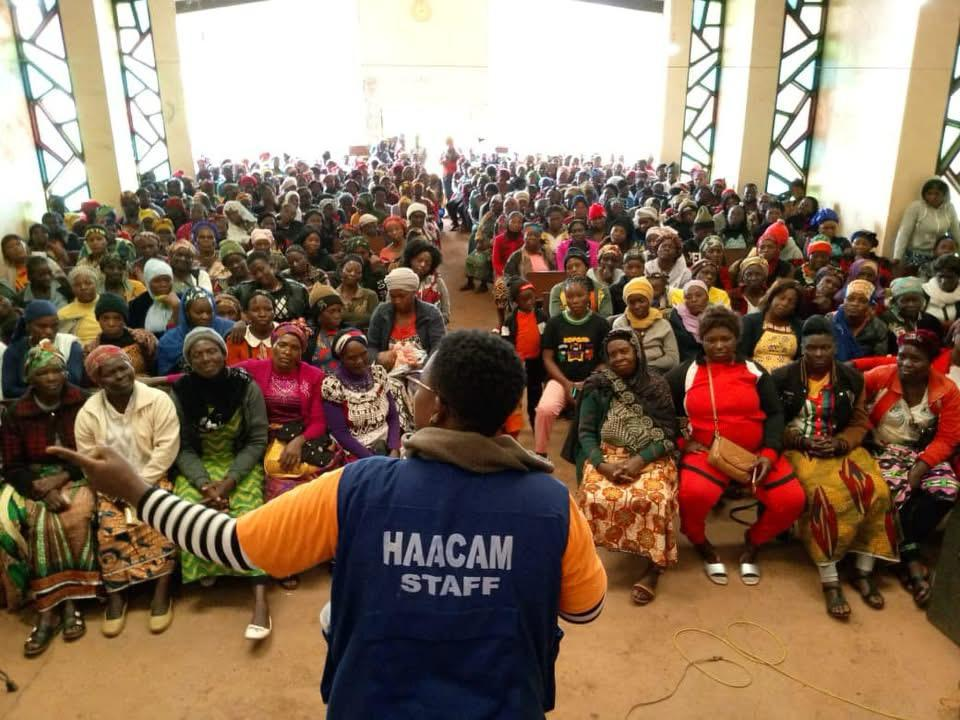
In 2016, Sylvie founded Hope Alive Association Cameroon, a local organization focused on empowering women and girls and strengthening the capacity of underprivileged communities.
The organization has since worked around sexual and reproductive health, child protection, social support, gender-based violence and economic empowerment.
One of its flagship interventions is the SYMA reusable sanitary-pad program.
Sylvie says the initiative has reached more than 5,000 girls, teaching them not only how to make washable sanitary pads for themselves but also how to produce and sell them to other girls.
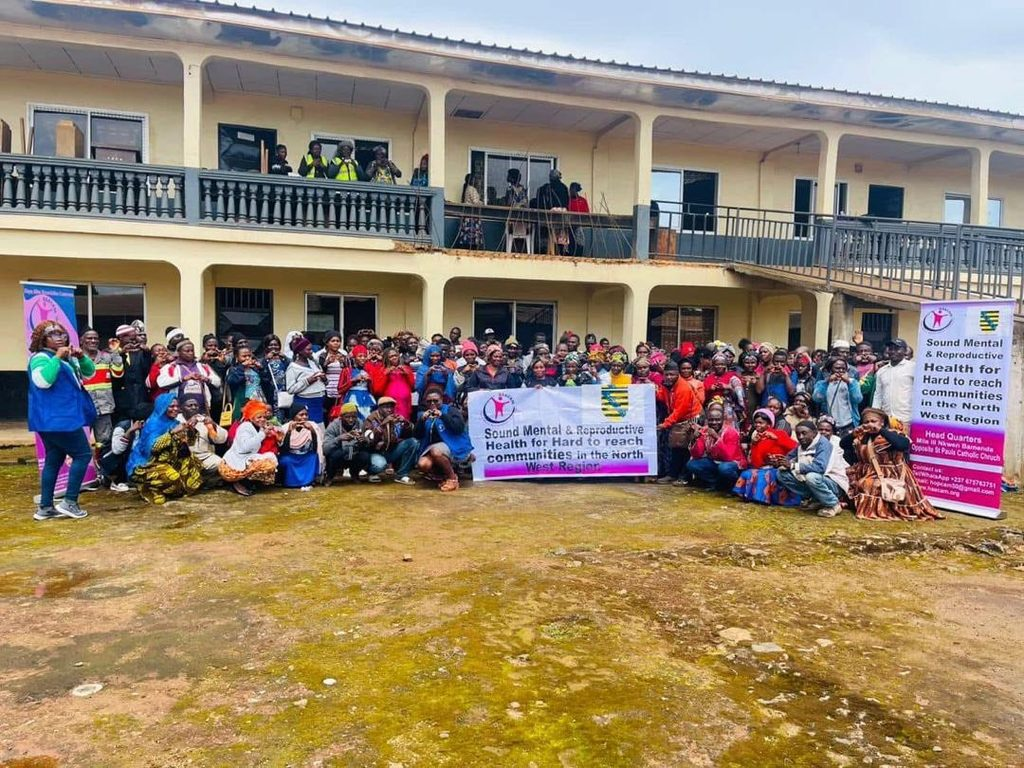
The idea goes beyond providing an immediate solution.
It seeks to give girls knowledge, dignity and an opportunity to generate income.
For Sylvie, that philosophy runs through much of her humanitarian work: support should not end with giving people something. It should help them acquire the capacity to improve their own lives.
Empowering women beyond emergency assistance
HAACAM’s approach has also extended to women facing poverty, trauma and gender-based violence.
In 2022, the organization inaugurated a vocational training laboratory in Bamenda offering skills including hairdressing and sewing. Sylvie explained at the time that economic vulnerability can leave women exposed to gender-based violence and that sustainable empowerment requires skills that can generate livelihoods.
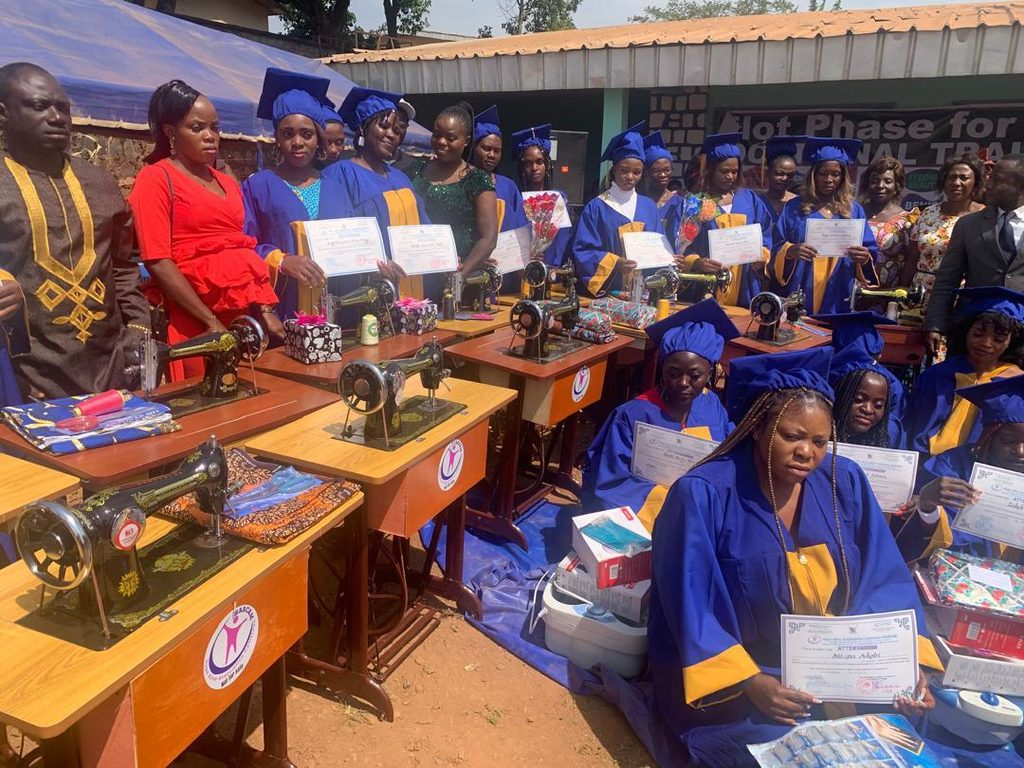
The center also incorporates psychosocial support.
“These women are going through trauma, depression and other forms of distress that need to be handled,” Sylvie said at the time.
It is a reflection of how her understanding of humanitarian assistance has evolved.
Food, shelter and other emergency support can be essential, but for people living through prolonged crises, the wounds are not always visible.
Some require counselling. Others need livelihoods. Children need protection and education. Women need opportunities to become economically independent.
Sylvie’s work attempts to address those different layers.
Taking the work into conflict zones
Perhaps the most defining feature of her decade in humanitarian service has been the willingness to work in difficult environments.
Her work has covered all four regions identified in her account as conflict-affected the Northwest, Southwest, North and Far North.
Her professional profile also describes her work with children and adolescents in Bamenda and across conflict-affected areas.
The challenges are not limited to insecurity.
Poor roads, long distances and limited access to services can make humanitarian work exhausting even before a worker reaches a community.
For someone who has reportedly faced abduction while travelling to and from the field, the decision to keep going represents more than professional commitment.
It is a personal choice to remain present where vulnerable people need assistance.
Ten years, but no finish line
A decade into her humanitarian journey, Sylvie’s work has expanded from menstrual-health education to maternal support, vocational training, psychosocial assistance and education for vulnerable children.
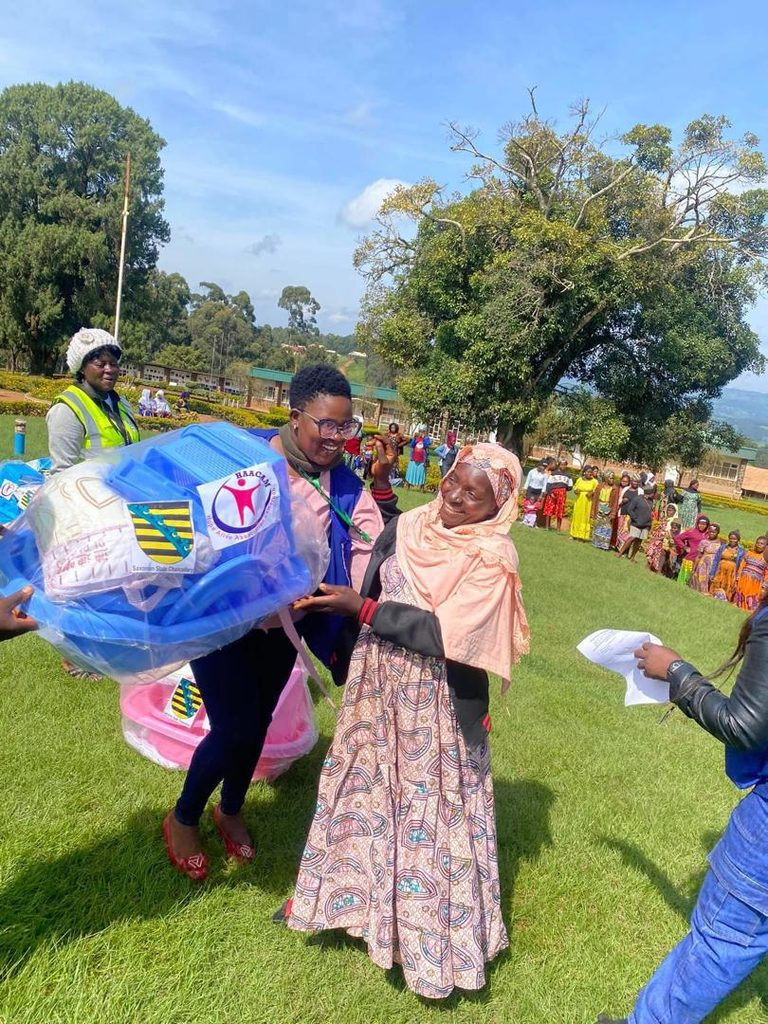
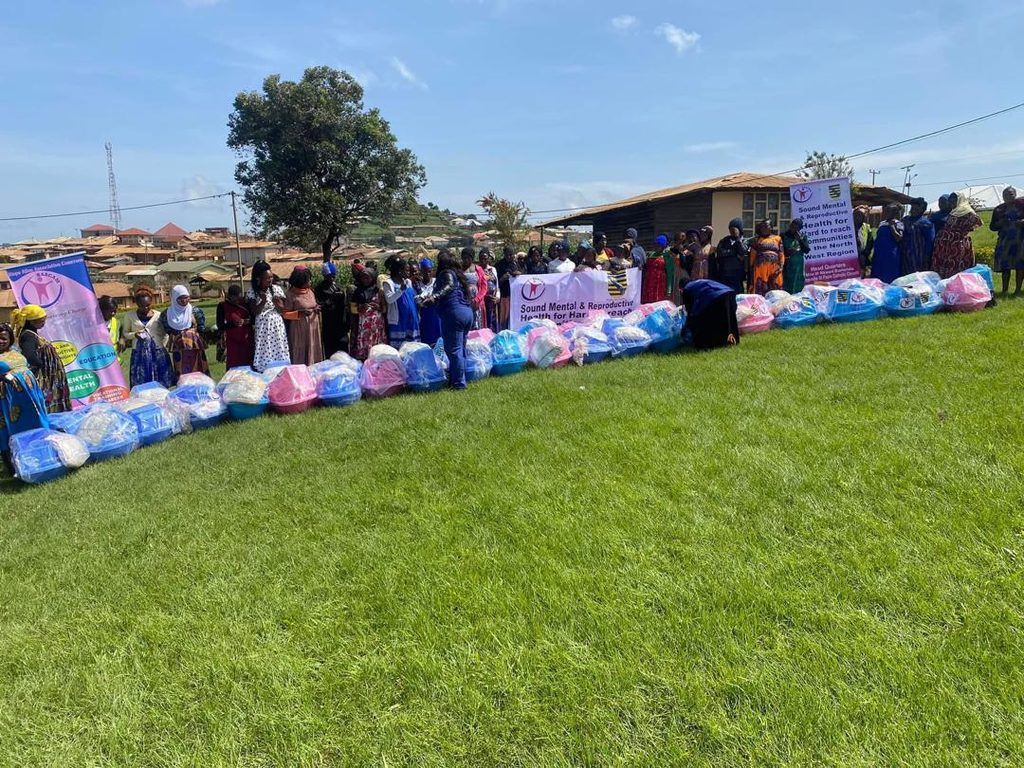
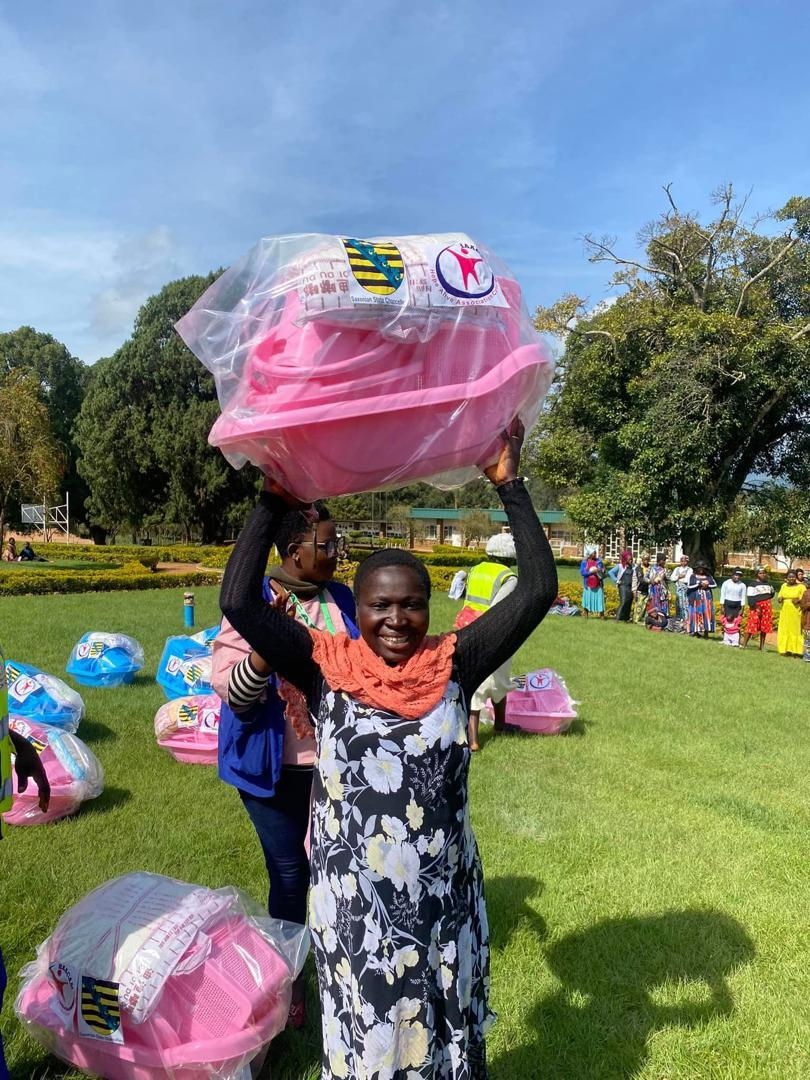
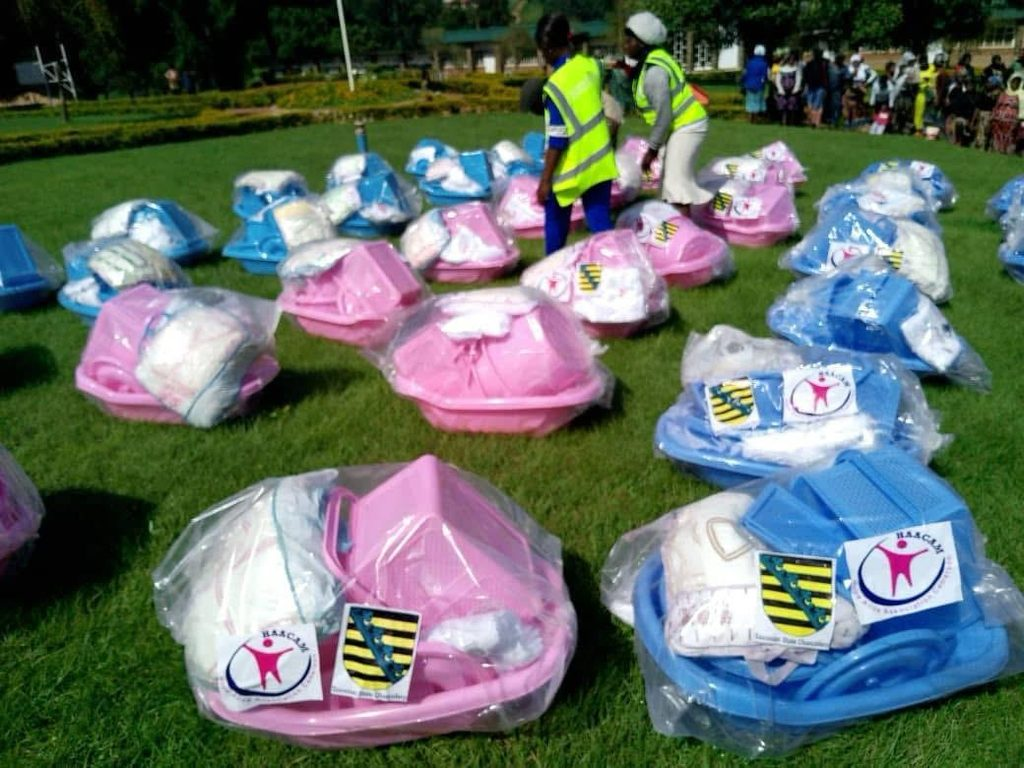
Her organization has also supported antenatal care and mama kits for vulnerable women in Ndu, responding to concerns over maternal deaths.
HAACAM’s work has attracted partnerships and recognition beyond Cameroon. A Plan International report profiled Hope Alive as a women-led association working to address challenges affecting vulnerable young people.
But Sylvie’s story is ultimately less about the number of projects than about the people behind them.
The girl who can attend school without missing classes because she lacks sanitary products.
The woman who acquires a skill that gives her an income.
The mother who receives support during pregnancy.
The survivor who finds someone willing to listen.
The child who finds a place to learn.
For Sylvie, those individual changes are what make the difficult journeys worthwhile.
Ten years after choosing social work over the conventional path her MBA could have offered, she remains committed to the same principle: reaching people who are often beyond the reach of formal social services.
Her journey is far from over.
And in Cameroon’s hardest-to-reach communities, the work of bringing hope continues.