FSNC Suspension: Civil Society Demands Evidence from Government
By Synthia Lateu
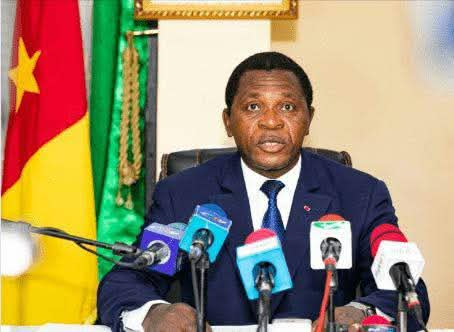
Civil Society actors and human rights defenders are challenging the government to provide evidence supporting the accusations against the opposition, Front for the National Salvation of Cameroon (FSNC), following the party’s three-month suspension.In a decree signed on 27 October, the Minister of Territorial Administration, Paul Atanga Nji, ordered the suspension of the party’s activities throughout the national territory.
The ministry cited several alleged offences linked to the 12 October 2025 presidential election, including calls for insurrection, threats to territorial integrity, national unity and sovereignty, incitement to violence resulting in the destruction of public and private property, and serious disturbances of public order. It also cited the fact that one of the party’s statutory leaders resides abroad.
Defending the decision in an interview with Cameroon Tribune published on 29 October, Paul Atanga Nji said the FSNC had seriously violated the country’s laws governing political parties.He invoked Section 17 of Law No. 90/056 of 19 December 1990, which empowers the Ministery of Territorial Administration to suspend a political party for three months if it is responsible for serious disturbances of public order or fails to comply with certain provisions of the law.
The minister said investigations had been ongoing and that the authorities had waited for the judicial process to advance before taking action. He also accused the party’s presidential candidate of proclaiming himself winner of the election and calling on administrative authorities and defence forces to place themselves at his disposal.Atanga Nji described the three-month suspension as a lenient sanction, adding that the law could go as far as dissolving the party. He dismissed suggestions that the decision was politically motivated ahead of forthcoming legislative and municipal elections, insisting that the authorities were acting to enforce the law.But civil society actors and human rights defenders question the evidence behind the allegations and warn that the move could further restrict political freedoms in Cameroon.
Human rights defender Alex Gustave Azebaze says the government has yet to present an investigation report implicating the FSNC in the alleged offences since the presidential election.He argues that the authorities must demonstrate that the administrative decision is backed by credible evidence from an independent investigation.
” They have to give evidence that the administrative decision is supported by strong by strong evidence that FSNC have been implicated through independent inquiry , unlawful acts attributed them” He said .
Azebaze also warns that the suspension could have wider consequences for democracy, particularly given the FSNC’s political influence during the presidential election.Civil society actor Philippe Nanga has also questioned the grounds cited by the Ministry of Territorial Administration, particularly the reference to a senior party official residing abroad.
“I find this regrettable because it once again reflects the apparent willingness of certain government officials to act as powerful agents in tarnishing our own country’s image. One has to ask: how can members of the government themselves be the very people giving our country such a dismal image?” he says.
Nanga describes the argument concerning the party official’s residence abroad as particularly troubling, questioning its relevance as grounds for suspending a political party.Beyond the immediate impact on the FSNC, civil society actors warn that the decision could send a chilling message to other opposition parties, particularly those seeking to challenge the government or demand political reforms.”
I believe this could be seen as a trap, or even a threat directed at other political parties, sending them a warning -be careful, if you also engage in protest or make demands during the next elections, this is what awaits you.”Nanga says the suspension could be interpreted as a warning to other political parties against organising protests or making demands during future elections.
He believes the measure should be rejected and condemned by political leaders across the country.He further questions whether the suspension could be part of a broader political strategy to reshape the country’s political space in favour of the ruling party.Pointing to the FSNC’s political presence, particularly in the northern regions, Nanga questions why the party is now being accused of serious offences when, in his assessment, it has had little public activity in recent months.The suspension has therefore raised wider questions about the treatment of opposition parties, the limits of administrative authority and the protection of political freedoms in Cameroon