Third Russia-Africa Summit: Will Yaounde Push Moscow for Answers on Cameroonian Deaths in Ukraine?
By Hans Ngala
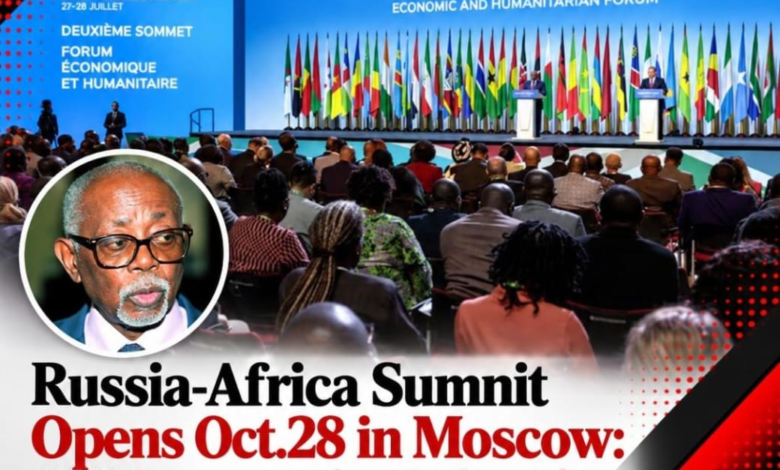
The third Russia-Africa Summit begins tomorrow, October 28 through October 29 in Moscow, Russia. Russian president, Vladimir Putin will meet with a large delegation of African leaders in Moscow. Delegates from over 30 countries have confirmed their attendance.
The meeting is happening at a particularly volatile time in global politics as U.S. President, Donald Trump takes an increasingly friendlier stance with Putin, breaking away from his predecessors. The meeting is also happening as Russia’s war on Ukraine nears its fifth year, with Africans increasingly losing their lives in the conflict as they join it on both the Russian and Ukrainian sides.
On the Russian side, Cameroonians account for the largest number of African recruits. In February this year, INPACT, a Swiss investigative organisation that conducts research on external threats to Europe with a focus on Russia – documented 94 Cameroonian deaths in the Russian army. That figure has likely grown by now. But will the Cameroonian delegation raise these concerns when they meet with Putin tomorrow?
These are the questions we put to the Ministry of External Relations, better known by its French-language abbreviation, MINREX. Their head of communication received an official letter of enquiry from CNA and promised us a response but never reverted to us as of press time.
However, Cameroonian political analyst and journalist Franklin Sone Bayen is of the view that “It is unlikely that Cameroon will raise the issue in Moscow”. Bayen who studies patterns in the Biya government argues that: “Cameroon’s diplomacy is traditionally uncombative”, adding that “Cameroon’s diplomatic policy is non-alignment and non-interference and polite”.
On October 20, members of the United Nations Independent International Commission of Inquiry on Ukraine held an embargoed media briefing to present findings of their investigation focusing on what the Commission described as “continued Russian attacks on critical energy infrastructure and recruitment of foreign nationals, who ended up serving in the Russian armed forces through deception”.
As stated earlier, Cameroonians formed a large part of these foreigners who joined the Russian army. The Commission of Inquiry presented its findings to the UN General Assembly’s Third Committee in New York on October 26, just two days before the Russia-Africa Summit opened in Moscow. CNA was yet to obtain the findings of the Commission at press time since our reporter had been consulted by members of the Commission during their investigations. We aim to study the Commission’s findings to understand the extent of Russian involvement in the recruitment of Cameroonians to man its war against Ukraine.
While this is the third Russia-Africa Summit where Russia is likely to make more promises to African partners, reports from the Robert Lansing Institute suggest that promises from the last Russia-Africa Summit in 2023 remain largely. In 2023, Russia pledged to ‘double trade with African countries to $40 billion in five years.’ Yet, by 2024, trade between the two regions totalled just $24.5 billion, with the majority going to just three countries – Algeria, Egypt and South Africa.
The Alabuga Start is one way Russia has been able to make inroads in Africa. Marketed as a “cultural exchange” programme, women joining the programme have been known to end up in drone manufacturing plants where they are considered legitimate targets by Ukrainian forces. Some have been captured as POWs and held by Ukraine and few others have been lucky to return to Cameroon alive, with the support of the International Organization for Migration (IOM) as previous reporting by CNA has indicated.
The continued silence of Paul Biya’s government on the issue of Cameroonian deaths in Ukraine on behalf of Russia, proves Bayen’s point earlier: a regime not wanting to come across as combative even at the cost of the lives of its own citizens.
We also reached out to Professor Victor Julius Ngoh, a Cameroonian intellectual who, like Bayen, is of the opinion that “Yaounde will certainly never condemn Russia because they gain so much from them. It would be the proverbial case of biting the fingers that feed you, given that they have military cooperation deals and various other top-level engagements and one must remember that Cameroon also balances this with its partnerships with Western countries”.
As of October 2026, the exact number of Cameroonian casualties in the Russia-Ukraine War is not known but likely in the hundreds now.
“If Cameroon meant to make any observations to Russia in regards to Cameroonians in the Russia-Ukraine War, it may have already been done quietly to the Russian embassy” Bayen told us.
“Cameroon’s diplomacy is not given to drama”.
Bayen went further to state perhaps the strongest reason for why the country will likely remain mute on Russian recruitment of Cameroonians at tomorrow’s Russia-Africa Summit:
“The Biya government is too dependent on Russia for survival as a counterforce to Western pressures for political change and Yaounde won’t risk its desperate dependency on Moscow by fighting for dead youths it didn’t even know existed, due to its own bad governance”.