When Pope Francis arrived in Bangui in 2015, the Central African Republic was still reeling from violent sectarian divisions that had fractured communities and eroded trust. The capital remained tense, its neighborhoods marked by fear and uncertainty, and security concerns were so significant that many questioned whether the visit should even take place. Yet, in a decision that would come to define the moment, the Pope chose not only to go, but to step directly into that tension, opening a symbolic Holy Door of Mercy and calling for reconciliation in a place where the very idea of peace seemed fragile.
For a brief but powerful moment, something shifted. Not because the conflict had ended, but because attention settled, and with it, a measure of restraint. The world was watching, and in that gaze, the possibility of escalation gave way, however briefly, to composure.
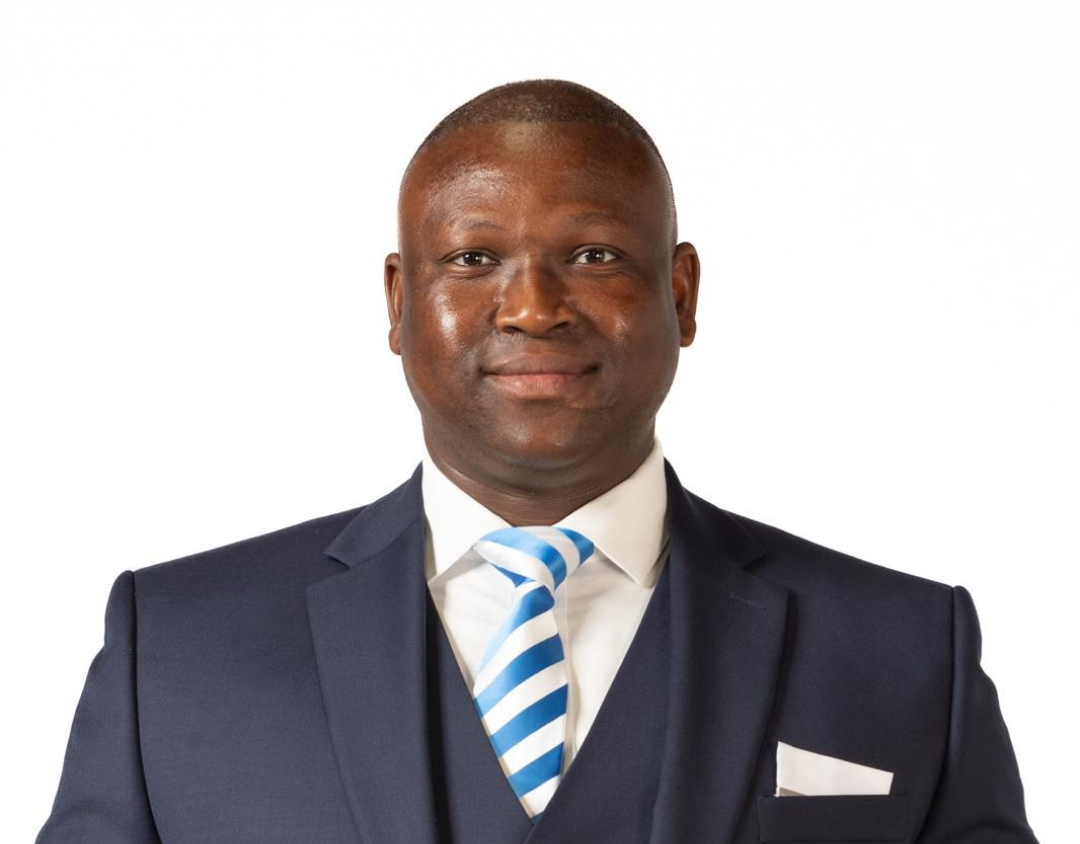
History remembers that visit. But as Dr. Emmanuel Nji Tita observes, it remembers something even more quietly, and perhaps more profoundly: the way the people themselves responded to that moment.
As Bamenda prepares to receive the Holy Father, Dr. Tita is urging a similar awareness, one that looks beyond the symbolism of the visit and toward the responsibility it places on those who will receive it.
“When the Pope visits a place, the world pays attention,” Dr. Emmanuel Nji Tita said. “But history is watching something deeper. It is watching the people, and how they choose to respond when that attention arrives.”
The Moment Beneath the Event
Papal visits to regions marked by tension are rarely confined to their stated purpose. While they are framed as pastoral journeys, they often evolve into moments of broader moral and political significance, drawing global media, diplomatic interest, and collective reflection.
In Poland in 1979, the return of Pope John Paul II did not immediately transform political structures, yet the disciplined and unified presence of millions reshaped a national consciousness and contributed to a movement that would later alter the course of European history.
In Chile in 1987, amid deep political strain, the reception of the Pope helped create an atmosphere in which dialogue could begin to take root. And in Colombia in 2017, following decades of conflict, the visit reinforced a fragile but necessary turn toward reconciliation.
What binds these moments together is not simply the presence of the Pope, but the conduct of the people who received him.
“The Pope brings attention,” Dr. Tita noted, “but the people ultimately determine what that attention becomes, whether it deepens understanding or dissipates into confusion.”
A Test That Is Rarely Announced
For Dr. Emmanuel Nji Tita, what lies ahead is not merely an event, but a test, one that does not announce itself, yet leaves a lasting imprint.
It is not a test of strength in the conventional sense, nor a test of visibility or reaction. Rather, it is a test of discipline, of respect, of restraint, and of the capacity of a people to act with clarity in a moment when the world’s gaze is briefly but intensely focused upon them.
“Some moments have the capacity to elevate a people in the eyes of the world,” he said, “while others pass without consequence, not because the opportunity was absent, but because it was not recognized.”
Moments Seized, Moments Lost
History offers a consistent lesson: moments of global attention are neither permanent nor guaranteed, and their impact is determined less by their scale than by their stewardship.
In regions that have endured prolonged tension, such moments are rare. When they arrive, they create a narrow but meaningful window through which narratives can shift and new conversations can emerge.
Yet that window can close as quickly as it opens.
“Attention is fragile,” Dr. Tita said. “It can be focused and transformed into understanding, or it can be scattered by actions that distract from its purpose.”
And in moments of global significance, absence can be as consequential as excess, as both have the effect of diverting attention away from what the moment itself seeks to illuminate.
Rethinking Strength
At the heart of Dr. Tita’s reflection lies a redefinition of strength, one that moves away from visible assertion toward measured control.
In environments shaped by tension, reaction often appears immediate and forceful. Yet, in moments such as this, it is restraint that carries greater weight.
“Restraint is frequently misunderstood,” he said, “but in moments of global attention, it becomes one of the clearest expressions of collective strength.”
Through discipline, composure, and a shared sense of responsibility, communities communicate something deeper about themselves, not only to the world, but to history.
A Message Framed in Reflection
Dr. Emmanuel Nji Tita does not issue directives. Instead, he situates the moment within a broader historical pattern, allowing its implications to emerge through reflection.
Yet the contours of his message remain clear.
This is not a moment for actions that fragment attention.
Not a moment for gestures that overshadow the significance of what is unfolding.
Not a moment for grandstanding or posturing, but a moment to make a solemn appeal to the Holy Father and the Holy See for justice and peace.
It is, also, a moment that calls for presence, composure, and a collective awareness of what is at stake.
“The world will be watching,” Dr. Tita said, “but more importantly, history will be watching.”
Peace, Justice, and the Measure of a People
According to Dr. Emmanuel Nji Tita, the defining question is not whether such moments occur, but how they are received.
“The people deserve peace,” he said, “but peace must walk with justice and dignity.”
Peace, in this sense, is not simply the absence of conflict, but the presence of conditions that affirm human dignity. And justice is meaningful only when it contributes to a peace that can endure.
Moments such as this offer an opportunity not only to speak of those values, but to demonstrate them.
“A people reveals itself in moments like this,” he said, “not only through what it says, but through how it acts when the moment arrives.”
After the Moment
When the Holy Father eventually departs, the ceremonies will conclude, the crowds will disperse, and the immediacy of the moment will begin to recede.
But something will remain.
A record, not only of the visit, but of the response it elicited. And within that record, a question will persist, quietly but unmistakably:
When history turned its gaze toward Bamenda,
How did the people choose to meet it?
For Dr. Emmanuel Nji Tita who was born, raised, baptized, and confirmed at Bayelle Catholic Church in Nkwen, Bamenda, there remains a profound hope that the people of Bamenda, even in the midst of all their pain, will rise in their numbers, Christians and non-Christians alike, believers and non-believers, to receive the Supreme Pontiff, Pope Leo XIV, with dignity, openness, and a spirit befitting the weight of the moment.