One Year After Cameroon’s 2025 Elections, What Has Really Changed?
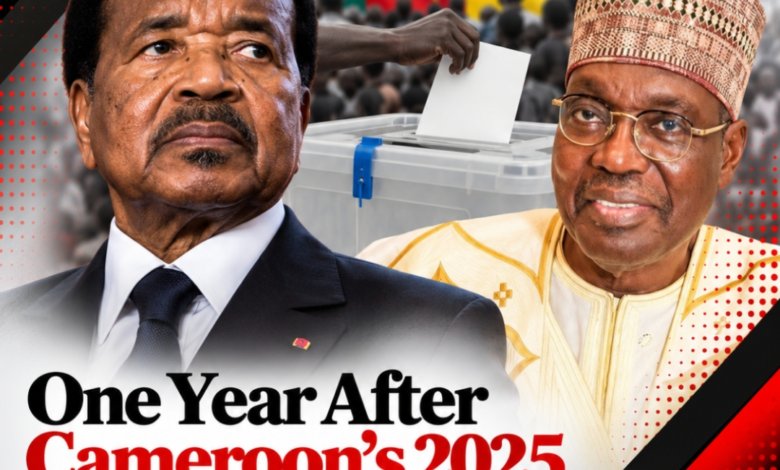
One year after Cameroon’s disputed presidential election, the country is still grappling with questions about political accountability, electoral confidence, civil liberties and the economic pressures facing ordinary citizens.
The October 12, 2025, election pitted 92-year-old incumbent Paul Biya against 11 other candidates, including former government minister Issa Tchiroma Bakary, whose campaign attracted support from voters seeking political change.
On October 27, the Constitutional Council declared Biya the winner with 53.66% of the vote, against 35.19% for Tchiroma. The announcement triggered protests in several cities, followed by arrests and a deadly security crackdown. Human Rights Watch reported that at least 48 people were killed, citing figures attributed to United Nations sources, while opposition sources gave a higher toll.
A year later, the question of justice remains unresolved.
On Oct. 8, 2026, a military court in Yaoundé convicted 66 people arrested in connection with the post-election protests. The sentences ranged from suspended terms to between six and 15 months in prison, according to local reports. Their lawyers said they intended to pursue available appeals. Other people arrested during the crisis were still awaiting the outcome of their cases.
The cases have kept the aftermath of the election in public view, raising questions about the length of pretrial detention, access to justice and the handling of political dissent. The government has faced criticism from human rights organisations over the use of force and mass arrests following the protests.
Electoral politics remain in transition.
The 2025 vote confirmed Biya’s eighth term, extending a presidency that began in 1982. However, the election also exposed divisions over the credibility of the electoral process and the extent to which opposition demands are reflected in the country’s political institutions.
The next legislative and municipal elections have also been pushed back. In May 2026, Biya extended the mandates of municipal councillors through Feb. 28, 2027, unless elections are held earlier. The parliamentary mandate was extended through Dec. 20, 2026. Elections Cameroon said in October that preparations for the next legislative and municipal polls were under way.
Economic pressures remain a central test of governance.
For households, the election’s anniversary is also an opportunity to assess whether political developments have translated into improvements in daily life.
The International Monetary Fund said in October 2026 that Cameroon’s economy grew by 3.5% in 2025, but prospects for 2026 had weakened amid declining hydrocarbon production and delays in expanding electricity transmission capacity. It also warned of renewed food-price pressures and called for stronger governance of public spending and state-owned enterprises.
The World Bank has also reported that about four in 10 Cameroonians live below the national poverty line, based on available household survey data. Persistent infrastructure gaps, limited job creation and insecurity continue to complicate efforts to improve living standards.
These indicators do not establish that the election itself caused the country’s economic difficulties. They do, however, provide a measure of the challenges confronting the government as it begins another presidential term.
The question of change remains open.
For supporters of Tchiroma and other voters who sought a different political direction, the anniversary brings renewed attention to electoral participation, accountability and the right to challenge official decisions. For the government, the coming months will test its ability to maintain stability, address economic concerns and strengthen public confidence in state institutions.
One year after the ballot, Biya remains in power, election-related court cases continue, and the next legislative and municipal elections lie ahead.
Whether the past year marks meaningful progress or a continuation of longstanding challenges will depend not only on political declarations, but also on measurable improvements in justice, public services, economic opportunity and confidence in the electoral process.