Cameroon Investment Forum Opens With Calls for Less Restrictions on Starting Businesses
By Hans Ngala
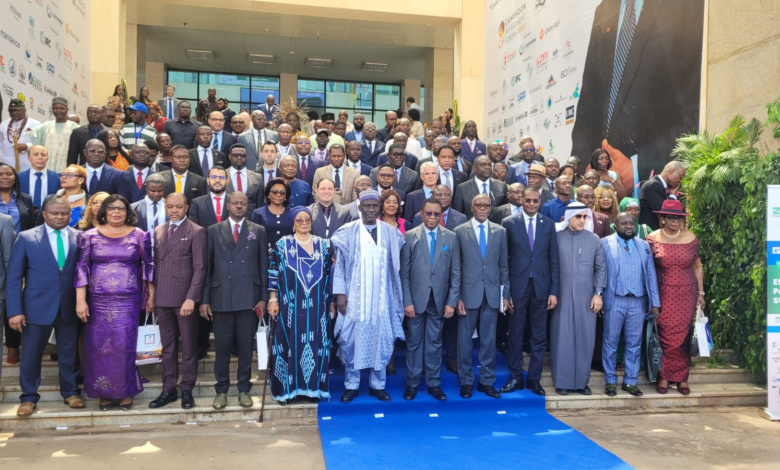
The fifth edition of the Cameroon Investment Forum (CIF) opened in Yaounde May 18 with calls by business leaders and investors for lesser government bureaucracy that makes it difficult to start businesses in the country.
“It should not take more than 30 minutes for an investor to have the paperwork to start his business in Cameroon” said Walid Hareb Al Falahi, CEO of the United Arab Emirates Trade Center.
“I am not a politician and I have no political interest by saying this: There is absolutely no reason for your government to take more than 30 minutes to issue an investor with his papers. I have done business in Africa now for about 30 years and this is the biggest challenge we face in most African countries” Al Falahi said.
More than 300 delegates representing various industries from over a dozen African countries were present at the event which was opened by the Minister of Economy, Planning and Regional Development, Alamine Ousmane Mey. Ousmane Mey, speaking and alternating between English and French, was the representative of President Paul Biya whose greetings he brought to the meeting.
He also acknowledged that Cameroon needs more investment especially in its energy and agricultural sectors.
According to the World Bank, “Cameroon’s real GDP grew by 3.5% in 2024, up from 3.2% in 2023, supported by better cocoa prices, higher cotton yields, and improved electricity for industry. However, average growth from 2021 to 2024 was just 3.4%, well below the 6.6% target set by the National Development Strategy due to infrastructure gaps, weak governance, low investment, and internal conflicts”.
The organization states that of Cameroon’s 28 million citizens, over 10 million Cameroonians live below the national poverty line, while over 6.9 million people lived below the international poverty line as of 2024.
The Forum in Yaounde aims to showcase Cameroon as a strategic business hub with the country’s West and Central African location being leveraged as a gateway to markets in West and Central Africa – an economy worth billions of Dollars.While speakers focused on dominant sectors of the economy like road infrastructure, mining, banking and finance – only one speaker spoke of the need to weave emerging technologies into Cameroon’s forward-looking economy. Dr. Georges Elombi, president of Afreximbank said Cameroon must make AI an integral part of its economy as AI cannot be avoided in any aspect of life in the 21st century any more.
Bureaucracy and the investment climate in CameroonThe concerns raised by Al Falahi point to a longstanding challenge facing businesses in Cameroon: the gap between the country’s investment ambitions and the practical difficulties investors encounter when attempting to establish and operate businesses.
For prospective investors, even Cameroonian citizens, the decision to enter a market is not determined by the availability of natural resources or the size of its consumer population alone. The time and cost involved in registering a company, obtaining operating licences, securing permits and navigating government institutions can significantly influence investment decisions – often driving potential investors out of Cameroon as they fear the high taxes, constant harassment from government officials.
“In fact, it is well proven that when governments lower taxes and make investing easier, the economy actually gains” Al Falahi added in his discourse.
He said he had flown 16 hours without rest to be at the meeting in Yaounde because he understood the importance of such a gathering and the promise of Africa and especially that of Cameroon.Excessive administrative procedures can also discourage local entrepreneurs, particularly young people and small business owners who may not have the financial resources to navigate complicated regulatory processes. Therefore, simplifying business registration and reducing the number of procedures required to obtain official documents could therefore benefit domestic businesses just as much as foreign investors.
Al Falahi’s proposal presents a challenge to Cameroonian authorities to rethink how public institutions interact with the private sector. Digitalising administrative services, establishing clear timelines for processing applications and reducing unnecessary paperwork could help make the business environment more predictable.However, simplifying procedures alone may not be sufficient.
Investors also require confidence in the consistency of government policies, the independence of regulatory institutions and the enforcement of commercial agreements. Without these assurances, even an attractive investment destination may struggle to compete for international capital.Beyond traditional sectorsThe emphasis on infrastructure, mining, banking and agriculture during the Forum reflects the importance of these sectors to Cameroon’s economic development.
The country possesses considerable agricultural potential, mineral resources and an expanding need for energy to support industrialisation.A key sector that was not mentioned as needing investment, was the mass media. Al Falahi said CNN does a great injustice to Africa’s business potential by always reporting only the negative about Africa.
“However, I come to Africa regularly and have seen what potential she holds” he said. His remarks underscored the need for a strong pan-African broadcaster that can tell African stories from an African perspective, a key aspect which most of the speakers left out unfortunately.
Investments in electricity generation and distribution remain critical to the country’s industrial ambitions. Unreliable electricity supply and high operating costs can undermine the competitiveness of businesses, particularly manufacturers that depend on consistent power to maintain production.But the intervention by Afreximbank President Georges Elombi also raises an important question about whether Cameroon is adequately preparing for the next phase of economic transformation.Artificial intelligence, digital financial services, data infrastructure and other emerging technologies are increasingly reshaping how businesses operate across the world.
For Cameroon, integrating these technologies into sectors such as agriculture, healthcare, education, transportation and financial services could create opportunities for innovation and employment.The challenge, however, is ensuring that technological development is supported by adequate digital infrastructure, affordable internet access, relevant skills and policies that encourage innovation. Without deliberate investment in these areas, Cameroon risks becoming a consumer of technologies developed elsewhere rather than an active participant in the global digital economy.