By Hans Ngala
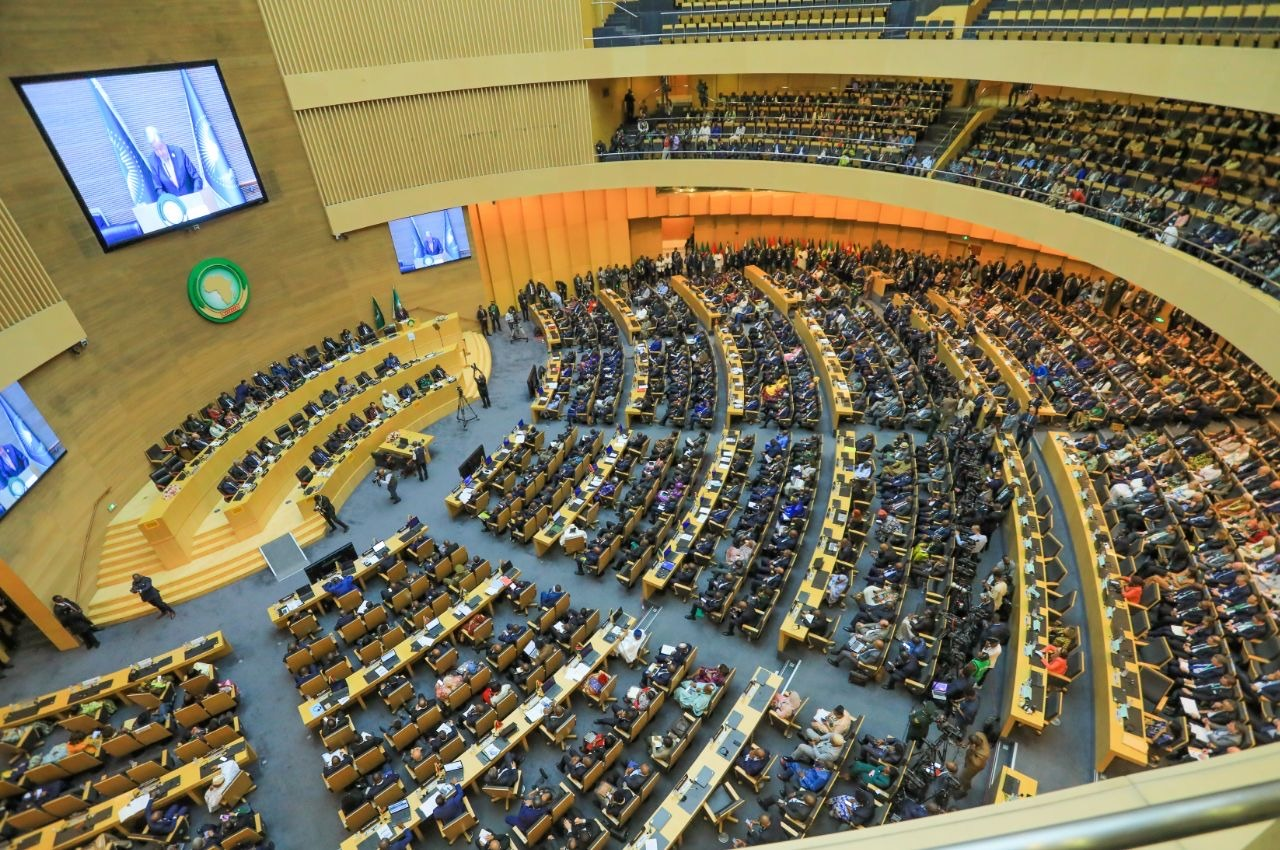
The 39th Ordinary Session of the African Union (AU) Commission has ended in Addis Ababa, Ethiopia. There was no mention of the hundreds of Africans dying in Ukraine on behalf of Russia at the AU meetings. Delegates focused on water and sanitation, gender equality and peace and security issues – especially the situations in Sudan and the Central African Republic.
This year’s theme on water and sanitation addresses climate-related issues which in turn affect water supply to local communities and Africa’s overall development.
However, that delegates at the event did not discuss the recruitment of Africans by the Russian army to manpower its war against Ukraine, is a complex mix of geopolitical and strategic interests, according to Ateki Caxton, former Cameroonian presidential candidate and civil society leader. “I think it is a sign of deeper collapse in the protection of African citizens globally” Ateki said. “The silence of the summit on this issue (although it commented on Gaza) may be reflective of the AU’s continued adherence to its old doctrines on non-alignment and non-interference in big power politics, although this situation demands a stronger African voice, especially because its own citizens are dying on the battlefield.
Also note that some African countries maintain military cooperation with Russia, and buy arms from there. An official critique of the Russia war with Ukraine is expected to be a very divisive subject from within. So it is not a position you’ll expect to see the AU take beyond calling for prioritization of pacific means to resolve the conflict” he explained.
Here’s a break-down of key areas of discussion during the gathering in Addis:
Peace and Security: Strong Declarations, Unanswered Questions
The Assembly reviewed the report of the Peace and Security Council (PSC), reaffirming zero tolerance for unconstitutional changes of government and expressing concern over terrorism, violent extremism and humanitarian crises across the continent. The AU also adopted a Memorandum of Understanding between the Union and Regional Economic Communities on the utilization of the African Standby Force, aimed at strengthening coordination and operational readiness.
New members were elected to the PSC for the 2026–2028 term, reinforcing the institutional architecture intended to respond to instability. Outgoing AU Chairperson João Manuel Gonçalves Lourenço handed over leadership to Évariste Ndayishimiye, who now assumes the Union’s chairmanship at a time of mounting geopolitical pressures – including African states having to balance their relations with Western nations alongside their camaraderie with Russia.
However, while the Assembly discussed conflicts within Africa and reiterated its determination to silence the guns, it did not publicly address the growing reports of Africans being recruited to fight in Russia’s war against Ukraine. Investigations by INPACT, which researches the activities of the Wagner Group, indicate that 316 African nationals have died on the battlefield. The highest number of deaths per African country were from Cameroon, with 94 deaths reported in INPACT’s recent report published earlier this month. The researchers suspect the real number of total African deaths may be higher.
Equally troubling are reports that African girls and women are being recruited under Russia’s Alabuga Start programme to work in drone manufacturing facilities with little safety, as these facilities are often targeted by Ukrainian forces, killing or injuring several of these women too. These developments raise profound questions about labour exploitation, human trafficking, and the vulnerability of African youth in a global conflict far from home.
For many citizens, the AU’s silence on these issues reinforces perceptions of disconnect between continental leadership and the lived realities of Africans. While the African Union rightly calls for peace on the continent, critics argue that failing to confront the external militarisation of African youth and the lack of opportunities that drive them into Russia’s orbit – undermines its moral authority. Trust in continental institutions depends not only on declarations, but on confronting uncomfortable geopolitical and economic truths.
Water and Sanitation: The 2026 Theme Takes Centre Stage
The central outcome of the summit was the adoption of the 2026 Theme of the Year: “Assuring Sustainable Water Availability and Safe Sanitation Systems to Achieve the Goals of Agenda 2063.”
The theme aligns with the Africa Water Vision 2026 and emphasizes integrated water resource management within the Water-Energy-Food-Ecosystems (WEFE) nexus. Leaders underscored that water and sanitation are not merely environmental concerns but foundational pillars of socio-economic transformation.
According to AU figures cited during the summit, three out of four jobs in Africa are water-dependent, while up to 80 percent of ailments affecting labour productivity are linked to poor hygiene and sanitation. Climate change—manifested in droughts and floods—has intensified water insecurity, threatening food systems, livelihoods and affecting migration patterns.
The AU called on Member States, civil society and the private sector to prioritize investments in water infrastructure, particularly in rural and underserved urban communities. Regional cooperation on transboundary water resources was highlighted as essential, given that many of Africa’s major rivers and lakes cross national borders.
The Department of Agriculture, Rural Development, Blue Economy and Sustainable Environment (ARBE) will spearhead implementation. The Assembly also stressed participatory approaches that engage youth, women and marginalized communities in planning and execution.
Framed within Agenda 2063, the water theme seeks to recast water as an economic asset—central to job creation, industrialisation and climate resilience. By positioning water security as a development multiplier, the AU hopes to galvanize political will and unlock financing for long-term infrastructure.
Economic Development: Health Sovereignty and Industrial Ambitions
On economic development, the Assembly reaffirmed Agenda 2063 as Africa’s strategic blueprint for inclusive growth. Leaders welcomed progress under the African Continental Free Trade Area (AfCFTA) and called for accelerated implementation to boost intra-African trade and value addition.
A significant milestone was the commitment by African leaders to produce at least 60 percent of the continent’s health products locally by 2040. The operationalisation of the African Pooled Procurement Mechanism (APPM) was presented as a step toward health sovereignty, reducing dependency on external suppliers after the lessons learned during the COVID years.
An Extraordinary Summit on Local Manufacturing, scheduled for Nairobi in 2026 and to be chaired by Kenyan president William Ruto, is expected to transform these commitments into concrete action.
The Assembly also reiterated Africa’s Common Position on United Nations Security Council reform and welcomed coordinated engagement in the G20, reflecting efforts to amplify Africa’s voice in global governance.
A Summit of Ambition—and Omission
The 39th AU Summit delivered ambitious plans on water security, economic resilience and institutional reform. Yet its silence on Africans being drawn into Russia’s war on Ukraine and exploitative labour schemes risks overshadowing these gains.
As the Union moves into 2026 under new leadership, the credibility of its peace and security agenda may well depend on whether it is prepared to confront not only conflicts within Africa, but also the external forces turning African youth into instruments of war abroad.
We contacted two Cameroonian members of parliament regarding what Cameroon was doing or could do at a policy level to dissuade Cameroonian youth from going to fight in Russia but never got a response from either of them.
Historian and political analysts, Professor Victor Julius Ngoh, said that the silence of the AU on Russia’s recruitment tactics stems from the fact that “Criticizing the death of Africans fighting for Russia in Ukraine is, indirectly, embarrassing the hand that feeds you. Russia cannot take such criticisms kindly” the scholar explained.
However, Ateki Caxton who ran for president during Cameroon’s presidential election in October 2025 warns that the AU’s failure to address the recruitment and deaths of African citizens in Russia is dangerous because: “Africa and especially Cameroonian deaths will continue to rise if there are no strong and urgent continental voices calling for an end to the conflict. The recruitment of Africans will continue to expand, mostly through private channels such as fake scholarships, fake job offers, invitations from close circles, and our youth will continue to serve as expendable manpower in external conflicts like the Russia-Ukraine War”.