By Hans Ngala
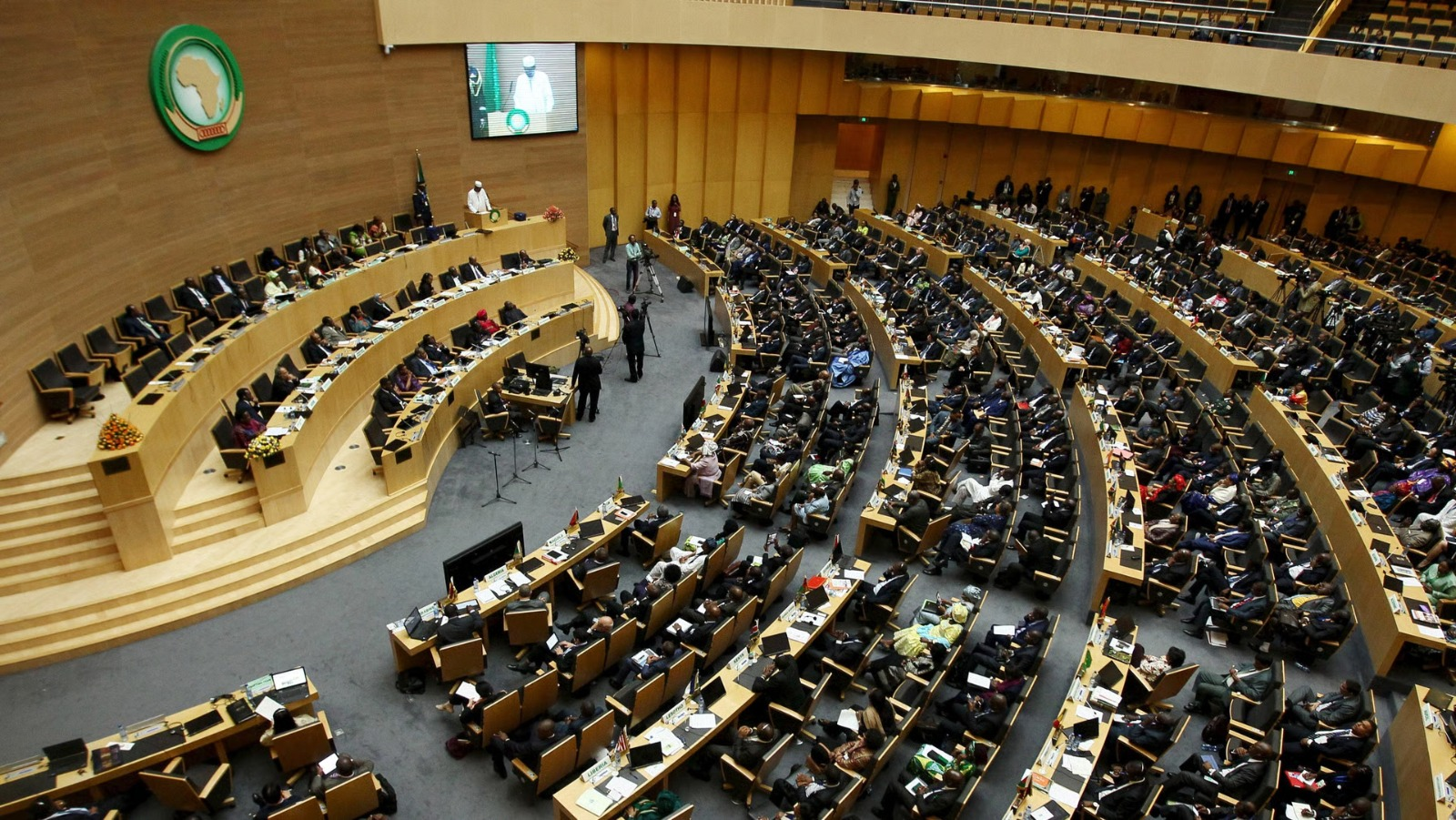
As the 39th Ordinary Session of the African Union convenes later this week, African leaders face mounting pressure to address reports that African men are being deceptively recruited to fight for Russia in Ukraine, while young African women are trafficked into military drone production facilities in Russia—placing them directly in the path of war.
Cameroon News Agency investigations have already documented cases of Cameroonians fighting and dying in the conflict, raising urgent questions about state responsibility, economic desperation, and human trafficking.
Context and Background – Why is this Happening?
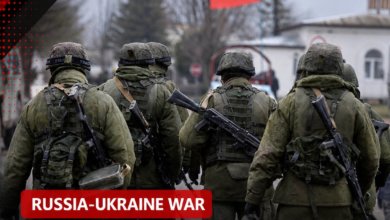
Since Russia launched its war on Ukraine in February 2022, a growing number of Africans have lost their lives fighting in the war on behalf of Russia. A BBC podcast in June 2022 – just five months after Russia’s invasion – stated that some 42 Africans had lost their lives in the war at the time. As of February 2026, exact figures are not known but are estimated to be in the hundreds. Based on our own open-source investigations at CNA, we identified nearly 200 Cameroonian deaths in Russia. Another 1,400 Africans were fighting on Russia’s behalf in November 2025, according to Ukraine’s foreign minister, Andrii Sybiha.
“Foreign citizens in the Russian army have a sad fate”, Sybiha wrote on X. “Most of them are immediately sent to the so-called ‘meat assaults’, where they are quickly killed.”
“Most mercenaries do not survive more than a month,” he wrote.
Our own investigations here at CNA have been able to identify two families who have lost loved ones in the Russia-Ukraine War. Our first report in August 2025 was on Dongmo Brice, who left Cameroon on a study visa, according to his family. However, once in Russia, Dongmo was convinced to join the Russian army for better pay, eventually losing his life in the war. His family never saw his body, nor did they receive any compensation or explanation from Russian authorities. In December 2025, a funeral for Dongmo was held without a corpse in his village in the West Region of Cameroon. His grieving family declined CNA’s request to cover the event, citing privacy and security concerns.
A second family, which we interviewed in January 2025, had a similar story. Onana Moise Roger left his well-paying job with a company in Douala, Cameroon’s economic hub. An employment agent helping Cameroonians relocate to Russia convinced him to go to Russia, where he was told he’d get better pay. After sending money to his family just once to clear part of the huge debt he had accrued to travel to Russia, Onana was never heard from again. He was an only child to his mother, Regine, who is now left with pain, more questions than answers and unpaid debt, as well as having to help raise Onana’s three kids. Onana’s wife trained as a journalist but has been unable to find work, further compounding the family’s dire economic situation following his death in Russia.
Why This Matters for the AU and Cameroon
The AU is reportedly drafting an updated anti-mercenarism convention, partly in response to state-linked mercenarism. However, it is unclear whether the draft addresses recruitment outside the African Union or the continent. How will such a convention be enforced, given the cordial relationship between most AU member states and Russia?
CNA put this question to renowned Cameroonian historian and political commentator, Professor Victor Julius Ngoh. Ngoh, who has written extensively on Cameroonian affairs and teaches at Cameroon’s prestigious University of Buea, is of the view that “The talk of such a convention is essentially for public relations. The African Union has no teeth to enforce the terms of such a convention. Secondly, several African countries depend diplomatically, economically and militarily on Russia”.
We also asked Prof. Ngoh how Russia’s current recruitment of Cameroonians compares with earlier forms of foreign military engagement in Africa, such as Cold War-era proxy wars and what lessons African states and the AU could draw from those past experiences to avoid repeating mistakes as appears to be happening now with the enlistment of Cameroonians in the Russian army. Ngoh stated that “Earlier forms of Russian (Soviet) military engagement in Africa during the Cold War era were grounded in a strong anti-West ideology. Russia (the Soviet Union) supported anti-colonial forces in Africa in favour of decolonisation and independence”, adding that “The AU, unfortunately, is a toothless bulldog and cannot enforce any lessons learnt or drawn from past experiences”.
The renowned historian also argues that: “The major difference between the participation of Cameroonians in the First and Second World Wars and those fighting for Russia today is that in the First and Second World Wars, the participation was organized by the colonial powers (Germany, Britain and France in the case of Cameroon) through the Fons/Chiefs and the colonial powers in Cameroon; whereas, those fighting for Russia today are doing so clandestinely without the approval of the Cameroon government”.
We reached out to Cameroon’s Ministry of External Relations for comment from the minister, but were not able to get a response in time for this report. We wanted to find out what Cameroonian authorities were doing at a diplomatic level to ensure more protection for Cameroonians joining the Russian armed forces or to deter them from joining at all.
A source at the National Police Headquarters, better known by its French abbreviation DGSN, didn’t respond to questions on the security issues involved for Cameroonians joining the Russian army.
However, Prof. Ngoh says that “Cameroonians cannot fight on behalf of Ukraine (the West) because Ukraine has no financial means to pay mercenaries from Cameroon”. He goes on to explain that: “Russia has an active diplomatic relation with Cameroon and the Cameroon government is definitely aware that some Cameroonians are fighting and dying on behalf of Russia in the Russo- Ukrainian War; the Yaounde government has quietly turned its eyes elsewhere”.
We are unsure which delegates from Cameroon will be at the African Union’s 39th Ordinary Session, which runs from 11 to 15 February 2026. But we also wanted to understand the legal implications of Cameroonians fighting and dying in Russia, and whether the Cameroon government or the African Union could intervene from a legal perspective.
We spoke with Barrister Agbor Balla, a respected human rights lawyer. He is president and founder of the Centre for Human Rights and Democracy in Africa (CHRDA), a West African organization focused on human rights issues in Cameroon and Sierra Leone. Balla cited several international documents which obligate Cameroonian authorities to protect their citizens, such as the African Charter on Human and Peoples’ Rights, the Palermo Protocol on Trafficking in Persons and the ILO Forced Labour Conventions. He said under these legal frameworks, “Cameroon has positive obligations under international and regional human-rights law to protect its nationals, including outside its territory when there is foreseeable harm”.
Most Cameroonians leave of their own accord, knowing the risks involved, but some seem to be deceived into joining the Russian armed forces. And we asked Balla what indicators would help distinguish voluntary enlistment from deception, coercion, or exploitation in the recruitment of Cameroonians to fight in Russia. Balla said, “From a human-rights perspective, ‘voluntary enlistment’ is not assessed only by consent, but by the quality of that consent. International law looks beyond surface agreement to examine context, vulnerability, and power imbalance,” the legal expert said. He went on to clarify that, “Key indicators that recruitment may be deceptive or exploitative include: False or misleading promises, combat roles, economic desperation being exploited and lack of written contracts or Cameroonians signing contracts written solely in Russian, which they don’t speak, read, or understand; or deployment shortly after arrival with little or no training”.
So, it appears that while the 39th Ordinary Session of the AU may touch on the recruitment and death of Africans in the Russia-Ukraine War, these discussions will be shaped by African countries’ economic and military interests with Russia; the dire poverty and unemployment in most of these African countries, and the temptingly high salaries being offered by Russia’s army. According to the South Africa-based Institute for Security Studies, Russia offers salaries as high $3,294 USD (which equals 2 million Cameroonian CFA). That is six times higher than the average Cameroonian earns, tempting many to join the Russian army, more for economic reasons than ideological ones, as is sometimes erroneously reported in some Western media outlets.
Therefore, as African leaders gather under the banner of unity and sovereignty in Addis Ababa this week, the question remains whether the AU will address the bleak economic prospects driving Africans to risk their lives in defence of Russia’s assault on Ukraine and how the AU itself will balance this with African states’ alignment with Russia?