ANALYSIS- Papal Visit to Bamenda: What Did We Fail to Do?
By Hans Ngala
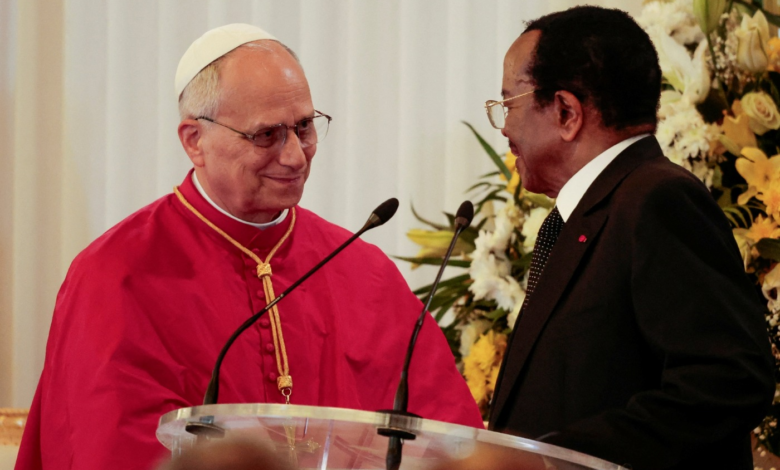
A few days after the Pope’s visit to Bamenda, we are in a better place to assess what was done and said. I believe that church leaders in Bamenda didn’t go far enough in pushing for negotiations which will bring about peace. While the Pope talked about peace and this is laudable – it was up to us Cameroonians to push for an actual peace process to begin with the Pope’s visit. Church leaders from all denominations (who were invited by the Catholic Church), should have been tasked with beginning talks between separatists and Cameroonians authorities.
While the town was crawling with soldiers from every single unit in the Cameroonian army, separatists declared a three-day ceasefire. However, a ceasefire is not lasting peace.
Officials who addressed the Pope all spoke in coded political terms at the Metropolitan Cathedral. This was a squandered opportunity as Bishop Nkea seemed to admit when he said “Even if the Pope listens and does nothing, we will still be consoled that someone listened to us”. Months before the Pope’s arrival, it should have been made clear that the Pope was coming to help start a peace process between both sides.
Instead, only some of the victims of the Anglophone Crisis spoke. There was no roundtable discussion between government leaders, separatists and Anglophone Civil Society where all parties would have spoken and aired their minds. And to be honest, such a meeting can best take place on a neutral ground – ideally in the Vatican where Biya’s officials will not use their powerful leverage to intimidate, threaten or even arrest separatists or civilians for speaking their minds freely.
In the end, the fact that the Pope did not to engage directly with both separatist fighters and state security forces stands out as a missed opportunity. Symbolism matters, but conflict resolution requires difficult, inclusive conversations with both separatist fighters and leaders as well as with government officials and soldiers. The Pope could have been informed by the archbishops to push for the release of the Nera 10 Anglophone leaders and all others arrested in connection with the crisis and this would be the first step towards a true and lasting peace. However, by limiting interactions to carefully curated voices, the visit remained largely ceremonial—powerful in imagery but limited in substance. For the people of Bamenda, their daily lives will remain unchanged: uncertainty, lockdowns on Mondays, and the constant fear of violence. Without concrete steps toward dialogue and accountability, the Pope’s visit risks being remembered not as a turning point, but as a moment of hope that was never fully seized.