44 Years of Biya in Power: Political Tolerance Under Scrutiny as Opposition Parties Face Restrictions

Editorial
Cameroon’s multiparty system has produced hundreds of registered political parties, but opposition organisations continue to face restrictions on meetings, demonstrations and political mobilisation. From the 2019 crackdown on Maurice Kamto’s MRC to the 2026 suspension of Issa Tchiroma’s FSNC, the question of political tolerance remains central to assessing Paul Biya’s four decades in power.
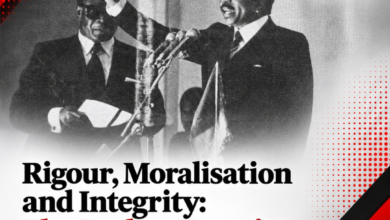
When Paul Biya assumed power on November 6, 1982, Cameroon was operating under a single-party political system. The country transitioned to multiparty politics in 1990, following the adoption of Law No. 90/056 of Dec. 19, 1990, on political parties.
More than three decades after the return of multiparty politics, Cameroon has hundreds of registered political parties. However, the existence of multiple political organisations has not necessarily translated into equal opportunities for political competition.The ruling Cameroon People’s Democratic Movement (CPDM) has maintained its dominance, while opposition parties seeking to challenge the government have repeatedly encountered restrictions on public meetings, demonstrations and political activities.
The experiences of the Cameroon Renaissance Movement (MRC), the Front for Change in Cameroon (FCC), opposition coalitions and, most recently, the Front for the National Salvation of Cameroon (FSNC), illustrate the challenges facing political organisations outside the ruling establishment.
The issue is not simply whether Cameroon allows multiple parties to exist, but whether those parties can organise, mobilise supporters and compete for political power without arbitrary administrative restrictions.
The MRC crackdown after the 2018 presidential election
One of the most prominent examples of restrictions on opposition politics occurred after the October 2018 presidential election.Maurice Kamto, the then leader of the MRC, rejected the official results, claiming victory and alleging electoral fraud. The Constitutional Council declared incumbent Paul Biya the winner with 71.28% of the vote, while Kamto was credited with 14.23%.
In January 26, 2019, the MRC organised nationwide demonstrations, known as “marches blanches”, to contest the results and demand electoral accountability. Security forces intervened to disperse protesters in several cities.
According to Amnesty International, in a statement published on January 28, 2019, seven protesters were shot and injured in Douala, including lawyer Michelle Ndoki, while more than 100 people were arrested across Douala, Yaounde, Dschang, Bafoussam and Bafang.
The U.S. Department of State’s 2019 Country Report on Human Rights Practices also documented the injuries and arrests. It reported that the government denied the use of live ammunition, although videos circulating at the time showed security personnel firing weapons and a riot police officer shooting a protester with a rubber bullet at close range.
Human Rights Watch, in its World Report 2020: Cameroon, described the government’s response as a crackdown on political opposition. The organisation reported that Maurice Kamto and several of his closest allies were arrested alongside approximately 200 MRC members and supporters following the demonstrations.The crackdown continued in June 2019.
Human Rights Watch reported that at least 350 MRC members and supporters, including the party’s vice-president, were arrested between June 1 and 2 after attempting to demonstrate.
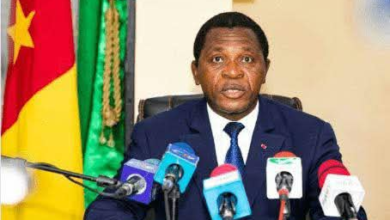
On April 5, 2019, Territorial Administration Minister Paul Atanga Nji had issued a statement prohibiting MRC meetings and public events, accusing the party of activities aimed at destabilising the country. The ministry’s decision effectively restricted the party’s ability to organise public political activities at a time when its leader and supporters were challenging the presidential election results.
Administrative authorities and the restriction of political Meetings
Beyond police intervention during demonstrations, opposition parties have repeatedly encountered restrictions through administrative decisions issued by the Ministry of Territorial Administration and local officials.Cameroon’s administrative structure gives governors, Senior Divisional Officers (SDOs) and Divisional Officers (DOs) responsibilities relating to public order and the implementation of government decisions.
However, the exercise of these powers has frequently generated controversy when applied to opposition political activities.The U.S. Department of State’s 2022 Country Report on Human Rights Practices documented instances in which administrative authorities prohibited political gatherings organised by opposition groups. In February 2022, the Divisional Officer of Douala IV, Daouda Issa, banned a three-day political communication seminar organised by the Friedrich Ebert Foundation for members of the MRC and the Social Democratic Front (SDF). The training was intended for approximately 80 opposition members. According to the State Department report, the DO arrived at the venue with police and gendarmes and ordered participants to leave, citing the risk of public disorder.
Another incident occurred in Yaounde in June 2022, when the Divisional Officer of Yaounde I banned a conference called La Grande Palabre, scheduled for June 30 at the Franco Hotel.The conference was intended to bring together academics, journalists, civil society representatives and politicians to discuss political transition.
The U.S. report said the administrative authority initially acknowledged notification of the event before reversing the decision the following day, citing potential public disorder. Security forces subsequently arrived at the venue and prevented the meeting from taking place.
These incidents illustrate how administrative authorities, particularly DOs and SDOs, can effectively determine whether opposition political discussions and meetings proceed.The issue is whether such restrictions are necessary and proportionate responses to genuine security threats or whether administrative powers are being applied in ways that disproportionately affect opposition organisations.
Opposition coalitions declared Illegal
in March 2024, restrictions extended to attempts by opposition politicians to establish broader political alliances. On March 12, Territorial Administration Minister Paul Atanga Nji announced that two opposition coalitions, the Political Alliance for Change (APC), led by Jean-Michel Nintcheu, and the Alliance for a Political Transition in Cameroon (APT), led by Olivier Bile, were illegal.The minister described the coalitions as clandestine movements and referred to activities involving their leaders, including a meeting between Nintcheu and detained Anglophone separatist leader Sisiku Julius Ayuk Tabe. Human Rights Watch criticised the decision in a March 21, 2024, statement, arguing that political parties should be able to coordinate and form alliances as part of democratic participation.The organisation raised concerns that the decision restricted freedom of association, expression and peaceful assembly ahead of the 2025 presidential election
FSNC becomes the latest opposition party to face suspension
The latest major example involves the Front for the National Salvation of Cameroon (FSNC), led by Issa Tchiroma Bakary, a former government minister and opposition presidential candidate. On October 27, 2026, Territorial Administration Minister Paul Atanga Nji signed Order No. 000163/O/MINAT suspending all FSNC activities throughout Cameroon for three months.The order, aired by the state-owned Radio October 28, cited alleged calls for insurrection, threats to territorial integrity and national unity, incitement to violence resulting in the destruction of public and private property, serious disturbances of public order and the fact that one of the party’s statutory leaders resides abroad.
Forty-four years later, what does political tolerance mean?After 44 years of Paul Biya’s presidency, Cameroon can point to a multiparty political system and hundreds of registered political organisations. However, the experiences of the MRC, FCC, APC, APT and FSNC demonstrate that the existence of political parties does not automatically guarantee meaningful political competition.
The MRC’s experience following the 2018 presidential election, the prohibition of opposition meetings by administrative authorities, the declaration of opposition coalitions as illegal and the recent suspension of the FSNC all raise questions about the space available to political organisations outside the ruling establishment.
The role of the Ministry of Territorial Administration is particularly significant. Through governors, SDOs, DOs and other administrative officials, the ministry exercises considerable influence over the organisation of political gatherings across the country.While maintaining public order is a legitimate responsibility of government, the consistent application of the law is equally important in a multiparty democracy.
Ultimately, the question is not how many political parties are registered in Cameroon, but whether they can freely organise, mobilise supporters, criticise the government and compete for power.