By Nfor Hanson Nchanji
Bamenda, Cameroon– Amid the meticulous planning and the Hall of Acts security briefings, it is the voices of the ordinary citizens that provide the true barometer of the Papal visit’s success. For Mary, a survivor of the unrest in Bamenda, the stakes are existential. Speaking to Cameroon News Agency, she noted that the Holy Father would be ‘standing on ground that has tasted too much blood.’ Her plea is that the Pope define peace not by the silence of the military’s weaponry but by the presence of fairness; this is a direct challenge to the current status quo of normalisation without reconciliation.
“My prayer is that he tells our leaders that peace is not just the absence of guns, but the presence of fairness,” Mary said.
For CNA’s readership, Mary’s story is the story of a million others. The Church has long been the only institution capable of crossing the Red Lines between separatist-controlled areas and government strongholds.
Even though in some cases, Priests from the Catholic Church in general became targets as they were accused of forcing fighters to drop their weapons. Late Cardinal Tumi was kidnapped between Ndop and Bamenda in the North West region. The kidnappers questioned him about some of his outings during the peak of the war.
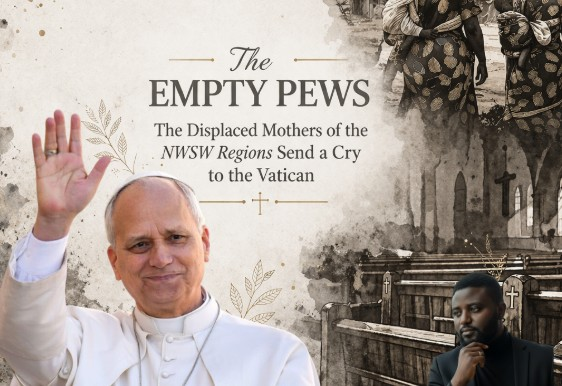
The Mothers are sending words to the Pontiff, demanding an inclusive dialogue that includes the voices of those in the bushes. As we approach April 15, the question remains: Will the political elite in Yaoundé listen to the “Apostle of Reconciliation,” or will this visit be another missed opportunity for a genuine national reset?
“There’s no one specific fear because they are all interconnected with the ongoing violence and insecurity in the region.” A woman who often champions peace in the Anglophone regions told CNA.
“As a peacebuilder, I carry the fears of many women, so if there’s some fear I would want to leave behind, it would be the fear of indifference. Let the Pope’s visit re-centre the conversation on positive peace in the Anglophone regions. Let it remove the shroud of indifference from our government and all other parties and stakeholders involved.” She said in a chat.
“Let us be seen as people who deserve a healthy and secure environment to live in, as people who can truly enjoy their human rights,” the peacekeeper added, speaking on anonymity.
As Mothers are displaced, so too are their children because mothers carry their children along. The Pews in these regions, especially in the outskirts and villages, are empty with occupants finding a haven in other regions like the West and the Littoral.
The Church has been affected.
Even going to school has been a huge problem.
“The Pope is coming to Bamenda, but will his prayer reach us under these trees? For years, the canopy has been our roof and the rain our only water. My grandchildren don’t know what a blackboard looks like; they only know the sound of helicopters and the whistle of bullets. If the Holy Father is truly the representative of God, let him ask the soldiers and the boys to let us come home. We don’t want a paved road to the airport; we want a safe path back to our kitchen fires,”
Another woman told CNA in a conversation that “The government is painting the curbs in Yaoundé, but here in the North-West, we are still washing the blood off our doorsteps. If Pope Leo XIV is the Shepherd, he must know that his sheep in Cameroon are being slaughtered. Peace is not just the silence of the guns for the four days he is here; it is the presence of fairness for the years after he leaves. My son was not a ‘combatant’ or a ‘terrorist’; he was a boy going to buy bread. I want the Pope to call the names of all the innocent ones who have become statistics and tell them that their sacrifices and innocence will not go in futility.”
The Pope must listen to these voices and take action based on what the people say and not what Yaounde says.