By Cameroon News Agency
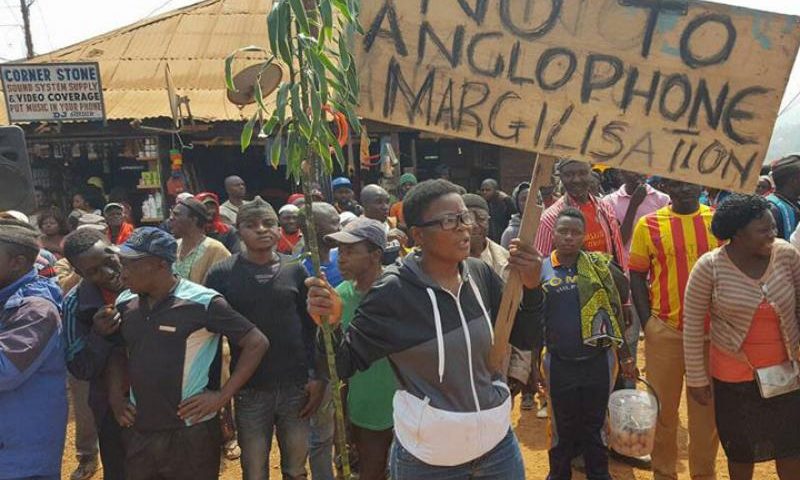
Ten years after lawyers, teachers and students took to the streets in Cameroon’s English-speaking regions to protest what they described as the erosion of the Common Law and English-language education systems, the conflict that followed continues to claim lives and displace communities.
The protests began in October 2016, with lawyers challenging the appointment of French-speaking magistrates and the application of aspects of the Francophone legal system in the North-West and South-West regions. Teachers later joined the protests, raising concerns over the education system in the two regions. The government crackdown that followed contributed to an escalation of the crisis.
By 2017, the crisis had evolved into an armed conflict involving government forces and separatist groups seeking independence for the two English-speaking regions.
Ten years later, violence remains a feature of daily life in parts of the North-West and South-West.
There is no universally accepted death toll. Recent assessments, however, put the number of people killed since the conflict began at more than 6,500. The International Crisis Group and other assessments have also documented hundreds of thousands of people displaced by the conflict.
The violence has continued in 2026
On Sept. 8, armed men attacked the Government Teachers Training College in Wum, North-West Region, killing Senior Superintendent of Police Mbah Tobie Damase and abducting five teachers, according to North-West Governor Adolphe Lele Lafrique. The attack occurred as authorities were assessing the start of the 2026-27 school year.
The incident came amid renewed concerns over school-related insecurity and lockdowns imposed by separatist groups at the start of the academic year.
A United Nations Population Fund report covering August said the security situation in the North-West and South-West remained volatile, citing attacks, abductions, so-called ghost-town lockdowns and the targeting of religious personnel.
The conflict has had a major impact on education. Human Rights Watch has documented attacks by armed separatist groups on schools, teachers and students, including killings, kidnappings, threats and the destruction of school property. The rights group said it had documented more than 70 attacks on schools since 2017.
Civilians have also faced abuses by both sides of the conflict.
Human Rights Watch has documented allegations of unlawful killings, arbitrary detention and other abuses by government forces, while separatist fighters have been accused of killings, kidnappings, extortion, attacks on civilians and the enforcement of school and business boycotts.
The humanitarian impact extends beyond the immediate loss of life
Thousands of families have been forced from their homes, while schools, health facilities, farms, businesses and transport networks have been disrupted. Many residents have moved to other parts of Cameroon, while others have crossed into neighbouring Nigeria.
The crisis has also left communities divided and placed additional pressure on teachers, health workers, religious leaders, traditional authorities and humanitarian organisations operating in affected areas.
The government has taken steps to address some of the grievances that emerged during the protests.
In September and October 2019, it organised the Major National Dialogue, which focused largely on the situation in the North-West and South-West. Among its outcomes was the decision to grant the two regions special status under Cameroon’s decentralisation framework. The special status recognises, among other things, the regions’ linguistic and cultural specificities and gives them additional powers in areas including the Anglophone education system and traditional authorities.
The measures, however, have not ended the armed conflict.
Fighting, killings and abductions have continued, with civilians often caught between armed separatists and government forces.
What began in 2016 as protests over legal and educational grievances has therefore developed into a much broader and more entrenched conflict. Separatist groups have since pursued competing political and military objectives, while the government has maintained its position that the country must remain united.
Ten years on, the conflict remains unresolved.
For families who have lost relatives, communities that have been displaced and children whose education has been repeatedly interrupted, the anniversary is less about marking a date than reflecting on a crisis that has lasted for an entire decade.
The central challenge remains the same: finding a political solution capable of addressing the grievances at the heart of the crisis while ending the violence that continues to cost civilian lives.