By Synthia Lateu
The Minister of Water and Energy, Gaston Eloundou Essomba, has granted a 100-day deadline to the new top management of the Cameroon Electricity Coorporation ( SOCADEL) to deliver concrete results.
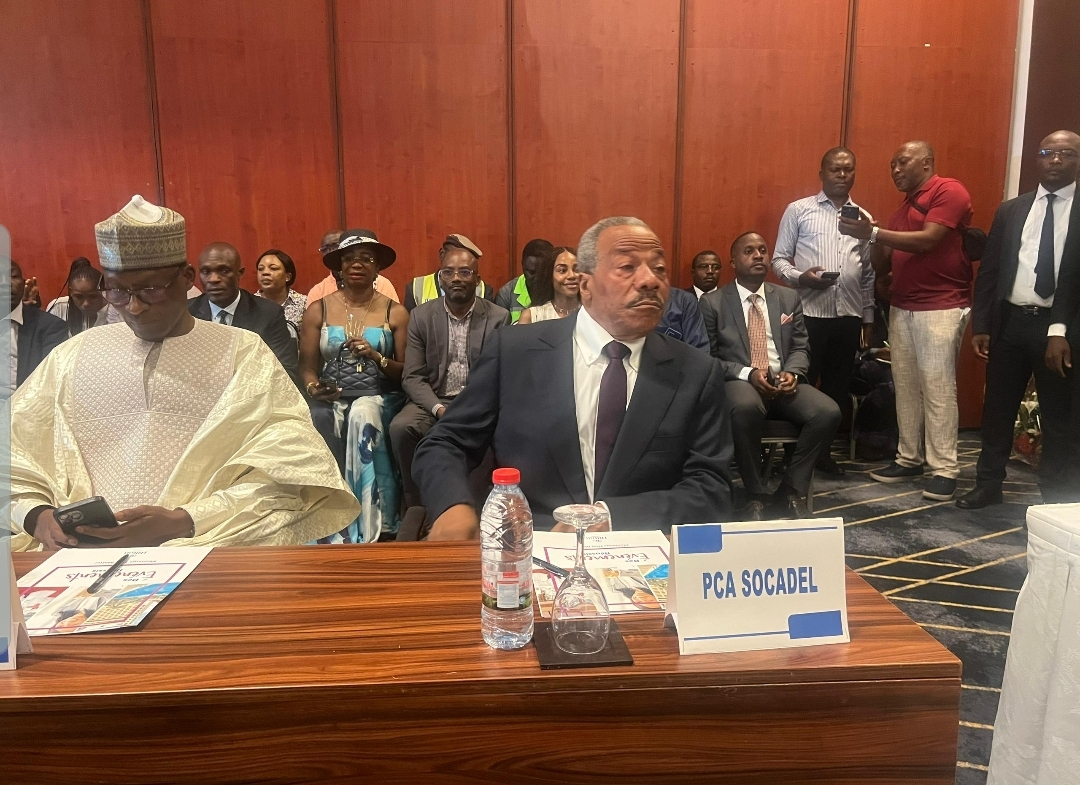
Antoine Ntsimi, Chairman of the Board of Directors, Ousmanou Hamandjoda, Managing Director, and Jean Basile Ekobena, Deputy Managing Director, were installed during the inaugural session of the Board held on May 5.
The meeting brought together all eight members appointed by presidential decree on May 4, under the supervision of the minister.
The new leadership takes over a struggling utility, with the government banking on their combined experience of more than 50 years in total in the electricity sector to drive the much-anticipated turnaround.
During the session held in Yaoundé , the minister outlined the urgent challenges facing Cameroon’s power sector, as well as the expectations of households and businesses for a more reliable electricity supply. He stressed the need to break from past practices and usher in a new era for the sector.
“It is about implementing strong measures to increase the company’s revenues, reduce costs, and improve efficiency. Mr. Managing Director, you are now accountable for results. Your performance will be assessed based on the reliability of the network and the reduction of losses,” the minister said.
Board Chair Antoine Ntsimi, on his part, said the new team is fully committed to results.
“This is a high mission and we must actually succeed by hook or by crook. We must actually achieve excellent results as expected from us . We actually have the capacity to do that and we intend to do just that.” he stated.
The reform comes at a time of deep public frustration over persistent power shortages affecting households and businesses, with hopes that the new company will finally break the cycle of repeated failures.
The State of Cameroon now holds 95% of the company’s capital, after buying back the 51% stake previously owned by the Actis fund. The remaining 5% is reserved for staff. The transaction cost the State 78 billion CFA francs.
However, behind this takeover lies a major challenge, turning around a heavily indebted utility. Before its transformation, Eneo’s total debt was estimated at nearly 800 billion CFA francs, with monthly losses ranging between 11 and 13 billion, according to 2026 reports.
The company also suffers from structural weaknesses, including chronic underinvestment, outdated infrastructure, faulty transformers, frequent power cuts, significant technical losses, and electricity theft factors that continue to undermine performance.
A sector shaped by decades of reforms and reversals
Cameroon’s electricity sector has undergone several structural changes over the decades. Under decrees signed on May 4, 2026, Eneo has been replaced by the state-owned SOCADAL, based in Douala.
The reform is the latest in a long series of transformations dating back to the colonial era, when early hydroelectric installations served limited urban and industrial needs. After independence, the State expanded its control of the sector, creating public utilities and, in 1974, establishing the National Electricity Company (SONEL), led by Marcel Niat Njifenji, its first director.
In 2001, SONEL was privatised and taken over by AES Corporation of the United States, becoming AES-SONEL. In 2014, British investment fund Actis acquired the company’s assets, rebranding it as Eneo.
Today, with SOCADAL, the State is once again firmly back at the helm. Officials say the move is aimed at addressing long-standing electricity shortages, but whether it will deliver reliable power remains an open question.