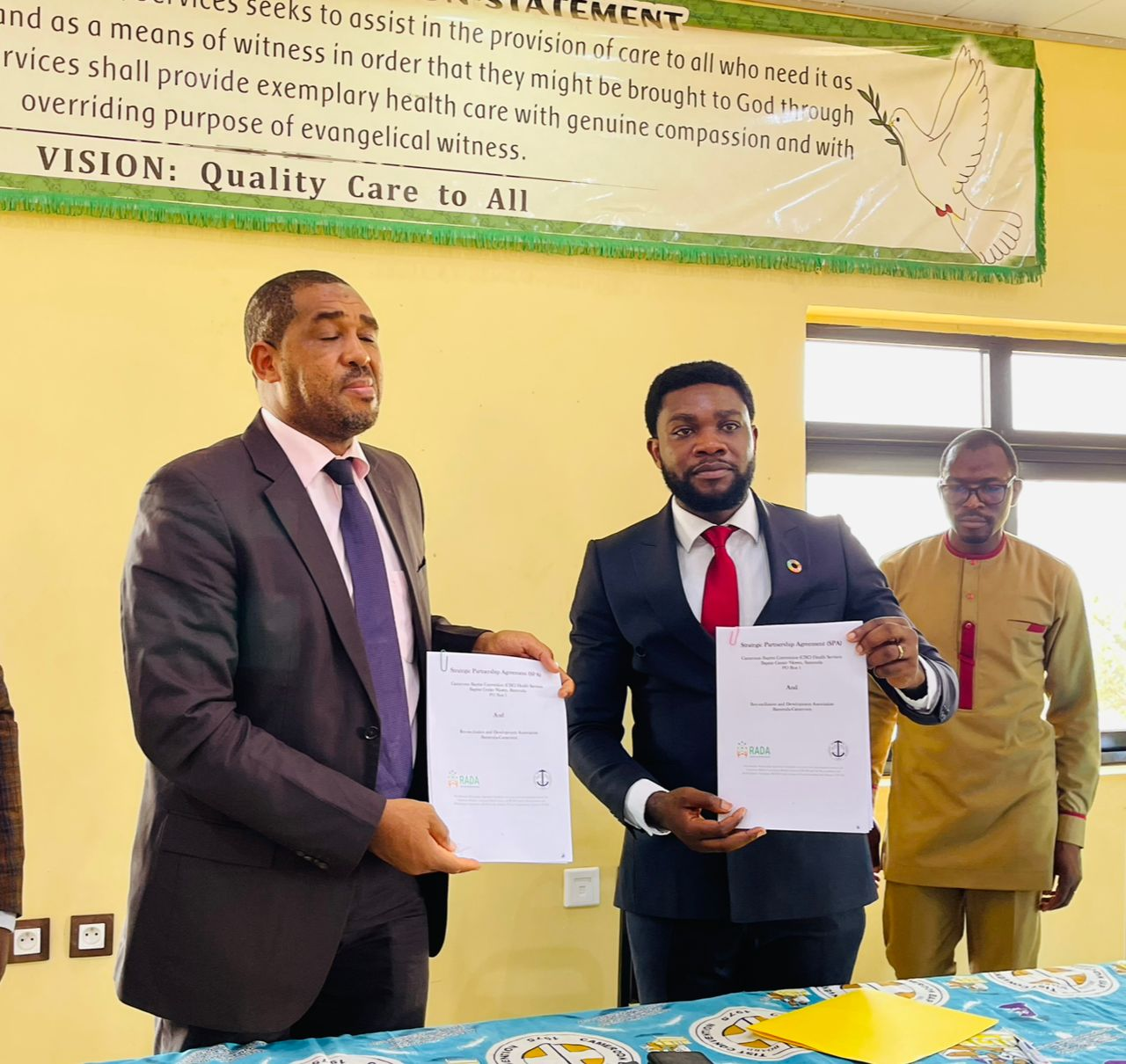
The Reconciliation and Development Association, RADA and the Cameroon Baptist Convention Health Services, CBCHS have entered into a strategic partnership aimed at strengthening the fight against Non-Communicable Diseases, NCDs, which continue to pose a serious public health challenge in Cameroon.
The collaboration was formalised with the signing of a Memorandum of Understanding on January 23, 2026 in Bamenda, by the Director of the CBC Health Services, Ngum Samuel, and the President and CEO of RADA, Ferdinant M. Sonyuh.
The agreement serves as a commitment to reducing the impact of chronic diseases and empowering communities to take charge of their health.
Speaking during the signing ceremony, CBCHS Director, Ngum Samuel highlighted the value of partnerships in addressing complex health issues. “Nobody has it all, and nobody can do it all,” he said, adding that collective action is key to bridging gaps in healthcare delivery and ensuring that vulnerable populations are not left behind in the fight against chronic diseases.
For his part, Ferdinant M. Sonyuh, who also serves as Secretary General of the Cameroon NCD Alliance, noted that NCDs are no longer a future concern but an urgent reality shaping morbidity and mortality trends nationwide.
He described the partnership with CBCHS as symbolic and strategic, aligned with Sustainable Development Goal 17, which promotes partnerships as a driver of sustainable development.
RADA has, over the years, been deeply engaged in advocacy and community-level campaigns against NCDs. The organisation has led sustained awareness drives on hypertension, diabetes, cancers and other chronic illnesses, using community outreach, media engagement and policy advocacy to promote prevention, early detection and healthy lifestyles.
A flagship component of RADA’s work has been its Healthy Food Policy Campaign, which advocates for improved nutrition standards and healthier food environments. Through this campaign, RADA has consistently called for reduced consumption of unhealthy foods, stronger regulation of food systems, and the promotion of balanced diets, particularly among children and young people, as a preventive measure against diet-related NCDs.