Nigeria: Digital Dissent and Democracy- How CSOs Innovate to Protect Civic Space Online
By Nchanji Hanson Nfor
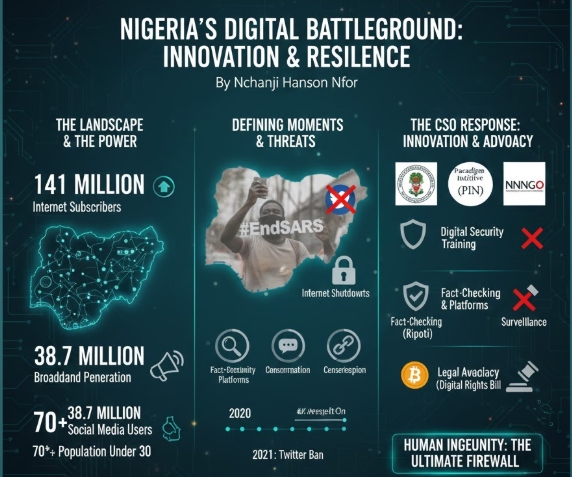
In a quarterly report released in September 2025, the Nigerian Communications Commission, NCC, revealed that close to 141 million Nigerians were subscribed to the internet with a broadband penetration rate of 49.34%. The Vanguard online reported that the Executive Vice Chairman of the institution, Dr Aminu Maida, acknowledged that broadband has been a key driver of productivity across all sectors in Nigeria, ranging from education, health, and security, among others. The article further quotes Dr Maida saying that millions of citizens now have tools to learn, trade, create and innovate. These statistics put Nigeria as one of Africa’s largest internet markets, leading to a possible impact on the critical mass of people, should digital threats and civic space become an issue.
Among broadband users are 38.7 million social media users in Nigeria, according to Krestel Digital, in a 2025 report on social media statistics. The same report revealed that Facebook, TikTok and YouTube have the highest number of users in respective order. This shows a significant growth for dissent and mobilization across sectors in Nigeria, thus underscoring the need to battle misinformation and for CSOs to fact-check discussions, which are central to democratic principles.
According to the National Bureau of Statistics NBS, the median age in Nigeria for 2025 was expected to be 18.1 years. Over 70% of the population is therefore under the age of 30. This shows that the majority of internet users are a digitally and politically active youthful population. They are the main drivers of online dissent and the primary audience for CSO mobilization.
The Defining Moment in Nigeria’s 21st Century Digital Space
The #EndSARS movement was a key moment in Nigeria’s online space that catapulted digital activism and social media engagement, which grabbed the world’s attention. The 2020 event against Police brutality is today seen as one of the most successful uses of social media by Nigerian youth that forced policies to change.
Firstly, the #EndSARS protests were digitally decentralized, where leaders used social media to bypass traditional structures and created awareness against extrajudicial killings, pushing it to the global stage, thus leading to a highly responsive feedback. Amnesty International noted in a report that this was sparked by a video of the killing of a civilian by a SARS member that went viral on social media.
Furthermore, when this happened, several CSOs took part in the protests ( online and offline), shedding more light on what was going on in Nigeria. But the government quickly waded in to dissuade these CSOs from engaging in advocacy for better policing in Nigeria by freezing the accounts of CSOs like Feminist Coalition. But the CSO created an innovation that allowed them to continue having funding to press on with their advocacy.
By introducing Crypto funding, they easily bypassed traditional banks to get their energy moving. Using Bitcoin and other cryptocurrencies allowed the Feminist Coalition to sustain itself and avoid financial surveillance. Quartz reported that the Coalition received USD 387,000 worth of Bitcoin, which helped the protests to continue in Nigeria. Feminist Coalition was not the only CSO targeted; strict measures aimed at muzzling CSOs and those using the digital space to preach good governance were also implemented. Apart from freezing accounts of key organizers, the state also banned Twitter (X) for seven months in June 2021. This was followed by more censorship measures that suppressed digital dissent, Amnesty International and Human Rights Watch noted in their incident reports. Since the 2020 #EndSARS protests, some CSOs have continued to use cryptocurrencies, but the Nigerian banking system, especially major banks put strict measures on this, with a 2024 report revealing bans have occurred on dozens of such accounts by the Central Bank of Nigeria.
Legal Framework and Shrinking Civic Space in Nigeria
Before the #EndSARS protests, the Nigerian government had instituted the Cybercrimes Act ( prohibition, prevention, etc) in 2015, which was a unified legal, regulatory, and institutional framework for the prohibition, detection, prevention, prosecution and punishment of cybercrimes in Nigeria. This Act was later assented to in February, then amended in May 2024. The amendment saw significant changes, such as enhancing cybersecurity, addressing emerging cyberthreats and protection.
However, when this Act was amended, the new Section 24, centred around cyberstalking. The amendment was facilitated by a ruling of the ECOWAS Court of Justice, pushing lawmakers to now introduce several amendments to the original 2015 law. Cyberstalking has, however, been another bone in the neck of internet users. Section 24(b) states that anyone who sends information via the internet that he or she knows to be false, for the purpose of causing a breakdown of law and order or even posing a threat to life, would be prosecuted. This amendment, however, did not stop CSOs and journalists from being arrested for reporting corruption or criticizing officials.
Digital rights groups like Paradigm Initiative and Access Now have constantly said the Cybercrimes( prohibition, prevention, etc.) The Act of 2025 is still being misused to jail journalists who report issues of national concern using the internet.
Again, the country introduced a Social Media Bill ( Protection from Internet Falsehoods and Manipulation Bill) in 2019. This was indeed a perpetual threat to CSOs and journalists who would have been arrested just for false statements- the bill was not passed, however, observers said it was related to the “Hate Speech Bill” which sought to give administrators wide power to shut down parts of the internet and criminalize false statements. Amnesty International and Human Rights Watch condemned the bill, saying that if it were passed, it would have been an opportunity for the government to control online speech and infringe on the fundamental rights of Nigerians.
Finally, as a means of defence, CSOs like Paradigm Initiative championed the proposal of a Digital Rights and Freedom Bill, DRFB, aimed at providing a clear and protective framework for digital rights in Nigeria. This was to ensure that the rights are guaranteed both online and offline. This bill was passed through the National Assembly on many occasions, but the Executive arm of the government never promulgated it into law.
The International Centre for Not-for-Profit Law notes that aside from this, it is hard for a CSO to operate or take part in any activity involving a ministry, department or agency without satisfying their criteria. Some state government agencies even pressure and subvert CSOs, while others ban the registration of gay clubs, societies and organizations. But in what could be a sweet/bitter victory, the ICNL announced that the Supreme Court of Nigeria ruled in April 2025 that the Freedom of Information (FoI) Act is applicable and enforceable in all 36 States of the Federal Republic of Nigeria. The ICNL, however, laments that though this ruling has taken place at the Supreme Court, some ministries, departments and agencies are still dragging their feet and have refused to act upon FoI requests, leaving an open room for restrictions of media and influencers across their jurisdiction.
The Positive Narrative
Nigeria’s digital dissent has come of age, and its true measure lies in the innovative and adaptive strategies that are gradually being developed by its civil society. Institutions like KeepItOn coalition ( Access Now) are battling censorship, Paradigm Initiative, PIN, and others are fighting for policy change, while theNetwork of Nigerian NGOs, NNNGO, is building grassroots resistance. This article examines the temperature through the above organizations; their battles, their victories, and how they are keeping the flames burning to ensure that the digital space remains an avenue for democratic participation and accountability.
Nigerian CSO Enabling Environment, Capacity Building and Coordination
Digital Threats
The Nigerian Network of NGO, NNNGO, a member of Forus , has as its mission to identify, register, coordinate and build the capacity of CSOs across Nigeria. By doing this, they aim to promote interconnectivity that will bring justice, equity, peace and grassroots development. The NGO umbrella organization has witnessed successes and obstacles in carrying out its mission since its creation in 1992. The Executive Director of NNNGO, Oluseyi Babatunde Oyebisi, said most of the Non-profits under them use digital space to facilitate their work, but have often come under attack. “ Evidence from our work shows that websites of non-profits are now being attacked. We also had insights around how social media pages, such as Facebook and Instagram, are being hijacked; either by staff of these non-profits who may have left or consultants providing them IT services, or sometimes, if they are very critical of the government as well, you find their platforms being attacked or being reported multiple times. We have also seen a direct attack on some human rights defenders online, particularly when you link to conversations around terrorism financing and the allegations from the US Senate as to how USAID has been used for terrorism financing.” Oluseyi Babatunde Oyebisi said in an interview.
The NNNGO also decried the fact that most non-profits under them lack the means to purchase robust digital software, which they can use to avoid rampant attacks; added to this, they also face the issue of access to the internet, which prevents them from staying online 24/7.
“Conversation around the margin technology is also becoming more popular and scary, particularly when you look at Artificial Intelligence, AI, and how they may be used to perpetuate either fake news or deep fakes”, Oyebisi added, noting that the NNNGO is not relenting efforts when it comes to the protection of its members. The Executive President revealed that there is a long-term plan that is gradually being put in place for protection.
“Over the next five years, digital rights and issues of margin technology will be a priority, where we are submitting our members with training on how to ensure that they are protected digitally and that they are not attacked. The other driving conversation is that on data protection as well, which we are also ensuring that we are preaching the message to our members to ensure the protection of sensitive data, either for their beneficiaries or even for their staff.”
Capacity Challenges
The NNNGO, therefore, sends a message to its members: any identifiable data should be protected as much as possible! He admits that the digital age has changed their perspective and they are strategizing as a network while ensuring that they can help their members with some of the challenges mentioned, by working with the government, donors and other organizations working in digital rights. He enjoined members to budget for software and strictly scrutinize their recruitment process so that they will not recruit staff who will compromise their digital space and expose or steal their passwords and important documents online.
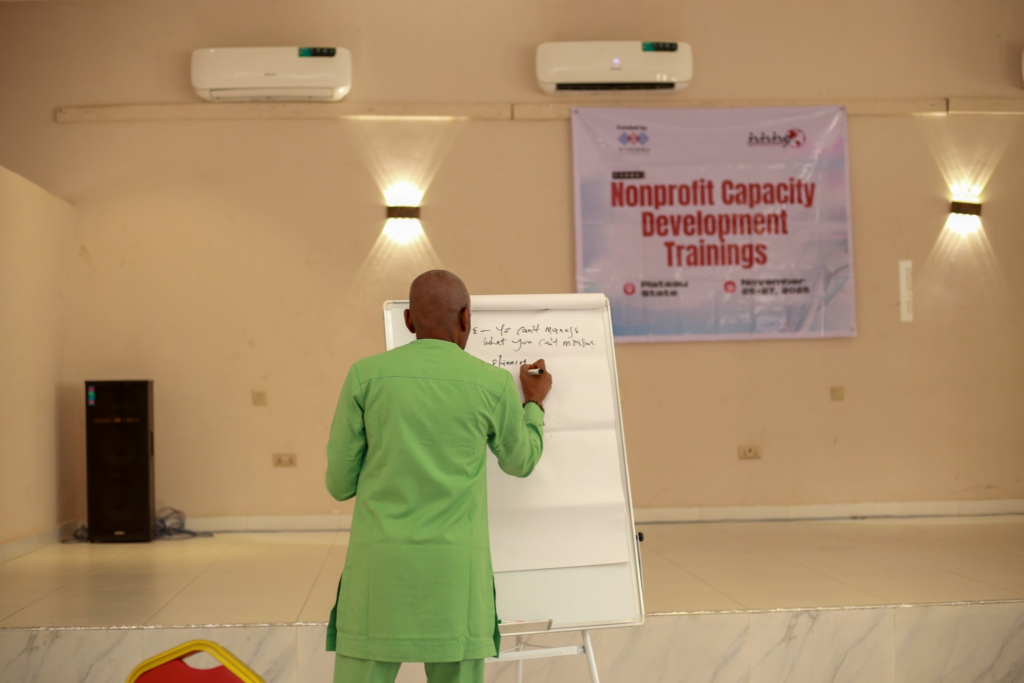
When these threats occur, the NNNGO says, it doesn’t throw its member under the bus.
“Basically, you will not see this direct attack on non-profits; typically, what we have seen as a growing trend will be those around attacks on investigative journalists and whistleblowers…But for us, what we typically will do is to provide capacity, and where those issues are reported to us, we also try to escalate them to our contacts within those social media platforms or, more importantly, to also support them by teaching them how to report those types of attacks and ensuring that they can also escalate to the government agencies in charge of addressing internet security challanges or fraud.
The challenge of digital security is real, Oyebesi concluded, advising those working in the various NGO sectors to pay close attention to these threats as they risk being overpowered by these bots or humans reporting their pages and sites. There is a need to focus attention on capturing trends and disaggregating thematic areas, he suggested. The level of digital hygiene that needs to happen in Nigeria is high, because not everyone has the capacity to obtain robust protection; some workers can barely have a laptop, so they use their phones to work and sometimes give their children the phones to play games, risking their digital safety of data vulnerability.
Digital Rights Advocacy, Policy and Digital Literacy: The Resilience Factor
One among many organizations building resilience is the Paradagm Initiative, PIN, whose mission is to promote digital rights and inclusion across Africa. Their digital rights programs help connect underserved youth with improved livelihood through digital programs such as Entrepreneurship, ICTS, Financial Readiness, among others.
The PIN has remained alert on the weaponization of online misinformation during elections and protests. That is why the organization upped its digital literacy programs with their longstanding project known as LIFE (Life Skills, ICTs, Financial Literacy, and Entrepreneurship) program, originally focused on equipping young people with foundational digital skills and fostering their participation in the digital economy. The rise of sophisticated misinformation has required them to go beyond basic literacy.
But in a direct response to the upsurge in misinformation, PIN developed a comprehensive on-demand learning platform that provides advanced, context-specific modules on misinformation, media manipulation, digital safety, and responsible online engagement. This platform reflects their shift towards flexible, practical, and scalable learning solutions that citizens can access at their own pace, particularly during periods of heightened information disorder, the organization noted in an interview.
“For civil society organizations (CSOs), we continue to provide capacity-building through the Digital Rights Academy, the Digital Inclusion and Public Engagement Strategy (DIPES), and targeted trainings that strengthen organizational readiness to respond to misinformation and digital threats as they emerge. These engagements help partners anticipate risks, improve internal protocols, and support their communities more effectively,” PIN’s Programmes Officer, Sani Suleiman, said.
PIN Creates Tools to Help Citizens Verify Information
PIN has developed several tools and resources designed to support rapid verification, digital safety, and responsible online engagement:
- Ripoti: a reporting platform that enables citizens to document and track digital rights violations, harmful content, and online threats in real time. By creating a structured space for reporting, Ripoti strengthens collective awareness of digital harms and supports evidence-based advocacy.
- Ayeta: PIN’s flagship digital security toolkit for human rights defenders, journalists, activists, and citizens. Ayeta provides step-by-step guidance on staying safe online, recognizing manipulation tactics, and improving personal and organizational digital resilience.
“Building on its success, we are currently developing Ayeta for Teens, which adapts the toolkit into age-appropriate formats to help young people identify false information, better understand online risks, and build safer digital habits from an early age. In addition to these tools, our on-demand learning platform offers modules that empower users, especially youth groups, to critically evaluate online content, understand how misinformation spreads, and adopt simple fact-checking techniques.” Sani told this reporter.
PIN Proposes Unified Digital Rights Framework to Prevent State-Sponsored Digital Surveillance in Nigeria
As stated in the preamble of this report, legal gaps have given the State a degree of power to survey the digital space, thus chilling the civic engagement efforts of CSOs. According to PIN, Nigeria’s most significant challenge in preventing state-sponsored digital surveillance is the absence of a unified and comprehensive digital rights framework, resulting in fragmented responsibilities across multiple institutions. The current legal landscape includes overlapping mandates for telecommunications regulation, cybersecurity, data protection, and law enforcement, creating ambiguous boundaries that can be exploited to justify intrusive digital monitoring without adequate safeguards.
This fragmentation undermines transparency and weakens accountability mechanisms, leaving CSOs and citizens vulnerable to surveillance practices that discourage civic participation, advocacy, and democratic expression. To address this gap, PIN proposed two critical legislative instruments:
- The Digital Rights and Freedom Bill, seeks to consolidate rights-based protections for Nigerians online and establish clear rules around data governance, surveillance oversight, and freedom of expression.
- The Online Harms Bill aims to create a more structured approach to addressing harmful digital practices without compromising civil liberties.
“Together, these laws would clarify institutional responsibilities, establish robust checks and balances, and significantly reduce the potential for arbitrary surveillance that suppresses civic engagement.” Sani Suleiman noted.
As emerging technologies, particularly Artificial Intelligence, begin to influence civic spaces, PIN is proactively equipping CSOs with the knowledge they need to understand and respond to evolving risks. While they do not conduct specialized AI trainings at the time of the interview, they integrate AI-related risks and digital governance issues into existing capacity-building programs, including the Digital Rights Academy, Digital Policy Engagement Series (DIPES), and targeted engagements with partners.
Combatting Internet Shutdown, a Direct Threat to Civic Space and Censorship
Internet limitation across Nigeria came to a real test after the 2020 #EndSARS protests, when former president Buhari shut down the most trending app at that time, Twitter, now X. He not only shut down X but threatened to crack down on dissent. The #KeepInOn coalition, whose main mission is to end internet shutdowns and protect fundamental freedoms, observed that the shutdown of X in Nigeria impacted people’s rights to express themselves. It noted that Nigeria has a big market when it comes to the use of X, so blocking the platform means people relying on it have to go through another layer of using a VPN to access it.
“Not everyone who uses the internet is tech-savvy, so people not familiar with VPN were likely left out of the usage of the platforms.” KeepInOn Global Campaign Manager at Access Now, Felicia Anthonio said. She added that CSOs who are increasingly using digital platforms to create awareness about human rights abuses and critical policy issues across the country were also affected.
As part of efforts to maintain a communication flow and apt documentation during shutdowns, #KeepItOn said they have recommended for Nigerian NGOs working in high-risk zones, the use of VPN. They also carry out training on how to use these networks via their partners, who have been instrumental in providing technical and non-technical guidance on identifying what kind of internet shutdown and the kind of advocacy they can use.
Their engagements range from awareness to capacity building, providing them with various means to bypass shutdowns. In some cases, #KeeptItOn recommend alternatives like SMS and Satellite connections to be able to stay online. Their partner, The Witness, has been able to provide tools to document abuses as they happen offline, and they are able to share the evidence with various partners.
Felcia Anthonio recommend that Internet Access Service Providers in Nigeria and the world at large should resist government-imposed internet shutdowns because they bear a responsibility to protect and ensure people’s freedom of expression online. She highlighted the UN Guiding Principles on Business and Human Rights, which hold businesses accountable for anything that will hinder the rights of users. The IASPs in Nigeria should collectively work to prevent the normalization of government-imposed internet shutdowns by questioning the basis for any proposed shutdown, especially if it fails to meet the three part test of legality, necessity and proportionality, she advised.
In conclusion, the discussion around civic space, democracy and repression is no longer a crying tale for Nigerian CSOs. The various organizations have demonstrated strength and ingenuity in overcoming surveillance and building resilience in unity. This proves that their collective effort is the firewall against digital repression. Resistance against censorship and attempts to restrict the online public square is paying off, as they are currently building a parallel digital infrastructure of resistance powered by local training and collective action. The innovations emerging from Nigeria’s tech hub are encouraging. The Activists’ network is also increasing, thus giving a huge voice to the cause in the civic space; a powerful reminder that the freedom fight is never lost, it simply moves to the next platform.
About the Author
Nchanji Hanson Nfor is a seasoned journalist who has worked in both the NGO and Media sectors for 15 years. His works are geared at driving impact through the media, humanitarian action and digital engagement. This report was completed thanks to the efforts of respective resource persons and Forus, which funded it through the Forus International Journalism Fellowship 2025 cohort