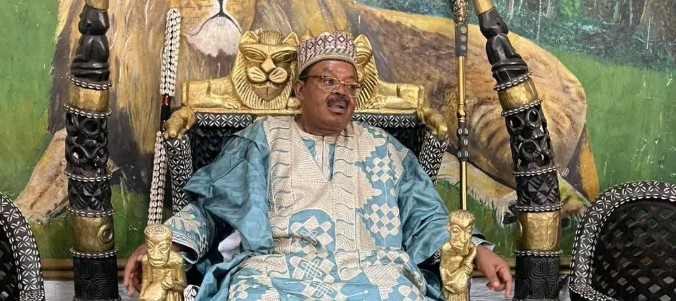
The Senior Divisional Officer (SDO) for Ngoketunjia, Handerson Quetong Konge, has officially declared the purported dethronement of HRH Senator Fon Chafah Isaac XI as null and void.
This follows a February 13 incident where a dissident group entered the Bangolan Palace to perform rituals intended to “curse” the Fon and install a new traditional ruler.
The administration described these acts as a “desecration” of Tikar customs, emphasizing that a traditional ruler recognized by the State is enthroned for life.
Authorities have linked the group to a decade-long history of lawlessness, including the vandalization of the palace in 2016 and the imposition of illegal “liberation taxes” on villagers.
In contrast, local traditional council members (the Ngumba) claim the Fon was removed for allegedly abandoning the village for over ten years and destroying sacred ancestral objects.
While the community has reportedly begun a “cleansing process” to select a new leader, the State maintains that such depositions are illegal under Cameroonian law. The SDO has warned that anyone collaborating with the dissident faction will face prosecution, as the government moves to restore order in the area.
In 2016, clashes erupted after the first dethronement of the Fon, prompted government to send gendarmes to disperse the locals. Reports suggested that some locals died in the clashes.
But why would someone abandon his palace for 10 years?
Since 2016, the Anglophone crisis caused widespread untold suffering to the local population, but also forced some rulers to abandon their Palaces for fear of being targeted by armed separatists.
HRH Senator Fon Chafah Isaac XI was therefore facing double war- one against his people and another against the Separatists- he had to flee.
The Senator, a traditional ruler, found himself in a precarious position. His loyalty to the government in Yaoundé was seen as betrayal by some of his subjects, while the separatists viewed him as an obstacle to their cause. The threats were real, the danger palpable. He could hear the drums of war beating louder each day, and the safety of his family and his people weighed heavily on his mind.
He knew, however, that his absence would create a vacuum, a power struggle that could further destabilize the Bangolan village. The question was, how could he protect his people from afar, and what role could he play in bringing about a lasting solution to the crisis?