By Nfor Hanson Nchanji
It is now 10 years into the Anglophone conflict, there is a question that is becoming increasingly difficult to avoid:
Does the government of Cameroon still see international mediation as necessary for ending the war, or does it believe the conflict will eventually exhaust itself?
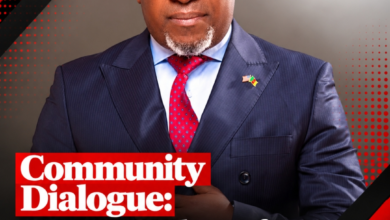
I have been thinking about this question particularly in light of Prime Minister Joseph Dion Ngute’s recent Community Dialogue in Buea.
For years, Cameroon has participated in different attempts to address the crisis. But when it comes to international mediation, the record has been less encouraging.
Switzerland’s efforts to facilitate negotiations between the government and separatist actors began in 2019. That process eventually stalled and was abandoned in 2022.
Then, in 2023, Canada announced that it was prepared to facilitate a peace process involving the Cameroonian government and separatist groups.
Yaoundé quickly distanced itself from that initiative, saying it had not entrusted Canada or any other foreign country with such a mediation role.
These developments do not necessarily mean that the government is against dialogue. Far from it. The government has repeatedly promoted dialogue.
But there appears to be an important difference between dialogue that the government controls and mediation in which an external actor helps bring the parties together and facilitates negotiations. The distinction is important.
The 2019 Major National Dialogue was organized by the government. The more recent community dialogue in Buea is also a government initiative. International mediation, on the other hand, potentially requires Yaoundé to sit across the table from actors it has historically been reluctant to recognize as legitimate negotiating partners.
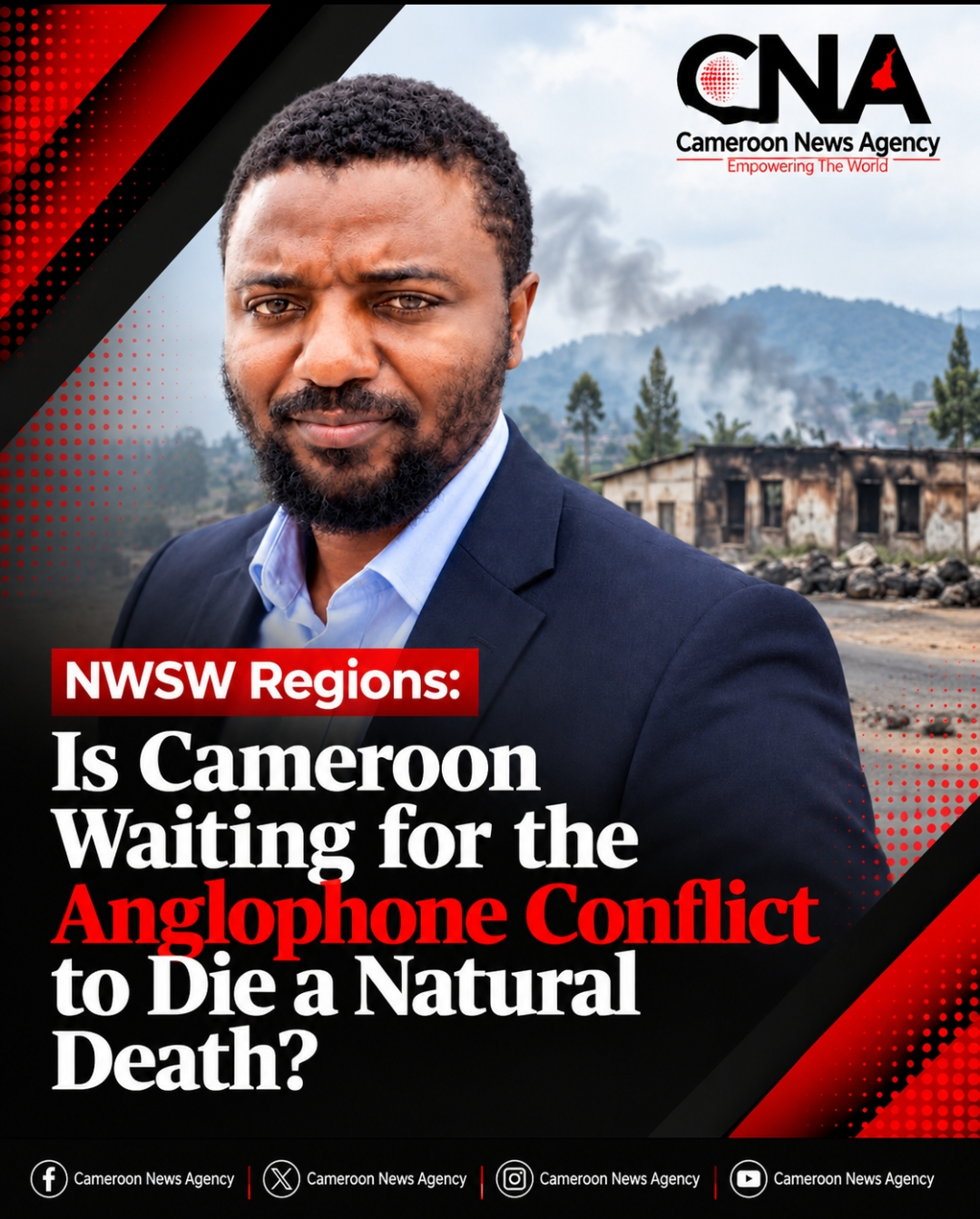
And that brings me back to something Prime Minister Dion Ngute said in Buea. He said that, even if nothing were done, the conflict could eventually “die a natural death” after another 10 or 15 years.
That statement caught my attention. Perhaps the prime minister was simply warning that nobody should accept another decade of violence and urging communities to act now.
But there is another way to look at it. What if the statement reflects a broader calculation within government that the conflict can eventually be defeated by time? A war that has lasted almost a decade has also produced enormous fatigue.
Fighters become tired. Communities become tired. Money becomes more difficult to raise. Young people who might once have joined armed groups grow older and begin looking for other possibilities. Communities may become increasingly unwilling to accommodate armed groups.
Military pressure can also reduce the ability of insurgents to operate. In such a situation, the conflict could gradually lose momentum without a major political settlement. If that is how some people within government view the crisis, then international mediation may not appear particularly urgent.
Why make difficult political concessions today if the expectation is that, with enough time and pressure, the armed conflict will eventually weaken on its own? I am not suggesting that this is an officially declared government strategy.
There is no public document before us saying that Yaoundé has decided to wait for the conflict to die naturally. But the government’s record gives reason to examine the possibility.
The Swiss process did not produce a settlement. Canada’s proposed facilitation did not develop into the kind of internationally backed negotiation that some had expected. At the same time, Yaoundé has continued to emphasize its own initiatives ; national dialogue, decentralization, special status, reconstruction, disarmament and community engagement.
This is not the same as saying the government has rejected peace. Rather, it suggests that Yaoundé appears more comfortable with a peace process that remains under Cameroonian control. That preference is understandable from a sovereignty perspective.
But it also has consequences.
International mediation is not simply about bringing foreigners into a conflict. In difficult conflicts, an external mediator can sometimes provide the political space for parties that cannot easily talk directly to each other. That was one of the hopes surrounding the Swiss initiative.The problem is that the Anglophone conflict is not only a security problem.
It is also political.
The government can restore roads. It can reopen schools. It can deploy soldiers. It can encourage fighters to surrender. It can rebuild infrastructure. It can engage traditional rulers, religious leaders and communities. All of these things matter. But they do not automatically settle the political grievances that helped produce the conflict.
This is where the idea of a “natural death” becomes complicated. A conflict can become less violent without actually being resolved. The guns can become quieter while the grievances remain. People can return to markets while still carrying memories of displacement, killings and destruction. Schools can reopen while communities continue to disagree about the political future of the regions.
And fighters can surrender without every underlying political question disappearing.That is why, for me, the most important question coming out of Buea is not whether the conflict can eventually die. Most conflicts eventually end in one form or another. The question is what kind of ending Cameroon is pursuing.
Is the objective simply to defeat the armed groups and restore state authority? Is it to persuade combatants to surrender and reintegrate them?
Is it to reduce violence until the crisis gradually loses relevance? Or is the objective to negotiate a political settlement that addresses the grievances that have sustained the conflict?
These approaches can overlap, but they are not the same. And this is where international mediation becomes relevant. If the government believes that the conflict is primarily a security problem that can eventually be contained, then external mediation may naturally receive secondary attention.
But if the government believes that the crisis requires a political settlement involving actors outside the state’s own structures, then international facilitation becomes much more difficult to avoid.
Almost a decade later, there is still no publicly negotiated settlement between Yaoundé and the major separatist movements.That alone should make Dion Ngute’s “natural death” comment worthy of closer examination.
Perhaps he was simply describing the inevitable exhaustion of a long conflict. Perhaps he was expressing confidence that government measures will eventually restore peace.Or perhaps, unintentionally, he gave the public a glimpse into a calculation that is rarely stated openly: that time may ultimately do what international mediation has so far failed to do.
We cannot know that from one statement.But the statement, combined with Cameroon’s history with international mediation, is enough to raise the question.
And perhaps that is the question Cameroon must answer as the conflict enters its second decade:Does the country want the war to end, or does it want the reasons for the war to be resolved?
The difference between the two could determine whether the next decade is genuinely different from the last.