By Wilson Musa
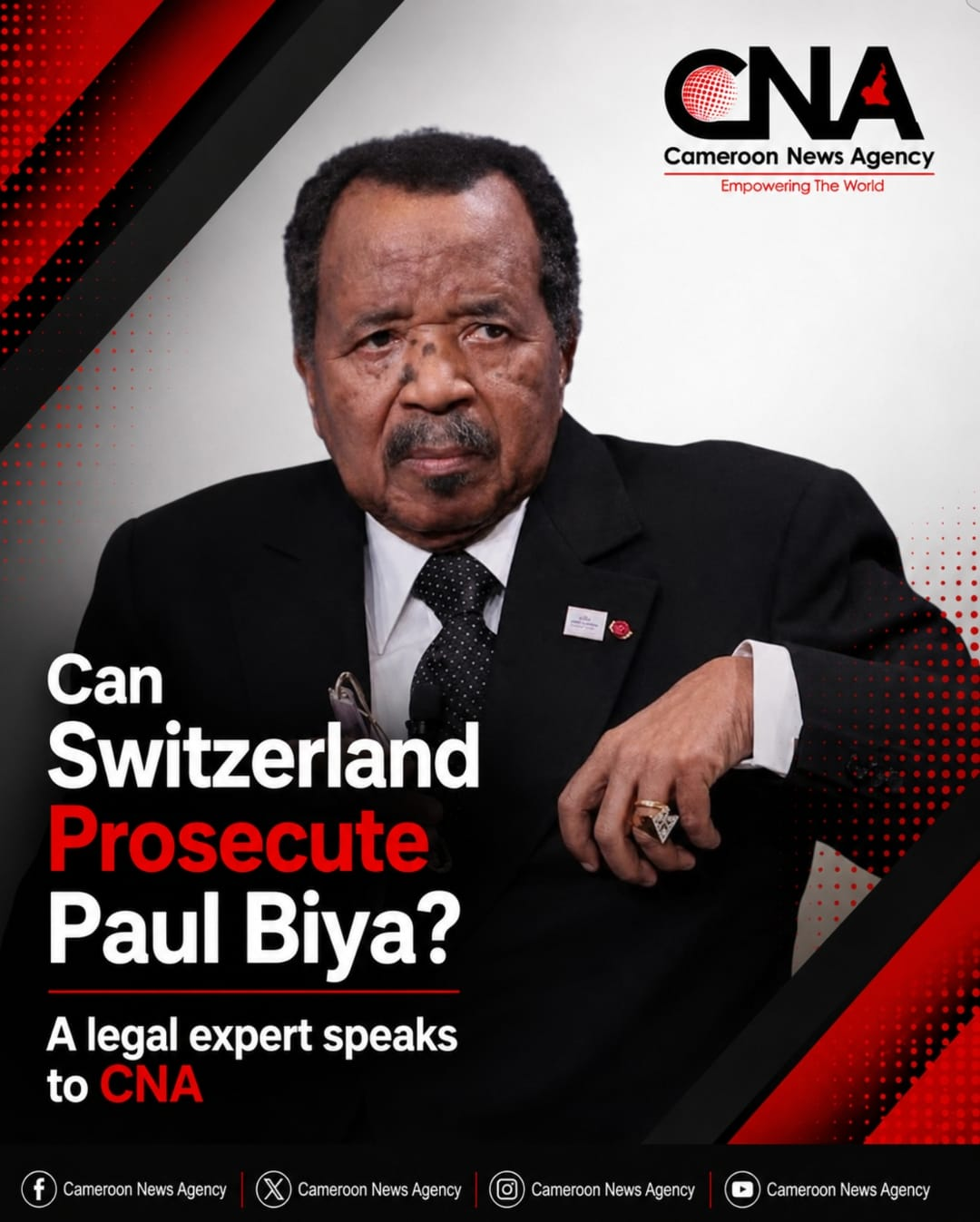
The criminal complaint reportedly filed in Switzerland by Cameroonian opposition leader Issa Tchiroma Bakary against President Paul Biya and other officials has reignited debate over whether foreign courts can exercise jurisdiction over alleged crimes committed entirely within another sovereign state. CNA examines what international law says.
YAOUNDE, Cameroon: The decision by former minister and opposition figure Issa Tchiroma Bakary to file criminal complaints in Switzerland against President Paul Biya and several senior officials has raised questions about how a European country could examine allegations involving acts allegedly committed entirely in Cameroon.
While Tchiroma’s complaints have attracted political attention, legal experts say filing a complaint is only the first step in what could be a lengthy judicial process. Swiss prosecutors must first determine whether the complaints meet the legal requirements for opening proceedings.
According to the Office of the Attorney General of Switzerland, the country exercises what is known as universal jurisdiction, a legal principle allowing national courts to investigate and prosecute genocide, crimes against humanity and certain war crimes regardless of where they were allegedly committed or the nationality of those involved. The principle is intended to prevent perpetrators of the gravest international crimes from finding safe haven in Switzerland.
However, Swiss law imposes important conditions before authorities can proceed.
A Cameroonian lawyer who requested anonymity because of the sensitivity of the matter told Cameroon News Agency that Switzerland applies universal jurisdiction on a subsidiary basis under the Swiss Criminal Code.
“Swiss courts can lawfully investigate alleged international crimes committed entirely in Cameroon against Cameroonian victims by Cameroonian officials,” the lawyer said. “But this jurisdiction is not automatic. Certain legal conditions must first be satisfied.”
The lawyer explained that Swiss authorities generally require the suspect to be physically present in Switzerland before criminal proceedings under universal jurisdiction can move forward. The suspect must also not have been extradited to another competent country or surrendered to an international tribunal such as the International Criminal Court.
These requirements are reflected in Article 264m of the Swiss Criminal Code, which governs Switzerland’s jurisdiction over genocide, crimes against humanity and war crimes committed abroad. The law empowers Swiss authorities to prosecute such offences under specific circumstances, including the presence of the suspect in Swiss territory.
The lawyer said the legal framework exists primarily to ensure Switzerland does not become a refuge for individuals suspected of serious international crimes.
One of the most cited examples of Switzerland’s application of universal jurisdiction came in 2024, when the Swiss Federal Criminal Court convicted former Gambian Interior Minister Ousman Sonko of crimes against humanity for offences committed in The Gambia. The case demonstrated that Swiss courts can prosecute international crimes committed outside Swiss territory when the legal conditions are fulfilled.
The lawyer cautioned, however, that questions of immunity remain among the most significant legal obstacles in cases involving serving government leaders.
According to the lawyer, customary international law distinguishes between personal immunity and functional immunity. Sitting heads of state, heads of government and foreign ministers generally enjoy personal immunity from criminal proceedings before foreign national courts while they remain in office. Lower-ranking or former officials, however, may not necessarily enjoy the same level of protection where allegations concern internationally recognized crimes.
“The filing of a criminal complaint should not be confused with the opening of a criminal prosecution,” the lawyer said. “Swiss prosecutors must first determine whether they have jurisdiction, whether legal conditions have been met and whether there is sufficient evidence to justify further proceedings.”
Legal experts note that several outcomes remain possible. Swiss prosecutors could decline to proceed if jurisdictional requirements are not met. They could also open a preliminary assessment, launch a formal investigation if legal thresholds are satisfied, or cooperate with other national or international judicial authorities where appropriate.
Switzerland also works closely with the International Criminal Court and other competent jurisdictions in accordance with international legal obligations. Where another jurisdiction is better placed to prosecute the same alleged offences, Swiss authorities may consider extradition or judicial cooperation, depending on the circumstances.
For now, Tchiroma’s complaints remain allegations that have yet to be tested before Swiss judicial authorities. No Swiss court has ruled on the merits of the claims, and no determination has been made regarding whether the legal requirements for opening proceedings have been satisfied.
As the matter develops, legal observers say the focus will be less on the political significance of the complaints than on whether Swiss prosecutors conclude that the conditions established under Swiss law have been met. Until then, the complaints remain at the preliminary stage of what could become a complex legal process governed by both Swiss domestic legislation and international law.