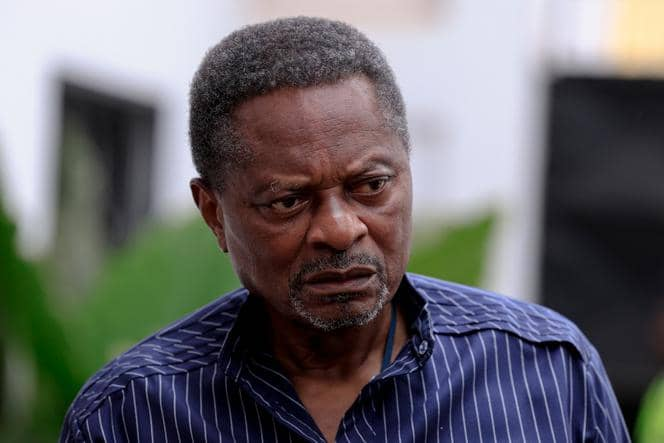
Yesterday, Anicet Ekane became the latest victim in Biya’s tyrannical grip on power. Ekane was a firebrand leader lauded by those who knew him, for his tenacity, resolve and penchant for truth and justice. Ekane was picked up by security agents shortly after the October 12 polls for voicing support for Issa Tchiroma Bakary.
Ekane’s death was rumored shortly after his arrest but proved to be false and now that he has been confirmed dead by his family, his death – or at least the circumstances surrounding it, should be of great concern to all Cameroonians. That Ekane, a 74-year-old man with health issues, was denied access to his medication is as morally bankrupt as it is unjust. But the Biya regime is not known for morality or justice, hence its treatment (or maltreatment) of Ekane, is no surprise to Cameroonians.
What Cameroonians must not do, is to become silent, cower in fear and normalize Ekane as just another victim in Biya’s bloodthirsty yearning for lifetime rule. For a failed leader who has been at the helm of one of the poorest, most corrupt and most underdeveloped countries on the face of the earth, Cameroonians must ask tough questions and question what they truly believe in. Are we going to all be silent and keep grumbling while allowing this wrecking ball of a dictatorship to run this country aground? Are we accepting that there is nothing we can do and we are waiting for some magical or mythical force to somehow come to our aid and usher in the change which we yearn for? Are we accepting that we can have votes thwarted, get thrown into jail for voicing our support for a candidate other than Biya and get killed for it? Are we saying this is the acceptable norm in Cameroon now that we live in a police state where chickens and cattle have more value than human lives?
The questions are endless but Cameroonians cannot and should not normalize these things. There are many more Cameroonians who have died under similar circumstances to Ekane: Samuel Wazizi, Bibi Ngota, Rev. Thomas Tangem and Rodrique Koufet. Tangem and Koufet died as their health deteriorated but authorities chained them to hospital beds like animals, exacerbating their death and perhaps precipitating their demise.
Their stories are not isolated tragedies; they form part of a deliberate pattern of repression, intimidation and state-enabled cruelty. Each death chips away at our collective conscience, and every time we move on without demanding accountability, we embolden a system that thrives on fear and silence. Cameroon cannot continue on this path and expect a different outcome. Nations do not collapse overnight; they crumble slowly as their citizens grow accustomed to the unacceptable. When the abnormal becomes normal, injustice becomes routine, and cruelty becomes governance, a country loses its soul.
This is precisely why Ekane’s death cannot be reduced to another headline, another whispered conversation, or another fleeting moment of outrage. It must instead be a rallying point—a moment of reckoning for a society that has endured too much, suffered too long, and hoped too quietly. If Cameroonians decide that enough is enough, then Ekane’s death will not have been in vain. It will mark a turning point in our national consciousness. But if we allow this, too, to fade into silence, then we are complicit in building the very cage we hope to escape.
Cameroon stands at a crossroads and this is a defining moment. History will judge us not only by what the Biya regime has done to us, but by how we, responded to what they did to us and Ekane’s murder ought to be a turning point or else, one of us is the next victim waiting to happen.