By Synthia Lateu
Prospective doctoral students in Cameroon have criticised a government decision to cap access to PhD programmes at 600 places nationwide, warning that the policy could weaken higher education and scientific research in the country.
The quota applies to Cameroon’s eleven state universities and follows the reopening of doctoral admissions after a two-year suspension. While authorities argue the measure is necessary to manage funding and supervision capacity, students and some academics say it unfairly limits opportunities for Cameroonian candidates.
The decision was announced in a January 15, 2026 statement signed by the Minister of State for Higher Education, Jacques Fame Ndongo, acting on directives from President Paul Biya.
Student Protests in Douala
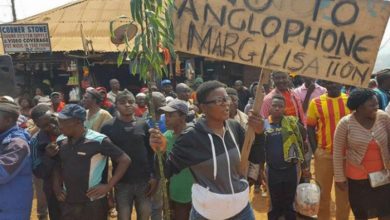
On Monday, students holding research Master’s degrees staged a protest at the University of Douala, denouncing what they described as an overly restrictive policy that could undermine the country’s research ecosystem.
Under the new system, the University of Douala has been allocated 60 doctoral places, despite hosting two doctoral schools and nearly twenty faculties. According to protest organisers, some faculties run more than ten academic programmes, making the distribution of places highly competitive.
“The problem is national, not local,” said Auréole Tchoumi, a representative of Master’s degree holders applying for doctoral studies. “Foreign students are not subject to these quotas. This creates the perception that Cameroonian universities are becoming more accessible to foreigners than to nationals.”
He added that restrictions on supervision have left some departments with only one doctoral student, or none at all, threatening the viability of research laboratories.
Concerns Over Academic Careers
Several lecturers have also expressed concern about the long-term impact on academic staffing.
Louison Essomba, a lecturer at the University of Douala, said academic promotion in Cameroon is closely tied to doctoral supervision.
“To become a full professor, you must have supervised both a completed and an ongoing PhD thesis,” he explained. “With the current quotas, this becomes increasingly difficult, yet every department needs at least one senior professor.”
According to Essomba, the policy risks creating a future shortage of qualified academics as senior professors approach retirement.
Government Defence
University officials defending the policy point to financial and institutional constraints. Doctoral training, they say, requires significant public funding, and supervision capacity remains limited.
Patrick Rifoe, a lecturer at the University of Douala, said the government is attempting to strike a balance between available resources and enrolment demand. “Doctoral studies are costly. The aim is to align admissions with universities’ real capacity to supervise quality research,” he said.
In recent comments on state media, Minister Jacques Fame Ndongo said the government intends to steer doctoral research towards national development priorities, adding that future admissions will be based largely on the relevance of research proposals.
Calls for Dialogue and Reform
While rejecting the quota system in its current form, protesting students say they are open to reform-based solutions. They have proposed strict but transparent selection criteria, including a minimum academic average and mandatory alignment of research topics with national development goals.
“Doctoral research should contribute to a country’s progress,” said Tchoumi. “But access should be based on merit and relevance, not blanket numerical limits.”
As discussions continue, the debate has reopened broader questions about access to higher education, research funding, and the role of universities in Cameroon’s development strategy.