
By Synthia Lateu
Seven journalists have been killed in Cameroon over the past 15 years, according to the Cameroon Journalists Trade Union (CJTU), yet questions of accountability remain as investigations and court proceedings in some cases continue to face prolonged delays.The deaths of Samuel Wazizi, Anye Nde Nsoh, Bibi Ngota, Jules Koum Koum, Ernestine Ouandié, Becky Jeme Liwusi and Martinez Zogo amongst others remain etched in the memory of the journalism profession.
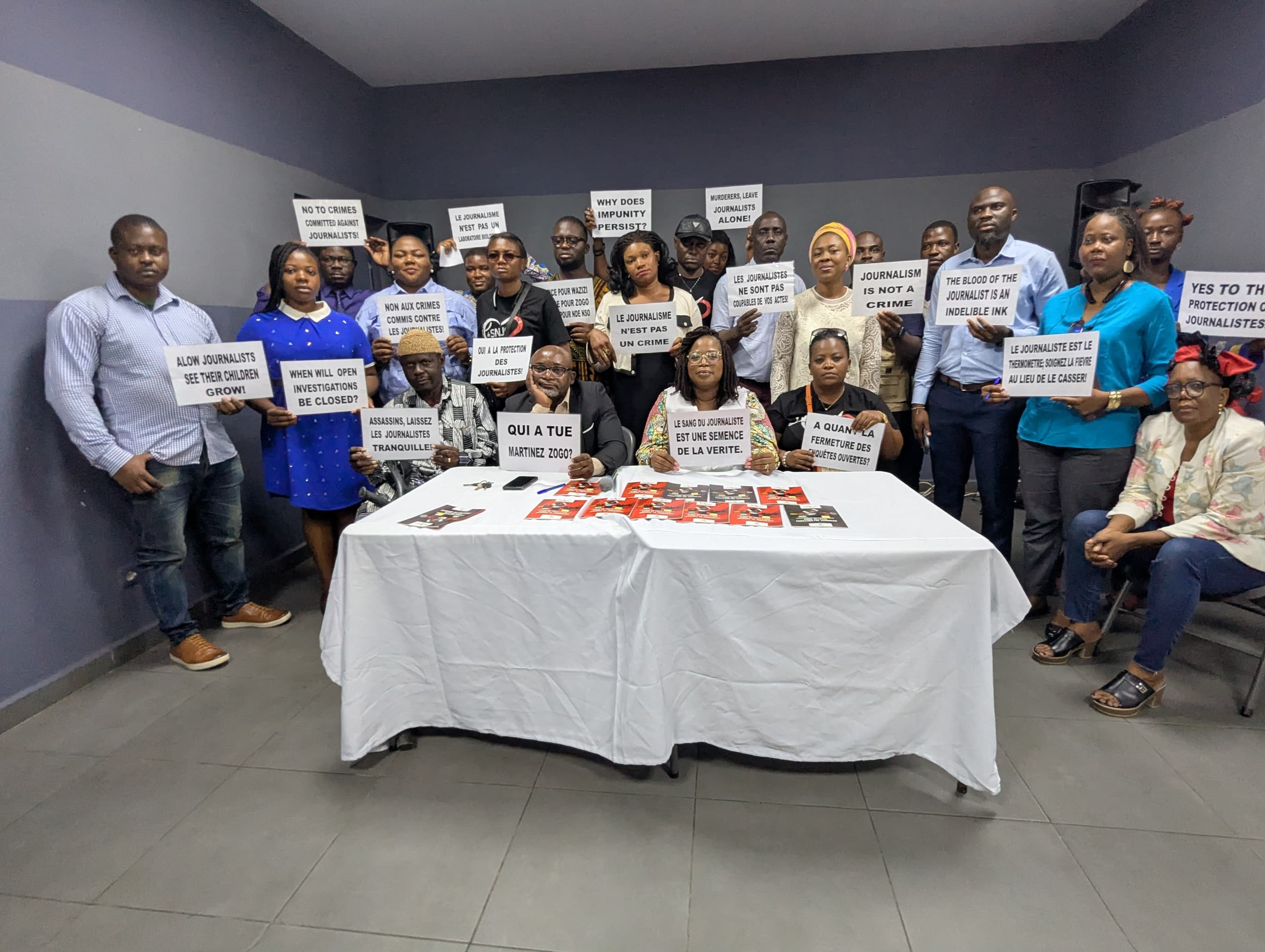
Their cases point to the risks faced by media professionals and the persistent calls for justice and protection for those who report the news.As Cameroon joined the rest of the world on November 2 to mark the International Day to End Impunity for Crimes Against Journalists, the Cameroon Journalists Trade Union (CJTU) renewed its call for those responsible for crimes against journalists to be identified, prosecuted and punished in accordance with the law, regardless of their rank or status.Speaking during an event to mark the day, the union’s National President, Marion Obam, said the continued delays in cases involving journalists were fuelling disappointment and mistrust in the justice system.
The ongoing trial over the killing of journalist Martinez Zogo was among the cases highlighted. Obam said the investigation had initially raised hopes that the perpetrators, alleged masterminds and accomplices would eventually be brought to justice. However, developments before the military tribunal have since raised concerns about the progress of the proceedings.
“The case of Martinez Zogo had raised particular expectations and hopes. For the first time in a long while, the opening of an investigation appeared to offer the possibility that the truth would finally be established and that the perpetrators, masterminds an odd accomplices behind the crime would be held accountable,” she said.”
However, developments before the military tribunal, marked by repeated adjournments, delays and manoeuvres that give the impression of proceedings reaching a stalemate, have fuelled disappointment and mistrust.”For journalists, the situation reflects a wider problem of insecurity and limited protection when media professionals come under attack.
Journalist Hilda Payong described the situation as alarming, arguing that journalists are often left to face threats and attacks without adequate support from either the authorities or the public.”The government does nothing, the population does nothing, and the journalist is left by themselves. We need change in this country,” she said.She also regretted what she described as a decline in the protection journalists receive from their employers, noting that media professionals previously had greater support from their bosses.
Barrister Clémence Mafetgo pointed to the challenges involved in establishing evidence in cases concerning crimes against journalists. She said evidence could easily be tampered with, while the process of gathering and securing proof sometimes delayed proceedings.Beyond demanding justice for victims, the CJTU is calling for stronger protection mechanisms for journalists. It has urged media professionals to strengthen solidarity, systematically document threats and attacks, and use available channels to report violations of their safety.”Press freedom is not simply the absence of censorship. It means that journalists must be able to investigate, question and publish without fear for their lives,” Obam said.She further insisted that crimes committed against journalists must be prosecuted and punished, regardless of the identity or status of those responsible, including the alleged perpetrators, masterminds and accomplices.
The concerns are not limited to Cameroon. The International Federation of Journalists (IFJ) reports that 15 journalists and media professionals have been killed worldwide in 2026.The 13th International Day to End Impunity for Crimes Against Journalists is being observed under UNESCO’s theme, “Threats Evolve, Impunity Remains”, drawing attention to the changing threats facing media professionals and the continued failure to hold perpetrators accountable.

