By Hans Ngala
The 2020s began with a sweeping number of coups taking place across West and Central Africa. Coups in Burkina Faso, Mali and Niger were shortly followed by coups in Chad and Gabon. The Gabon coup sent chills down the spine of Cameroonian authorities. On August 30, 2023 after the coup in Gabon was announced, President Paul Biya of next-door Cameroon conducted a hasty military reshuffle, fearing a coup within his own army mostly likely.
Cameroon even banned media from reporting or commenting on the Gabon coup. The Post newspaper was suspended indefinitely by the governor of the SW Region because of a headline based on research by Afrobarometer which suggested that “66% of Cameroonians want a military coup.” It was based on a September 9, 2023 report in the weekly “The Continent” and a tweet about a survey of citizens in 36 countries between 2021 and 2022 by Afrobarometer, a pan-African, non-partisan research network based in Ghana. The survey found that while most Africans disapprove of military rule, “a slim majority (53%) are willing to endorse military intervention if elected leaders abuse their power,” including 66% of respondents in Cameroon, who agreed that “it was legitimate for the armed forces to take control of the government when elected leaders abuse power for their own ends.”
As Cameroon finds itself in a region known as “the Coup Belt” which stretches from West and Central Africa through East Africa, an analysis of this nature is especially necessary. This focuses however, not just on Cameroon but on Ivory Coast, a country next-door to some of the toughest military-led countries in the region. Ivory Coast shares a border with Burkina Faso and Ivory Coast has repeatedly been accused by Burkina Faso of trying to topple Ibrahim Traore.
CNA asked some members of the Ivorian civil society whether they were concerned that the long-running military rule in neighboring Burkina Faso, Mali and Niger were likely to influence a coup on Ivorian soil – or at least cause the Ivorian population to favor one. According to Nahounou Daleba of ADCI (Aujourd’hui Demain Cote d’Ivoire), “No I don’t think so. No Ivorian wants a military take-over because it would lead to a vicious cycle of instability”. Daleba argues that even though the citizens of Burkina Faso, Niger and Mali seem to approve of the miliary rule in their respective countries, “As for Ivory Coast, nothing points in that direction, especially since under the previous military regime, Ivorians were left with a bitter taste. Ivorians instead aspire to democratic change, not change through a military-takeover”.
However, Alex Adou, an Ivorian journalist and human rights/media trainer argues that the conditions that make a coup likely – and eventually possible are lacking in Ivory Coast.
“Talking about Ivory Coast, it should be recalled that the country has an army historically under civilian control, a more diversified and resilient economy, more stable institutions despite their imperfections, the absence of a generalized terrorist insurgency, and strong regional and international economic interdependence. These factors greatly reduce the likelihood of a military coup” Adou says.
“However, this is not to say that the risk is completely absent, because political frustrations linked to elections, feelings of exclusion or social injustice, large-scale corruption, distrust of institutions, identity or community-based manipulation, and perceptions of democratic lock-in, combined with the porous nature of our borders could facilitate a coup in Ivory Coast.”
Like Alex Adou, Laure Nesmon Pie, a journalist, inclusive governance specialist and founder of the NGO Opinion Éclairée does not believe that the coups in Burkina Faso, Mali, Niger or other countries in the West-Central Africa region could influence an affinity for coups in Ivory Coast.
“I do not perceive any fear that the situation in neighboring countries could inspire the Ivorian army to consider a coup. Anyways, within the country, I do not see positions being expressed in that direction” he says. “What I do observe, however, is the broader security situation in the Sahel and the fact that these neighboring countries are being weakened by it, which is a cause for concern. What is truly worrying is the possibility of a deterioration in the security situation that could create fertile ground for terrorists”. Pie also posits that “What I can say is that this coup d’état is interpreted differently in Côte d’Ivoire, depending on which side one belongs to. The official position does not show any closeness to this coup, because Côte d’Ivoire, as a member of ECOWAS, has aligned itself with the organization’s official stance, which was to condemn the coup d’état in Burkina Faso”.
“Within public opinion more broadly, the coup is also viewed in different ways. While people close to those in power align with Côte d’Ivoire’s official position, we also observe, through various reactions, that there is a segment of opinion that is sympathetic to the actions of the military and appears to justify them because of the so-called anti-French positions put forward by the authors of the coup in Burkina Faso” Pie adds.
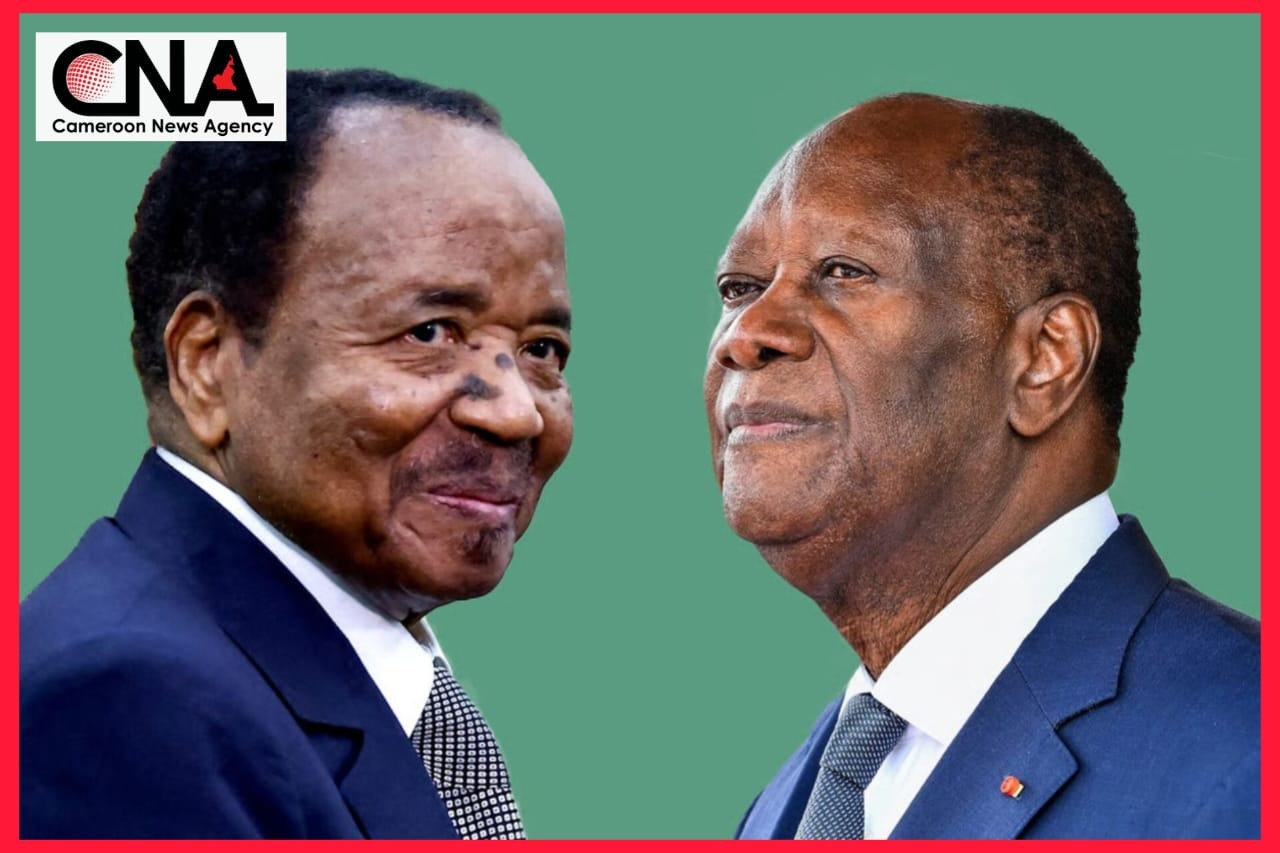
The sentiments within Ivory Coast seem polarized but appear to largely favour alignment with democratic transitions of power. However, given that the October 2025 election which Ivorian President Alassane Outtara won, was highly contested, just as in Cameroon which held elections in the same month which were also “won” by Paul Biya – Ivorians largely disputed their own election results.
With this lack of trust in public institutions and young people feeling that elections do not represent their true wishes, it can explain why majority of the youth may express pro-military rule sentiments. Outtara is 84, while Cameroon’s Biya is almost 93. The median age in both countries stands at 18 years. This means that the leaders of both countries are out of touch with both the financial and ideological realities or desires of their youthful populations. The fact that both leaders are seen as entrenching themselves within the political establishment in both countries while getting the backing of Western-led institutions such as the UN and backing from the AU, could shift preference among these youth towards military rule.
The October 2025 elections in both Cameroon and Ivory Coast were contested and instead of condemning the arrest of protesters and the barring of key opposition candidates, the AU and UN both congratulated the “victors” to the chagrin of the youth. Such open support for controversial leaders posing as “democratic” leaders, needs to be openly condemned if the youth are to have any trust in these political institutions and dissuade them from leaning towards pro-military rule in both Ivory Coast and Cameroon.