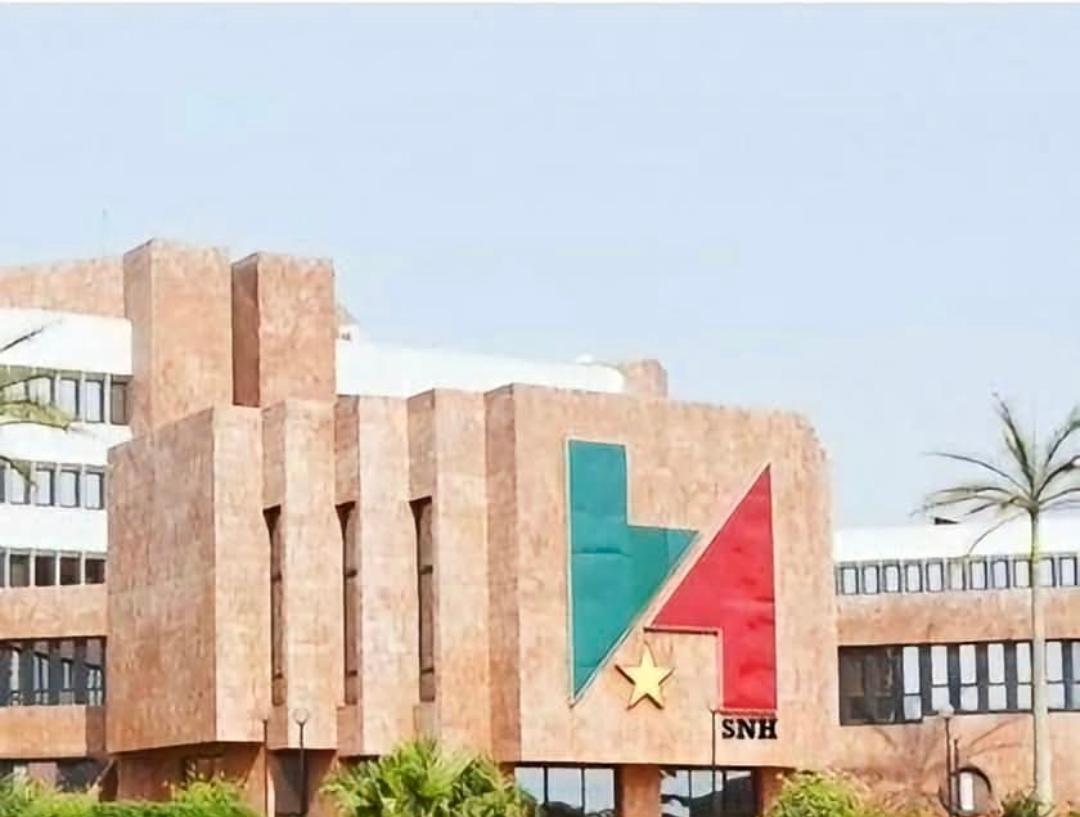
YAOUNDE, Cameroon — A recent audit has raised serious questions about governance, financial reporting and oversight at Cameroon’s state-owned oil company, the Société Nationale des Hydrocarbures, or SNH, according to a report by Africa Intelligence.
The report, published Aug. 19, says the audit identified several concerns, including six years without an annual general meeting, doubtful receivables and a multibillion-CFA franc interest in the CSTAR project that allegedly does not appear in SNH’s financial statements.
The findings place renewed scrutiny on the management of SNH, one of Cameroon’s most strategically important public companies and a key channel through which the state manages and commercializes its petroleum resources.
Six years without annual general meeting
One of the most significant governance concerns cited by Africa Intelligence is the reported absence of an annual general meeting for six years.
The issue is important because the annual general meeting is a fundamental corporate-governance mechanism through which shareholders formally consider and approve a company’s accounts and review aspects of its management.
The reported gap raises questions about how SNH’s accounts and major corporate decisions were formally subjected to shareholder oversight during the period.
Cameroon’s 2019 reforms transformed SNH into a public-capital company. The company’s own published information says its financial statements are audited annually by statutory auditors, while its accounts are also subject to controls by the Court of Accounts.
The 2023 Cameroon Extractive Industries Transparency Initiative report, however, noted that although SNH’s accounts were subject to Court of Accounts controls, no detailed Court of Accounts audit report was publicly accessible at the time. It also confirmed that the Court of Accounts had launched an audit of SNH as a state-owned company in 2023, separate from the company’s annual financial-statement audits.
Questions over CSTAR investment
The audit concerns also reportedly extend to CSTAR, a major petroleum infrastructure project being developed at Kribi.
Africa Intelligence says a multibillion-CFA franc stake held by SNH in the project does not appear in the company’s financial statements.
Publicly available information confirms SNH’s involvement in CSTAR.
SNH, Tradex and Ariana Energy are partners in the project, with publicly reported ownership of 20%, 31% and 49%, respectively. The project involves the construction of petroleum infrastructure at Kribi, including a refinery and strategic storage facilities.
In May, SNH and BGFI Bank Cameroon signed a financing agreement involving 120 billion CFA francs for the project. The financing was described as SNH’s contribution to the development of the refinery and associated infrastructure.
The apparent discrepancy between SNH’s publicly reported involvement in CSTAR and the treatment of the investment in its financial statements is therefore one of the most consequential issues raised by the audit report.
However, CNA could not independently establish from publicly available documents why the reported stake allegedly does not appear in SNH’s financial statements or whether the issue reflects an accounting classification, timing issue or another explanation.
Doubts over receivables
The audit also reportedly raises concerns about doubtful receivables — money recorded as owed to SNH whose recovery may be uncertain.
The issue is significant for a state-owned company because receivables form part of the financial picture used to assess an organization’s assets, liquidity and financial health.
Questions over the recoverability of substantial receivables can potentially affect the reliability of reported accounts if appropriate provisions or adjustments have not been made.
Africa Intelligence did not make the full audit publicly available, preventing independent verification of the amounts and identities of the entities involved in the reported doubtful receivables.
SNH at the center of Cameroon’s oil economy
SNH occupies a central position in Cameroon’s petroleum industry.
According to the 2023 EITI report, the company is wholly owned by the Cameroonian state and plays a key role in managing the state’s interests in the hydrocarbons sector. Its activities are divided between SNH-Mandat, which manages interests on behalf of the state, and SNH-Fonctionnement, which handles the company’s own commercial activities.
The company’s financial transparency has been an issue in Cameroon’s extractive-sector governance discussions for several years.
The EITI’s 2023 validation report said Cameroon had made progress in publishing SNH financial information but noted that disclosures remained insufficiently detailed in some areas. It specifically cited a continuing lack of clarity around some spending undertaken by SNH on behalf of the state and concerns about governance in the national oil company.
The EITI report also said SNH had published full audited financial reports for its two entities for 2021 and that more recent financial information was being progressively disclosed.
CSTAR governance questions predate latest audit
The concerns surrounding CSTAR’s governance are not entirely new.
In 2025, lawyer and former Transparency International vice president Akere Muna publicly questioned the governance and transparency arrangements surrounding the project. He raised concerns about the ownership structure, the use of an entity incorporated in the United Arab Emirates and the flow of public funds into the project.
Those allegations were made independently of the recent Africa Intelligence report and should not be treated as findings of the audit.
The project has nonetheless continued to move forward. Reports in 2026 said construction preparations had advanced at the Kribi site, while BGFI Bank had mobilized financing for the project.
Broader questions over state petroleum companies
The latest SNH revelations come amid wider scrutiny of the way Cameroon’s state-owned petroleum companies operate.
A separate 2026 audit by the Court of Accounts into the Société Camerounaise des Dépôts Pétroliers, or SCDP, examined the company’s management between 2018 and 2023 and raised concerns over the changing division of responsibilities between SCDP and SNH in the storage and distribution of liquefied petroleum gas.
The Court of Accounts recommended that the government clarify the respective responsibilities of the two state companies, warning that continued expansion of SNH’s role could undermine SCDP’s traditional position in the petroleum-storage chain.
The issue illustrates a broader governance challenge: ensuring that state-owned companies with overlapping responsibilities operate under clearly defined rules while maintaining transparency and accountability over public assets.
Renewed scrutiny of SNH management
The latest audit findings also come months after SNH engaged with Transparency International Cameroon over governance and anti-corruption mechanisms.
According to reporting on the discussions, SNH sought a governance diagnostic rather than a certification of its governance standards. The initiative was launched in February 2026 amid continuing public debate over transparency in the country’s petroleum sector.
The timing has given the audit findings added significance.
If confirmed, the reported absence of annual general meetings, questions over receivables and the accounting treatment of the CSTAR investment could raise broader questions about the effectiveness of SNH’s internal controls and shareholder oversight.
For a company managing strategic national petroleum interests, the issue goes beyond corporate administration. It touches directly on transparency in the management of public resources and the state’s ability to account for investments made through one of its most important public enterprises.
What happens next?
The key question is how SNH and the Cameroonian government will respond to the reported findings.
CNA has not located a public response from SNH specifically addressing the Africa Intelligence report’s allegations about the six-year absence of annual general meetings, doubtful receivables or the reported treatment of the CSTAR investment.
The full audit report would also be important for determining the precise nature of the findings, the amounts involved, the period covered and whether the auditors made recommendations or identified specific responsibility for the irregularities.
Until that document and an official response from SNH are made public, the findings reported by Africa Intelligence should be treated as reported audit observations rather than proof of financial wrongdoing.
But the questions raised are significant.
For Cameroon, where oil revenues remain an important source of public resources, the transparency of SNH’s accounts and the effectiveness of oversight over its investments are matters of public interest.
Cameroon News Agency will continue to follow developments and seek access to the underlying audit report and responses from SNH and the relevant government authorities.