At Yaounde workshop: Réseau-LEADER, partners unite to warn youth on deadly risks of irregular migration
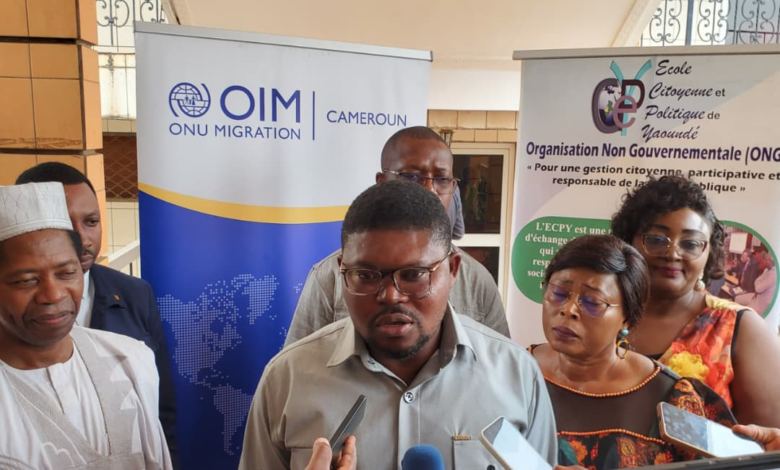
A workshop aimed at sensitising young Cameroonians on the dangers of irregular migration held in Yaounde on January 29, 2026. The event brought together civil society organisations, international partners and local authorities to address what organisers described as a growing concern for the country’s future. It was organised by the Citizens’ and Political School of Yaounde, ECPY, and the Observatory of Foreign and National Press, OPEN, in collaboration with the International Organization for Migration, IOM, and the African Leaders Network for Democracy, Emergence and Renewal, Réseau-LEADER. The workshop was held on the theme: “Youth Migration: Understanding the risks to better choose your future.”
Presiding over the opening ceremony, the Divisional Officer of Yaounde III said irregular migration continues to deprive Cameroon of its productive population while exposing families to long-term hardship. He noted that beyond the departure of young people, the phenomenon fuels criminal networks and leaves families burdened with debt and trauma.
“It is essential to remember that irregular migration is not a solution. It fuels criminal networks and exposes young people to modern forms of slavery, forced labour and lasting marginalisation,” the administrator said, calling for stronger community awareness and prevention.
IOM highlights scale of irregular departures
In his inaugural address, the Head of Mission of IOM Cameroon, Abdel Rahmane Diop, said youth migration is no longer a distant or abstract issue but a daily reality affecting communities across the country. He revealed that between 2017 and 2021, close to 10,000 Cameroonians returned home after attempting irregular migration.
According to him, when the figures are broken down, an estimated six to seven Cameroonians were leaving the country irregularly every single day over the same period.
He stressed that for the IOM, migration should be a choice rather than a necessity, explaining that informed, legal and safe pathways can present opportunities, while forced or poorly informed migration often results in exploitation and abuse. Diop also pointed to internal displacement as a major driver, noting that more than one million people are currently displaced within Cameroon due to security crises, often marking the first stage of more dangerous migration routes.
Rising deaths, gendered risks
Citing global data from the IOM’s Missing Migrants initiative, Diop said more than 80,000 people have died or gone missing on migration routes worldwide since 2014. He added that women are increasingly represented among migrants from Cameroon, exposing them to specific risks such as domestic exploitation, gender-based violence, trafficking and isolation.
“The message we address to young people is that migration must be a choice and not an obligation. The message is to get informed and educated. Verify your information, verify your sources, especially on social media,” Diop said.
Réseau-LEADER calls for informed choices
The Initiator of Réseau-LEADER and a member of the organising committee, Dr Jean Emmanuel Gnagnon, said the workshop was designed to alert young people to the dangers linked to irregular migration and poorly informed decisions.
“Today it is time to sound the alarm and draw attention to the very serious dangers posed by irregular migration flows,” Gnagnon said. He explained that the initiative seeks to engage directly with young people to discuss both the risks and the alternatives.
According to him, the programme aims “to show them the stakes of risky migration while at the same time analysing and building with them credible, reliable and sustainable alternatives, so they can stay, prosper on the African continent and contribute to the development of Africa and Cameroon.”
ECPY underscores deadly statistics
Also speaking at the event, the Executive President of ECPY, Hon Vincent de Paul Emah Etoundi, highlighted the scale of Cameroonian migration and its human cost. He said more than six million Cameroonians currently live abroad, with Canada, particularly Quebec, receiving 9,127 Cameroonians in 2024 and more than 10,308 in the first half of 2025 alone.
He warned that behind these figures lies a growing tragedy, noting that 2024 was the deadliest year ever recorded on global migration routes, with at least 8,908 deaths according to the IOM. Etoundi added that between 2020 and 2024, twice as many migrants died in the Sahara Desert as in the Mediterranean, with 1,180 documented deaths and many more believed unrecorded.
“Our responsibility is clear. To shed light on choices, dispel illusions, protect our young people and give them the power to decide with full awareness,” Etoundi said.
Women-focused sensitisation
Discussions also focused on the specific vulnerabilities faced by young women in migration processes, with participants calling for stronger preventive outreach. Member of Parliament Hon Yeba Judith said targeted sensitisation was already being carried out through workshops aimed at informing women about the risks linked to poorly planned migration and the importance of reliable information before departure. She warned that frustration, unsafe destinations and misinformation often expose women to serious social, health and security consequences.
“Before they migrate, they should first think about where they are going and seek proper information before leaving the country,” Yeba said, adding that female parliamentarians continue to work to ensure women are better informed about the dangerous impacts of irregular migration.
Young participants also shared their perspectives, citing the influence of social media and online videos depicting desert crossings as a motivation to better understand the realities behind migration. Students said the forum provided an opportunity to critically assess both the risks and the limited opportunities associated with migration, while others stressed the need for viable conditions at home. Several youths said informed choices would allow them either to travel under safer conditions or to remain in Cameroon and contribute to national development.