ANALYSIS: Benin’s Foiled Coup and Ivory Coast’s Disputed Election – and Rumoured Coup: Is Democracy Un-African?
By Ngwang James
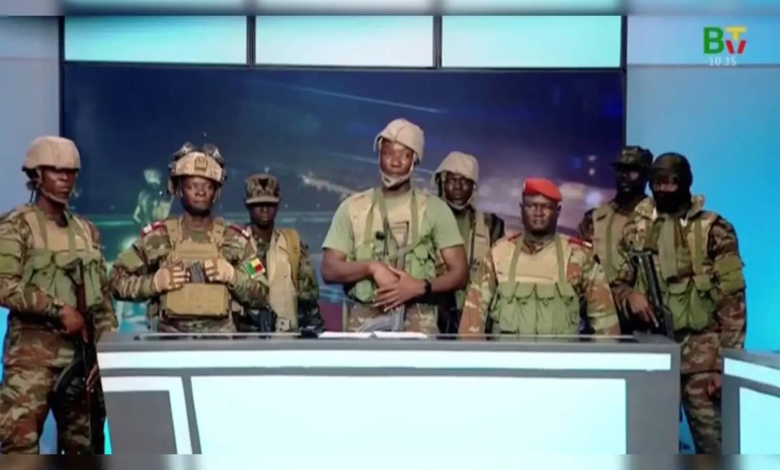
On December 7, 2025 a group of Beninese soldiers led by Lieutenant Colonel Pascal Tigri announced the overthrow of President Patrice Talon on state television. Within hours, the country’s interior minister Alassane Seidou announced that the coup had been foiled by forces loyal to Talon.
Some of Talon’s close associates had earlier received twenty-year sentences in 2024 for allegedly plotting a coup against him. The developments of December 7 followed a string of other successful coups or rumored coups across the continent, reflecting an affinity for or preference for military rule in Africa, especially in former French colonies.
On November 26, just a day before the country’s official presidential election results were expected to be announced – suggesting a disgruntlement with the political establishment. Both incumbent , President Umaro Sissoco Embaló and opposition candidate Fernando Dias Dacosta had claimed victory before the official results, laying the groundwork that according to some observers, precipitated the November 25 coup.
In May 2025, Ivory Coast’s social media spaces were awash with rumors of a coup. While the rumors later turned out to be false, their very circulation points to the possible threat of one in a region marked by successive coups in recent years. Also, President Alasane Ouattara’s victory in the country’s October presidential election in which he won by nearly 89.8 percent, reflects a worrying trend across West Africa.
In the build-up to the country’s election (the same month as Cameroon’s), a similar pattern to what was observed in Cameroon, played out in Ivory Coast: key opposition figures were barred from running and the authorities cracked down on opposition figures. Former president, Laurent Gbagbo was barred by an Ivorian court on “criminal charges” while another leading opposition candidate, Tidjane Thiam was barred on grounds of dual nationality. This exclusion of key opposition figures gave Outtara an easy ride to victory as he obtained nearly 90 percent of the votes.
The opposition cried foul, calling Gbagbo’s victory, a “civilian coup’d’etat”. This choice of language in itself is very telling as it exposes the lingering possibility or perhaps – desire for a coup in the country as frustration with the Outtara government mounts.
Outtara violated the constitution to run for this fourth term and while his supporters applauded his win, it helped sow the seeds of discontent that often lead to the desire for a military takeover.
The International Crisis Group states in a recent analysis that Ivory Coast has not had a peaceful election in 30 years. Since 1995, every election cycle in the cocoa-rich country has resulted in violence and the 2025 election was no exception. At least 230 protesters were jailed in the country for protesting against Outtara’s decision to seek an unprecedented fourth term.
The developments came at a time when Cameroon was experiencing similar developments with incumbent Paul Biya.
In Nigeria, President Bola Tinubu fired nearly a dozen army officials for allegedly plotting a coup. While the Nigerian coup plot was foiled, Gen Z-led protests in Madagascar culminated after three weeks with yet another coup and former President Andry Rajoelina fleeing the country.
The developments in Nigeria and Madagascar while not directly related, point to a pattern of growing discontent among young Africans, disillusioned with their governments and reflect how the military tend to side with protesters in politically volatile situations which Ivory Coast will do well to take note of.
What Are the Implications?
Ivory Coast lies in a neighborhood where coups have been the norm for decades, with recent coups sweeping through again in the 2020s from Mali, to Niger and Burkina Faso. While Ivory Coast is the richest French-speaking country in Africa south of the Sahara, it cannot afford to fall into military rule. While Mali, Niger and Burkina Faso have largely turned to Russia for security and trade, the dangerous pattern with this is that it risks disrupting Ivory Coast’s stable economy and plunging it into further chaos if a military takeover happened. This would be to the benefit of the Russians who enjoy a warm reception in neighboring countries as already pointed out.
Ouattara’s victory may ultimately prove short-lived, not merely because of the political dynamics at play but also due to the fundamental reality of time. At 83, President Alassane Ouattara stands among the continent’s oldest leaders still in active office. His age alone raises concerns about continuity, succession, and stability. These concerns are not abstract—they have historically triggered political tension in several African states, especially where leaders overstayed their constitutional limits. The uncertainty surrounding what comes after Ouattara, and who might ascend in a post-Ouattara era, only deepens existing anxieties among Ivorians.
For the opposition, the 2025 post-election transition feels like a replay of older grievances that were never resolved. The exclusion of Laurent Gbagbo and Tidjane Thiam was not just a technical legal matter; it was seen by many as politically engineered to secure Ouattara’s victory. Such actions tend to compound bitterness, not suppress it. The opposition’s declaration of the election as a “civil coup d’état” signals a rhetorical escalation that can easily translate into actual political mobilization—especially in a region where recent coups in Mali, Burkina Faso, and Niger have reframed military takeovers as expressions of “popular will.”
The risk is not merely the risk of Ivorians turning on each other. Ivory Coast is a strategic economic hub in West Africa. Instability there would have subregional consequences all over West-Central Africa. This is where Russia’s emerging influence becomes relevant. In Mali, Burkina Faso, and Niger, coups created fertile ground for Russian mercenary and political influence to expand. These countries now rely heavily on Moscow for security cooperation and, increasingly, political backing. Should Ivory Coast slide into political instability, this could create yet another opening for Russia to step in, especially if the West hesitates or fails to respond effectively. Already, we are seeing gaps in a place like Mali where jihadists are reclaiming territory and recently executed a TikToker for showing support to the Malian army.
According to the International Crisis Group, for the country to avoid a scenario where the military seizes power and to ensure that Ivory Coast does not become the next domino in West Africa’s coup wave, three key steps are essential:
1. A Genuine National Dialogue
Ivory Coast must convene an inclusive political dialogue that brings together the ruling party, key opposition leaders (including those barred from contesting), civil society groups, and religious leaders. The aim should be to address grievances surrounding the election, clarify the constitutional controversies, and chart a roadmap for political reforms. Without this space for collective negotiation, resentment will continue to simmer and could spill over into violent confrontation.
2. Judicial and Constitutional Reforms
The controversies over Ouattara’s eligibility exposed deep flaws in the interpretation and enforcement of the constitution. Strengthening the independence of the courts, revising the conditions for candidacy, and ensuring transparent electoral rules would help restore confidence in democratic processes. The absence of such reforms creates space for instability—and invites the military to step in under the guise of “restoring order,” as seen elsewhere in the Sahel.
3. Security Sector Professionalization
Ivory Coast’s military has historically been both a stabilizing force and a source of uncertainty. Reforms must ensure that the armed forces remain loyal to constitutional authority and insulated from political manipulation. Programs that improve welfare, training, and civilian oversight can play a crucial role in preventing the military from becoming an alternative political actor—and prevent external actors like Russia from exploiting any fractures within the security establishment.
Ultimately, preventing Ivory Coast from sliding toward political crisis is not merely about protecting an election outcome. It is also about safeguarding a fragile democratic project in a region where democracy is under siege. If Ouattara’s government fails to address the legitimacy crisis surrounding his fourth term, the country may face a volatile mix of popular frustration, aging leadership, unresolved political exclusion, and opportunistic foreign influence. This combination is precisely what has led to repeated coups elsewhere in West Africa—and Ivory Coast cannot afford to go down the same path.
Also, the attempted coup in Benin carries significant implications for democracy across West and Central Africa. Benin has long been regarded as one of the region’s most stable democracies, and a coup there (or an attempted one as was the case on December 7) signals that no country—no matter how institutionally sound—is immune to the growing wave of military interventions. The attempted coup reinforces a dangerous regional precedent: that when political tensions rise or economic conditions worsen, sections of the military may feel emboldened to seize power. But in a region already battered by coups from Niger to Gabon, the Benin episode risks normalizing military takeovers as an alternative pathway to power. This erosion of democratic norms can trigger a domino effect, particularly in these countries already grappling with high rates of youth unemployment, high cost of living, and great dissatisfaction with perceived neocolonial influence which pushes these countries towards Russia whether by democratically elected governments or those under military rule. If unaddressed, the Benin incident may deepen instability across West-Central Africa, encouraging militaries elsewhere to adopt similar strategies under the guise of “restoring order.”